Tag: Secret layers

  • KNBS 2026 Report About Kenyan Agriculture (Must Read)

    The Kenya National Bureau of Statistics (KNBS) released the 2026 Economic Survey. This is one of the most important documents about Kenya’s economy.

    It covers every sector — from local farming to international trade, social trends, and emerging issues. Whether you are a local farmer or a foreign investor, this report has something for you.


    In this post, I will give you a summary of Kenya’s agricultural sector from the KNBS 2026 report.

    Specifically, I will focus on three areas:
    – Production
    -Employment
    -Education


    As a farmer in Kenya, this is one of those documents that shows you where agricultural trends are heading. So let us dive in.

    1. Agricultural Production In Kenya 2025

    First, let us look at the bigger picture. The Sub-Saharan Africa region saw its real GDP grow by 4.4 per cent in 2025, up from 4.1 per cent in 2024. This growth was driven largely by improved agricultural production and better commodity prices across the region.


    Closer to home, Kenya’s real GDP grew by 4.6 per cent in 2025. The Agriculture, Forestry and Fishing sector — which contributes over 20 per cent of Kenya’s total economy — expanded by 3.1 per cent. In short, farming is still a major engine of Kenya’s growth.


    Here is a crop-by-crop breakdown of what happened in 2025:


    Maize production improved by 2.4 per cent to 45.8 million bags. This is good news for food security, since maize is Kenya’s staple crop.


    Wheat production fell by 18.2 per cent in 2025, and imports also contracted by 3.4 per cent. As a result, total wheat supply dropped by 5.2 per cent — meaning bread and flour prices may remain under pressure.


    Green leaf tea output dropped by 7.8 per cent. For smallholder tea farmers, this signals a difficult season that may have reduced earnings.


    Coffee production, however, increased from 49,500 tonnes in 2023/2024 to 51,400 tonnes in 2024/2025. This makes coffee one of the bright spots for Kenyan export agriculture.


    Sugar cane production dropped sharply by 24.7 per cent. This is a significant decline that puts pressure on local sugar supply and the livelihoods of cane farmers.


    Pyrethrum production fell by 18.2 per cent, and pyrethrum extract dropped even further by 41.5 per cent. Consequently, farmers growing this crop saw a very tough year.


    Rice paddy production increased by 6.4 per cent, supported by a 5.3 per cent expansion in irrigated land to 48,379 hectares. This shows that irrigation investment is paying off for rice farmers.


    Fresh horticultural exports grew by 13.8 per cent in volume — a strong result. However, earnings from fresh vegetable exports fell by 9.0 per cent, largely due to Maximum Residual Level (MRL) violations and export interceptions.


    MRL means the highest legally allowed amount of a chemical — usually a pesticide — that can remain in food after harvest. When Kenyan produce exceeds these limits, it gets rejected at the border.
    Therefore, if you are growing vegetables for export, understanding MRL compliance is no longer optional — it directly affects your income.


    Milk production increased by 3.5 per cent to 5.5 billion litres in 2025. Furthermore, marketed milk volumes grew by 11.5 per cent to 1.0 billion litres, meaning more farmers are successfully selling their milk rather than consuming it at home.

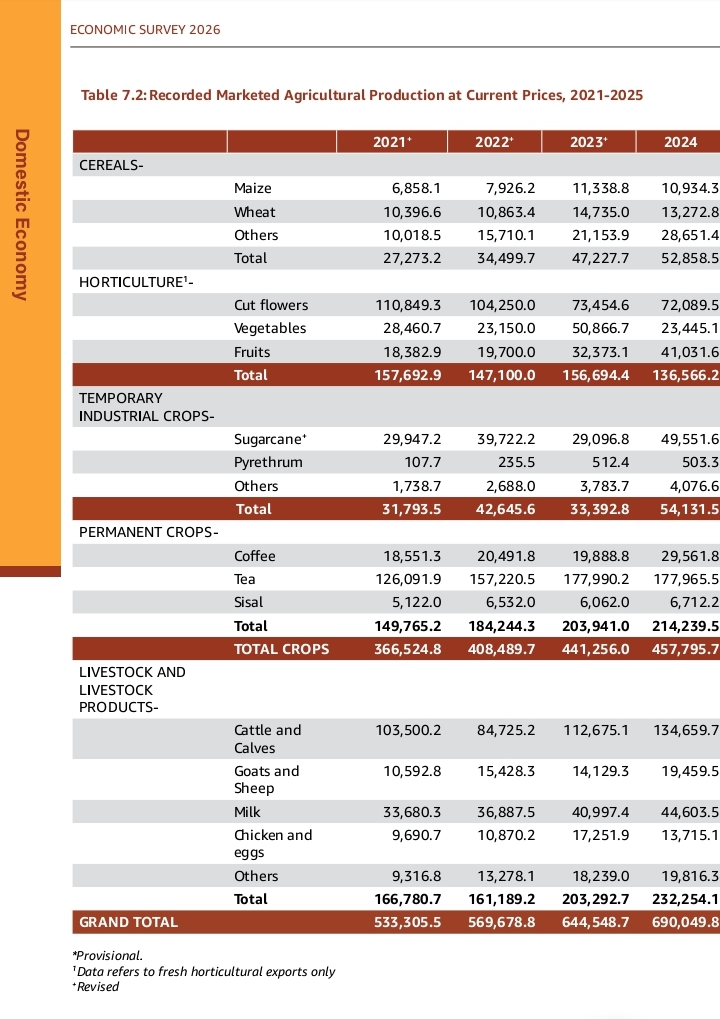
    KNBS 2026 Economic Survey summary of recorded marketed agricultural production
    These are the major crops in Kenya currently.As you can see most of them are for exports and it’s what was recorded.
    There’s probably a lot more than this.

    2. Agricultural Employment In Kenya 2025

    Now let us look at jobs. The agriculture, forestry and fishing sector remains Kenya’s largest employer overall. However, most of that employment is still informal and small-scale rather than salaried.


    Formal wage employment in the sector stood at:


    Private sector: 311,900 employees
    Public sector: 42,700 employees
    (working in institutions like the Ministry of Agriculture, county agriculture departments, forestry agencies, fisheries departments, and agricultural research bodies)
    Total formal jobs: 354,600


    That said, the real story is in the informal sector.
    Kenya’s informal sector employed 18.1 million people in 2025 — representing 83.8 per cent of total employment in the country. A large share of these are agriculture-related.

    In other words, the smallholder farmer is not the exception. He or she is the majority.
    These 18.1 million people are the backbone of Kenya’s food system. Yet most of them are farming without proper support, training, or resources.

    That is exactly why I am building something for them — and I need your input to make it useful.

    I’m On A Mission

    I am on a mission to help the smallholder farmer make more money — from before they start their farm, all the way to when they harvest their results.

    To do that well, I need to understand their challenges.


    Help me fill in this short Before You Farm survey. It takes just 2 minutes.


    In return, I will send you 2 of my Farming eBooks completely Free👇🏿

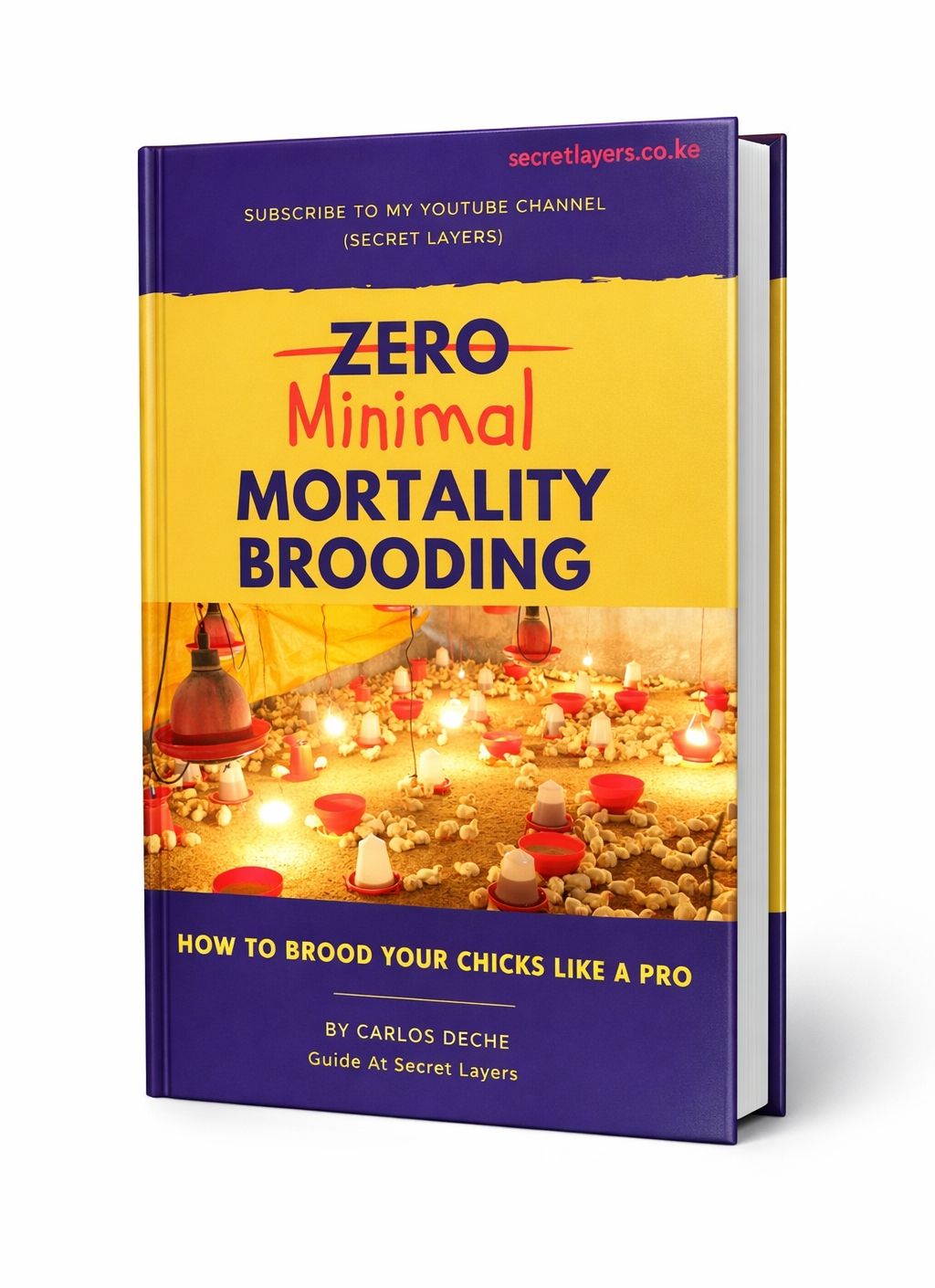
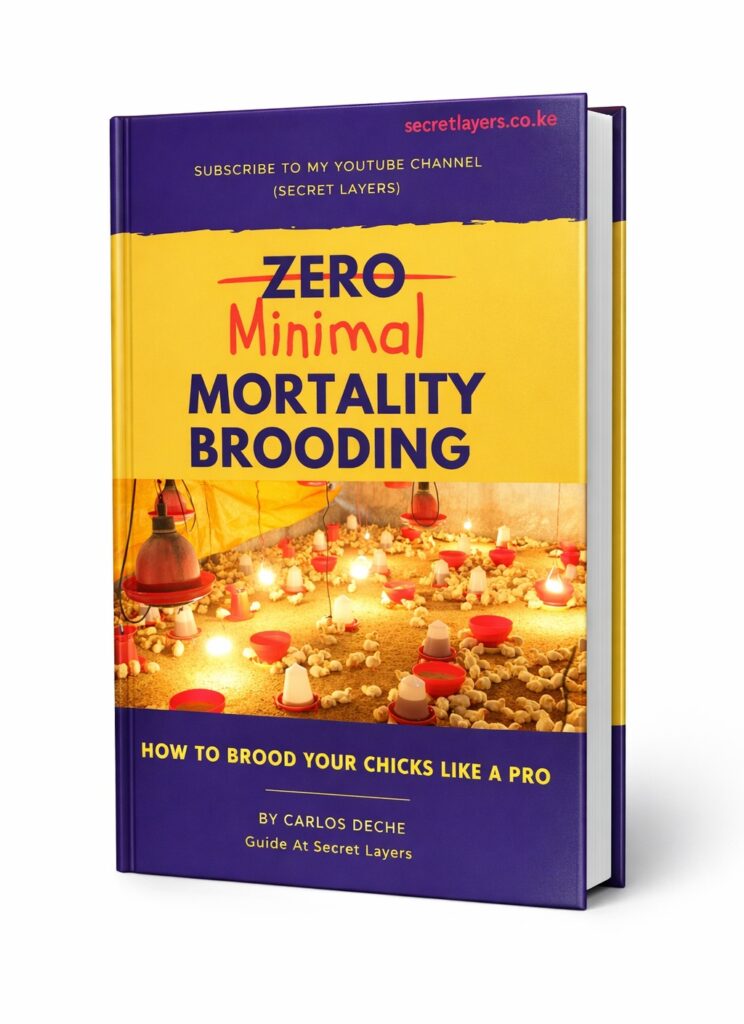
    Free Brooding Guide For Poultry Farmers. Zero (Minimal) Mortality Brooding. How To Brood Your Chicks Like A Pro. By Carlos Deche Guide At Secret Layers


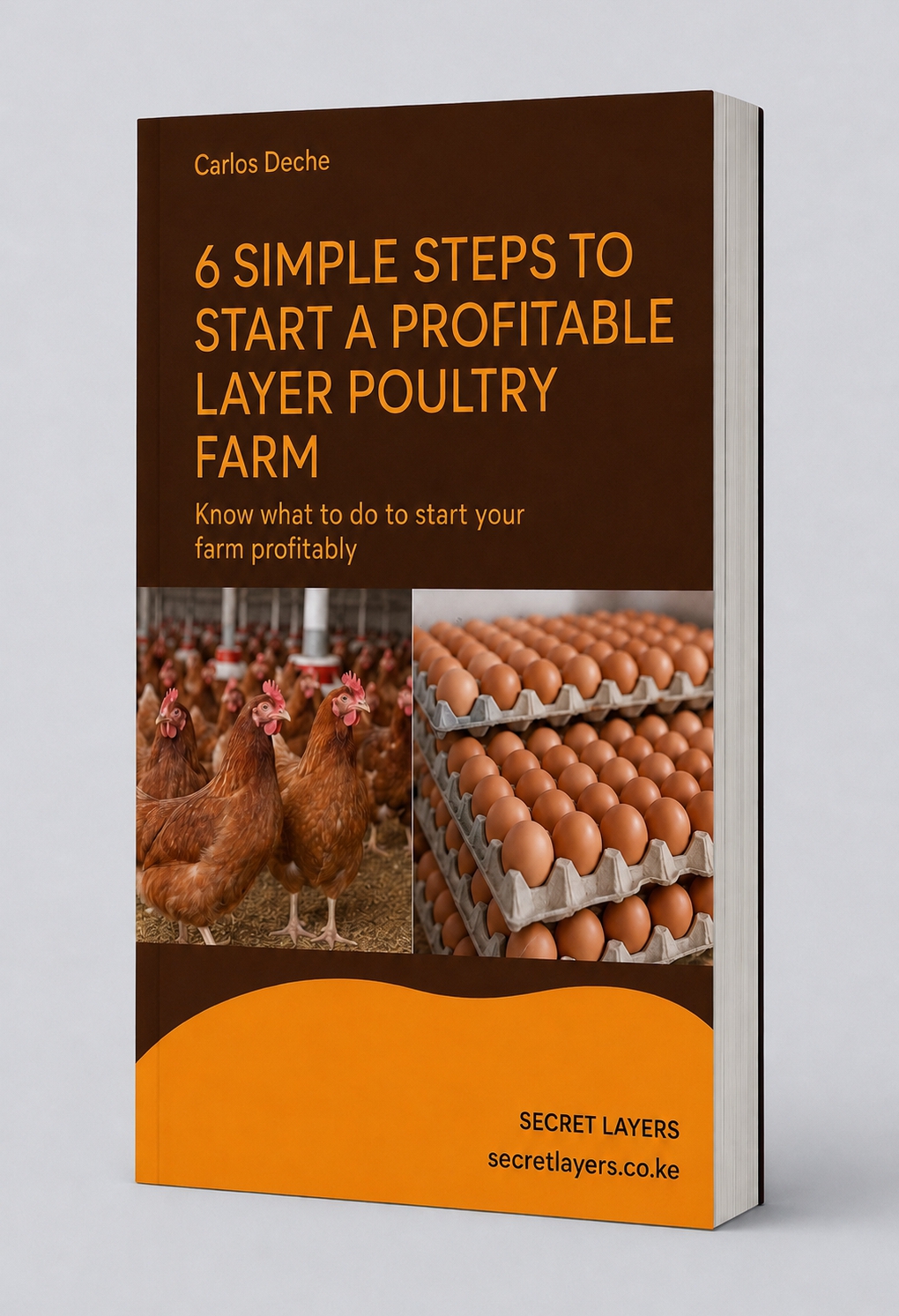
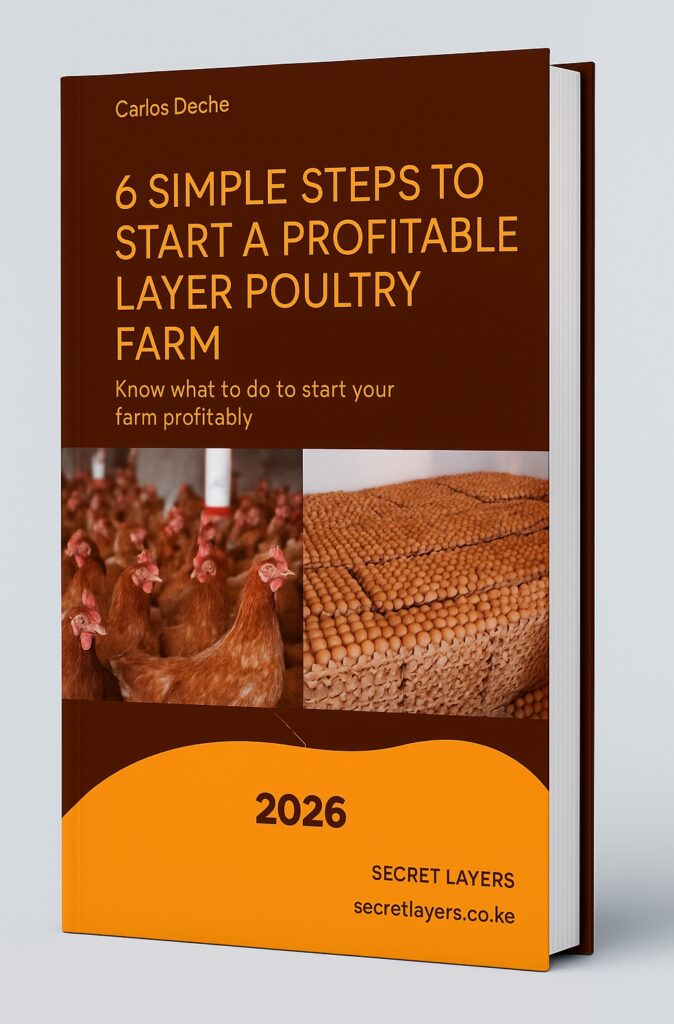
    Free beginners guide to starting a profitable layer poultry farm. Step by Step guide.

    3. Agricultural Education Trends In Kenya (2021 – 2025)

    Finally, let us look at the future — who is training to work in agriculture.


    Student enrolment across agricultural institutions showed a significant increase between 2021 and 2025:


    Degree level enrolments grew by 7.1 per cent, from 23,500 students in 2024 to 25,157 students in 2025.


    Diploma level enrolments increased by 17.4 per cent to 2,089 students in 2025.


    Animal Health and Industry Training Institutions (AHITIs) saw certificate enrolments rise by 55.2 per cent to 1,442 students.


    Meat inspection certificates at Athi River Meat Training Institute recorded 196 new students.


    Short-term vocational courses grew by 25.6 per cent to 922 students.


    Overall, more young Kenyans are choosing agriculture as a career path. This is a very encouraging sign for the future of farming in Kenya.

    Key Takeaways

    -Agriculture is a key contributor to Kenya’s GDP, accounting for over 20 per cent of the economy.


    -Agriculture is the largest employer in Kenya, with most people working in the informal sector.


    -Enrolment in agricultural courses is rising across degrees, diplomas, and certificates — so the future of Kenyan farming is in good hands.


    This is your overview of Kenya’s agricultural sector in 2025. It is a small glance, but I hope it has shown you the trends and the opportunities available to you as a farmer.


    If you want to read the full KNBS 2026 Economic Survey, you can find it here:

    https://www.knbs.or.ke/wp-content/uploads/2026/04/2026-Economic-Survey.pdf


    What do you think about this report? And what is your outlook for Kenyan agriculture? Let me know in the comments.

    Get your Free Ebooks if you haven’t.


    See you next Friday!

  • FOMO Farming – Why Most Farms Fail Before They Start

    Most farms do not start because a farmer saw a problem in the market. They start because a farmer saw his neighbour with a farm.

    That is FOMO — Fear Of Missing Out.

    And it is quietly killing farms before they even have a chance.

    The Story Of John And James

    John and James were neighbours. Good neighbours. They did not talk every day, but they had never fought about anything either.

    One Monday morning, John came home from work and noticed something strange. A group of contractors were busy in James’ backyard, building something big.

    He wanted to ask James about it. But they had not spoken in over a week. It felt too intrusive to just walk over and ask.

    So John waited.

    Two weeks later, the structure was complete. It was a chicken house.

    “Interesting”, John thought. “Let me see if he will make any money from this.”

    James Starts To Grow

    James brought in his first batch of chicks. Within three months, he was supplying chicken meat to the local market.

    One afternoon, James knocked on John’s door and asked if he needed chicken meat. Out of friendship — and because he genuinely needed them — John said yes. He became one of James’s regular customers.

    Weeks passed. James kept stocking new batches. His customer base grew steadily. People in the neighbourhood started calling him ‘The chicken guy’.

    John watched all of this quietly. Inside, he felt uneasy.

    Yellow day old layer chicks.Definitely still in brooding out on the farm with a spade - a commonly used farm tool/equipment

    The Decision That Changed Everything

    John talked to his wife about it. They both agreed — James must be making serious money. Why else would people keep coming back? Why else would he keep expanding?

    So they made a decision.

    Husband and wife visited the hatchery in the nearby town. They ordered chicks and started building their own chicken house. They did not ask James for advice. That would have felt like trespassing on his business territory.

    Three months later, their first batch matured. They started selling meat, just like James.

    It was hard at first. But slowly, people started buying from them too. Some of James’s loyal customers even switched over. Business felt good.

    When The Numbers Tell The Truth

    At the end of the batch cycle, John and his wife sat down to count their money.

    Something was off.

    They called John’s sister, who worked as an accountant, to help them go through the numbers. She looked at the records carefully and then looked up at them.

    “You have been making losses,” she said. “Your expenses are 15% higher than your revenues. Every month, you are losing money.”

    John was heartbroken.

    But then he asked the question he should have asked from the very beginning.

    What about James? Is poultry farming profitable for him too?

    The Truth About James

    John finally walked over to James’s house and asked him directly. “How is the business really doing? Is poultry farming profitable on your end?”

    James told him the truth.

    The business was not profitable. James had one large hotel outside town that bought most of his eggs and meat in bulk. Whatever was left, he sold to neighbours and the village market. Even with all that, he was only breaking even.

    He could not shut the farm down either. He had taken out a loan to start it. Every month, he farmed just to repay that loan.

    It was a cycle. A vicious one. Farm. Break even. Repay loan. Repeat.

    Not all that glitters is gold.

    Why FOMO Farming Almost Always Fails

    What you just read is not a unique story. It happens every single day across farms big and small.

    People start farming not because they identified a market gap, did a feasibility study, or had a clear business plan. They start farming because someone they know appears to be making money.

    A neighbour. A friend. A random farmer on social media posting about profits every week.

    These people sell a dream. And the dream looks real because you can see the chicken house, the chicks, the customers coming and going. What you cannot see is the loan, the losses, the breaking even, the quiet stress behind the scenes.

    Studies show that up to 70% of agricultural businesses fail in their first three years. Many of those failures trace back to one simple problem — the farmer started for the wrong reason.

    FOMO is a wrong reason.

    What FOMO Does To Your Thinking

    When you see someone else farming and apparently making money, your brain starts running a story.

    He must be making so much money.

    His life must be so much easier now.

    If I start now, I will make that money too.

    If I wait, I will miss this opportunity.

    That last thought is the dangerous one. You feel like the window is closing. Like you have to act right now or you will lose out forever.

    But that is rarely true.

    A farming opportunity that is real today will still be real in six months — after you have done proper research.

    After you have spoken to actual farmers who show you real numbers.

    After you have asked the hard question: Is poultry farming profitable in my specific market, at my specific scale, with my specific resources?

    The Right Way To Start A Farm

    Before you place a single chick order, here are some recommendations you should do.


    1. Talk to a real farmer — and ask for the numbers.
    Not the polished version. The real numbers. Revenue, expenses, loan repayments, labour costs, losses from sick birds, market price fluctuations.

    If a farmer is not willing to show you that, their “success” story is not useful to you.


    2. Study your local market first.

    Who will buy your eggs or meat?

    How many other farmers are already supplying that same market?

    Is the market growing or shrinking?

    Can it absorb one more supplier without everyone’s prices dropping?


    3. Run a simple feasibility test.
    Before spending a single shilling on construction, write down your projected costs and your realistic revenue. Not best-case revenue — realistic revenue.

    If the numbers do not work on paper, they will not work in real life.


    4. Start small and learn.
    A 50-bird first batch teaches you more than any YouTube video. Starting small keeps your losses manageable while you figure out the market, the feeding, the disease management, and the sales cycle.


    5. Have a clear customer before you start.
    James had one hotel that bought in bulk. That one customer kept him alive — even if just barely.

    Before you build a chicken house, find one person or business willing to commit to buying from you consistently.

    There Is Always Another Bus Coming

    There is a famous saying in investing: ‘There is always another bus coming’.

    It means this — missing one opportunity does not mean you have missed everything. Another one is always on its way. The farmer who waits, researches, and starts with a clear plan will almost always outlast the farmer who jumped in because of FOMO.

    So resist the urge. Control the impulse. Do not start a farm just because your neighbour has one and appears to be winning.

    Ask the harder question first: Is poultry farming profitable for me, in my situation, right now?

    If the honest answer is yes — go for it with everything you have.

    If the answer is unclear — do more research before you spend a single coin.

    The Bottom Line


    John lost money. James was trapped in a loan cycle. Neither of them started with a real plan.

    Both of them started because of how things looked from the outside.

    Farming is a real business. It rewards preparation, market knowledge, and patience. It punishes impulse, emotion, and FOMO.

    Before you order those chicks, before you break ground on that chicken house — make sure you are starting for the right reasons.

    Your farm deserves better than FOMO.


    Thinking about starting a layer poultry farm?

    Download my Free Guide and make sure you start your farm the right way.

    Free beginners guide to starting a profitable layer poultry farm. Step by Step guide.
    Name
    Limited access. Join other serious farmers who have taken the guide and get support.


    See you next Friday!

  • 6 Tips For Feeding Your Chicken And Maximize Your Farm Profits (Layers)

    Many poultry farms are dying because of feed.
    Not disease. Not poor management. Feed.


    And here is the part that will shock you even more — many farms are never even started because of feed.

    The fear of high, unpredictable feed prices scares aspiring farmers away before they buy their first chick.


    Feed accounts for 60 to 70% of total expenses on a poultry farm. It is the single largest cost you will carry. So the fact that it is the number one farm killer? That makes sense.


    This is why layer chicken feeding deserves your full attention. If you buy day-old chicks, you will be feeding those birds for almost two years. Every mistake at the feeder costs you money.


    Here are six feed management tips to protect your farm, your birds, and your profits.

    1. Feeding Time and Frequency

    Feed your hens twice a day. Once in the morning. Once in the evening.


    This works for two reasons.

    First, it fits a working farmer’s schedule. You are home in the morning and home in the evening. No complicated mid-day trips to the farm.


    Second, it reduces boredom. Full crops mean calmer birds. Calmer birds means less cannibalism and fewer injuries.


    One more thing— allow the feeders to go completely empty for about two hours each day.

    The best time is midday, during the hottest part of the day. This reduces heat stress, cuts feed wastage, and pushes your birds to eat more during cooler hours when they are comfortable and active.

    2. Feed Quantity

    Give your birds the right amount of feed for their age. Use the feeding schedule from your feed manufacturer or hatchery. Do not guess.


    Do not underfeed trying to cut costs. Underfeeding leads to lower egg production, smaller eggs, and generally sick birds. You will lose more money than you save.

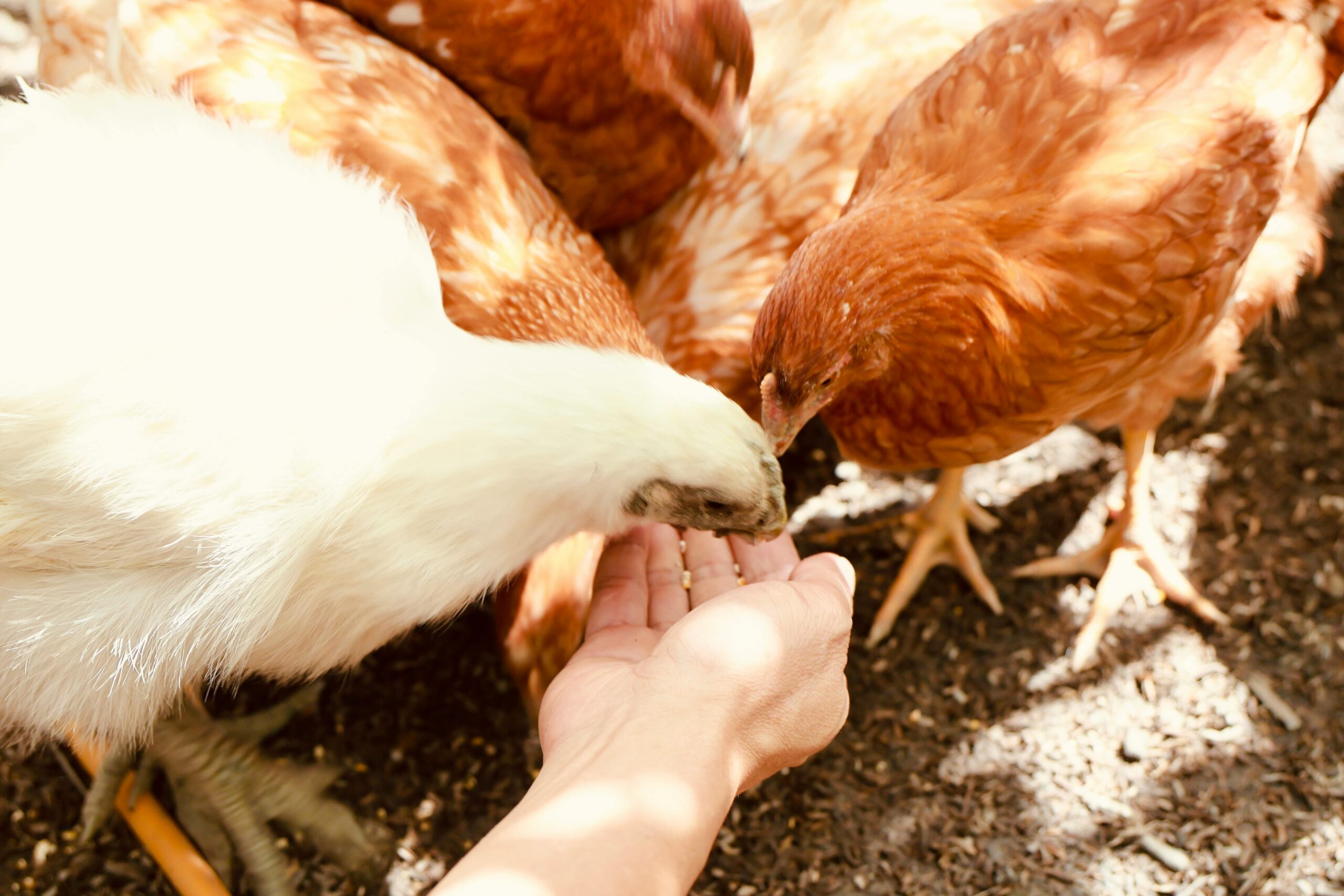
    Feeding chicken by hand.
    Feeding chicken on a farm.


    Do not overfeed either. Obese layers produce fewer eggs. That is not a theory. That is biology.


    Here is a tip most farmers do not know: give 40% of the day’s feed in the morning and 60% in the evening.

    Why? Because calcium from feed is absorbed at night, when the hen is forming the eggshell.

    More feed in the evening means more calcium available when the bird needs it most. Better calcium absorption means stronger shells and better quality eggs.

    3. Feed Quality

    Cheap feed is expensive. Read that again.


    Poor quality feed means poor egg production. Often below break-even.

    Yet very expensive feed can also kill your profits from the other side.

    The goal with layer chicken feeding is to find the sweet spot — good production rate, fair price, healthy profit margin.


    Try different feeds when you are starting out. Record the production results for each one. Then make your own decision based on data, not a salesperson’s pitch.


    Feed companies are in business to make money. Sometimes that is at your expense.

    Choose feeds that work for your farm, not feeds with the most attractive packaging or loudest brand ambassador.

    4. Supplements

    Your layers need more than feed alone.


    Calcium tops the list, especially during the laying phase. Without enough calcium, shell quality drops and birds can develop bone problems.


    Add zinc, vitamins, and amino acids too. These support immunity, bone strength, and consistent egg production.

    If your current feed does not include them, supplement separately.


    Do not skip this step. Supplements are cheap compared to the cost of poor production or sick birds.

    5. Water

    You are right — water is not food.


    That is exactly why it is on this list.
    Water is the most important input on your layer farm. More important than feed.

    Here is proof: if you run out of feed for a day, you can open the coop and let the birds free range. Problem delayed.
    Run out of water? There is no workaround. They will die.


    Ensure your chickens have clean, fresh water available at all times. There is a rule that experienced farmers live by: if you can not drink it, do not give it to your birds.


    Replace water in drinkers daily. Do not let it sit. Still water grows bacteria. Bacteria causes disease. Disease destroys your flock.


    Clean water is the simplest thing you can do for your birds. No excuses.

    6. Feeder And Drinker Management

    Imagine I invited you for dinner. Your favorite meal, perfectly cooked. But I served it on a dirty, crusted plate.
    Would you eat it?


    Your layers will. They have no choice. But dirty feeders and drinkers are dangerous. Mold and harmful bacteria accumulate fast. Once your birds ingest them, disease follows.


    Clean your feeders and drinkers thoroughly once a week.

    Use clean water, soap, and disinfectant.

    Let them air-dry completely before use.

    And if a feeder is visibly dirty before the week is up, clean it. Common sense overrules the calendar.

    A few more tips for drinkers and feeders setup:

    Fill feeders only halfway. Birds that eat from overfilled feeders spill feed. That spilled feed is wasted money. Half-full feeders ration the portion and reduce waste.


    Raise feeders to neck level. Adjust as the birds grow. This reduces spillage and keeps litter out of the feed.


    Space feeders evenly. No bird should walk too far to reach food or water. Poor spacing triggers competition, stress, and energy loss — energy that should be going into egg production.


    Use enough feeders and drinkers. Not too few to cause crowding. Not too many to make cleaning a burden.


    Remember: biosecurity is your first vaccination. Clean equipment is part of biosecurity.

    ….


    Layer chicken feeding is not complicated. But it demands consistency, observation, and discipline.


    Get the timing right. Get the quantity right. Get the quality right. Keep the water clean. Keep the equipment clean. Add the supplements your birds need.


    Do those six things well and your layers will reward you with steady production, strong shells, and a profitable farm.

    If you’re struggling with brooding your day old chicks,

    I put together a Free Brooding Guide covering how to prepare for chick arrival, how to receive day-old chicks, and the 8 brooding principles every farmer needs to know.

    Grab your Free copy here👇🏿

    Free Brooding Guide For Poultry Farmers. Zero (Minimal) Mortality Brooding. How To Brood Your Chicks Like A Pro. By Carlos Deche Guide At Secret Layers
    Name
    Limited access. Join other serious farmers who have taken the guide and get support.


    See you next Friday!

  • Why It Might Be Time To Quit Farming And Walk Away – Sunk Cost Fallacy

    What if I tell you maybe it’s time you actually killed that farm of yours.

    Yes. It might be time to sell everything.
    The birds. The animals. The houses. Maybe even walk away and start something new.

    I know. That sounds crazy coming from me.

    For the last 8 months I have been writing this blog, I have shown you my farming journey.
    I have shown you how farming can make you money. I have shown you how it can ultimately give you financial freedom.

    But today, let’s look at things from a different angle.

    Something Strange Was Happening

    Many years ago, economists noticed something odd.
    New businesses were losing money. A lot of money. More than they should.

    You might say — “Carlos, that’s normal. My small business hasn’t made a profit in six months.” And you’re right. Losses happen.

    But this was different.

    These businesses kept losing money for a long time. Way longer than made sense.


    That made the economists ask:
    Didn’t they see it happening?
    Couldn’t they spot the pattern?
    What were they waiting for?

    Then they noticed something else. Governments were doing the same thing. Losing money. Money that could have been saved if someone had acted sooner.

    That’s when the name Sunk Cost Fallacy was coined.

    The Sunk Cost Fallacy

    What Is The Sunk Cost Fallacy?
    It is simple.
    It is when you keep doing something because of what you have already put into it instead of looking at the outcome.
    Even when it is clearly not going to work.

    Time. Money. Effort.

    Here are some good examples..
    You keep watching a boring movie. Why? Because you already paid for it.

    You stay at a job you hate. Why? Because you have already been there 10 years — even though there is no promotion coming.


    You stay in a bad relationship. Why? Because you have already been together for 2 years.

    That is the sunk cost fallacy.

    The $9 Million Board Meeting

    Here is what it looks like in a real business.

    A company puts its best people, its money, and two years into a new product. The product flops. Almost no one buys it. The few who do won’t even tell their friends about it.

    So they have a board meeting..

    Person 1: We should kill this project. It is not working.


    Person 2: I agree. The market doesn’t want it.


    Person 3: But we have already put in so much time. (The beginning of the sunk cost fallacy)


    Person 4: Yes. And so much money. This is one of our biggest projects ever.


    Person 5: Think about all those 20-hour days we worked. Remember the commitment we made?

    They decide to keep going.
    At this point, they have lost $1 million.

    13 Months Later…

    Person 1: I think we should shut it down. It’s not going to work.


    Everyone else: Yeah. Kill it.

    Short meeting. But now they have lost $10 million.

    Why didn’t they stop at the first meeting?

    Sometimes Quitting Is The Right Move

    I believe in hard work. I believe in not giving up.

    But sometimes, quitting is the smartest thing you can do.

    A job. A career. A business. A project.
    Codie Sanchez, author of Main Street Millionaire, once said on her X page: “Quitters are winners.”

    Controversial? Yes. But think about it.

    Winners quit their bad habits. Their bad friends. Their bad environments. Their bad jobs. And then they go on to win with better ones.

    That is what she meant.

    Farmers Are Not An Exception

    Many farmers keep pouring money into a farm that makes zero profit. Whether it’s poultry, livestock or crops. It doesn’t matter.

    The scariest part? Most of them don’t even know they are losing money.

    If that is you right now — it might be time to put the hoe down and walk away.

    African man crying used to illustrate sunk cost fallacy.
    Maybe it’s time to quit that farming project and look for other viable opportunities.

    So How Do You Know When To Quit?

    Here are four things to ask yourself.


    1. Do you hate what you are doing?

    Pushing through something you hate helps no one. Not you. Not the people around you. Find something you actually like doing.


    2. Have you truly tried everything?

    Most people quit too early. They try 10 things and say “it didn’t work.” You need to try an unreasonable number of things first. Different methods. Different tactics. Different experts. Then, if nothing works — you have your answer.
    This is the most important one.


    3. Ask yourself: would I start this again today?

    Forget the past. Forget the money and time you already spent. If you were starting fresh today — would you choose this again?
    If the answer is no, that tells you something.


    4. Set your “kill criteria” before you start.

    Before you begin anything — a farm, a business, a project — decide in advance what will make you walk away. Write it down. When you hit that line, you walk. No guilt. No regrets.


    (This is one of the topics I’m considering to put in the farming bool I’m writing – Before You Farm. Tell me what you think in the comments)


    Quitting Doesn’t Make You A Quitter. It Makes You A Pivoter.

    Walking away from something that is not working does not make you weak.
    It makes you smart.

    For a deeper look at this topic, I recommend the book “Quit: The Power of Knowing When to Walk Away” by Annie Duke.


    What are your personal thoughts on quitting? Drop your thoughts in the comments.

    If you want to learn how to start and run a layer poultry farm profitably — grab the Free Ebook below👇🏿

    Name
    Limited access. Join other serious farmers who have taken the guide and get support.


    See you next Friday!

  • The Bucket Vs Pipeline Mindset Everybody Should Know About

    Are You Carrying Buckets or Building a Pipeline?


    Once upon a time, there was a small village.
    It was a good place to live.
    But there was one big problem.
    There was no water unless it rained.


    So the village elders made a decision.
    They asked people to apply for a contract to supply water daily.
    Two men were chosen: Ed and Bill.
    The elders wanted competition.
    They believed it would keep prices low and ensure steady supply.

    Ed

    Ed started immediately.
    He bought two metal buckets.
    Then he began walking to a lake one mile away.
    Every day.
    Morning to evening.

    He filled the buckets and carried water back to the village tank.
    It was hard work.
    But he was happy.
    He was making money.
    And he had a secure contract.


    Every morning, he woke up early.
    He made sure the village had water before people woke up.
    He worked every single day.

    Bill

    Bill disappeared.
    For months, nobody saw him.
    Ed was happy.
    He thought he had no competition.
    But Bill was not resting.
    He was planning.


    Instead of carrying buckets, Bill did something different.
    He wrote a plan.
    He created a company.
    He found investors.
    He hired people to help him.

    Then he came back with a construction team.
    Within one year, they built a pipeline from the lake to the village.

    The New Beginning

    At the launch, Bill made some announcements:
    His water was cleaner
    His supply was 24/7
    His price was 75% cheaper

    The villagers were excited.
    They rushed to his tap.

    The bucket vs pipeline mindset.Adapetwd from rich dad's cashflow quadrant to teach hard work vs smart work.
    A visual illustration of the bucket vs pipeline mindset. Which one are you working with?

    The Mistake

    Ed reacted fast.
    He reduced his price.
    He bought more buckets.
    He worked even harder.

    He hired his sons and other villagers to help him.
    Now they worked day and night. When his boys went off to college he said to them, ‘Hurry back because some day this business will belong to you.’

    But maybe there was a problem.When his son’s left for college, they never came back.


    Later on, he faced worker issues. Complains of having to carry one bucket per trip instead of two.
    Costs increased rapidly.
    Work became harder.

    Plan Number 2

    On the other hand, Bill did not stop there.
    He thought bigger.
    “If one village needs water, others do too.”
    So he expanded his system.
    He built pipelines to many villages.


    Now, he only made a small profit per bucket.
    But he delivered millions of buckets daily.
    Even when he slept, people consumed water and money kept coming in.

    Let’s Compare The Two

    Ed worked hard his whole life.
    Bill built a system that worked for him.

    Ask Yourself..

    Are you carrying buckets?
    Or are you building pipelines?


    Are you working hard?
    Or are you working smart?

    Now Back To Farming

    In farming, this is very important.
    You can:
    Sell eggs , milk, meat or vegetables daily and struggle
    OR
    Build a system that scales (distribution, contracts, automation)
    One is hard work.
    The other builds freedom.


    If you want real success:
    Stop thinking like Ed.
    Start building like Bill.

    This story is adapted from the book Cashflow Quadrant by Robert Kiyosaki.

    If you want to learn how you can start and run a profitable layer poultry farm(Like Bill) get this Free Layer Poultry Farming Guide.

    Name
    Limited access. Join other serious farmers who have taken the guide and get support.

    See you next Friday!

  • Don’t Buy Point Of Lay Chicken Before Checking These 7 Things(Non-Negotiable)

    So, you’ve read my Day Old Chicks vs Point Of Lay breakdown. You’ve seen the reasons. And now you’ve decided to go with Point Of Lay Chicken.

    Great choice.

    However, buying point of lay chickens is not as simple as showing up and paying. If you rush that step, you can lose money before your birds even lay their first egg.

    Because of that, you need a system.

    In this post, I will show you exactly how to choose point of lay chickens using a simple 7-point checklist. These are the things that protect your money and set your farm up to win.

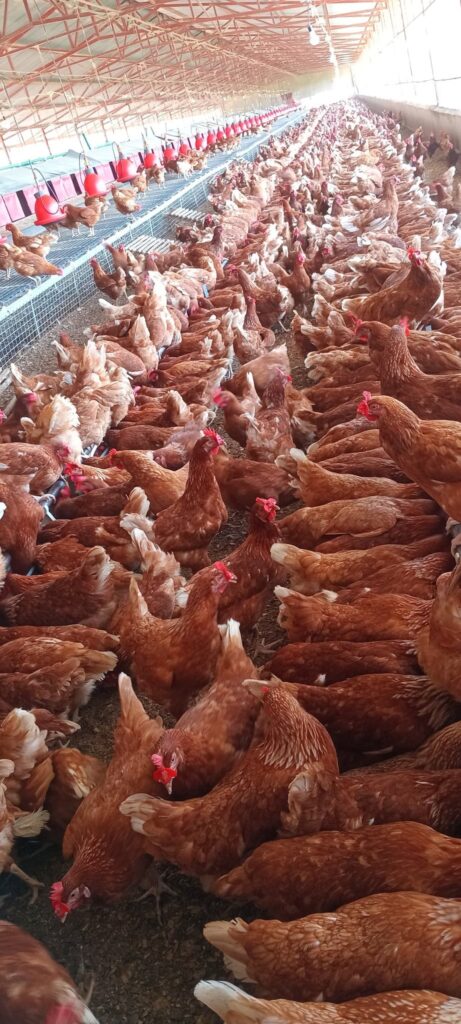
    Many layer chicken kept for eggs in a big poultry house.
    Point of lay chicken in a massive layer poultry farm.

    1. The Seller

    First, look at the person selling the birds.

    This is not optional. In fact, ignore this at your own risk.

    You are not just buying chickens. You are doing business with a human being. And not every person deserves your money.

    So ask yourself:

    – Is this seller trustworthy?
    – Does he keep his word?
    – Would you buy from him again?


    On the other hand, some people have a history. They lie. They cheat. They change stories. Many farmers lose money this way, not by bad luck, but by bad people.

    Because of that, do your due diligence.

    People do business with people they like and trust. Therefore, if something feels off, walk away. Another seller will always exist.


    2. Health Of The Birds

    Next, check the health of the chickens.

    Healthy birds make money. Sick birds kill farms.

    As soon as you arrive at the farm, start observing. Use all your five senses. This is one of the fastest ways to understand what you are dealing with.

    But here I’ll show you how to use three.

    First Listen.

    Are the birds making sound? A healthy flock is active and noisy. Weak birds are often quiet.

    Then Look, carefully.

    Check how they move. Watch how they eat. Observe how they scratch and peck. Also look at their feathers, their eyes, and even their droppings.

    After that, touch them.

    Feel the feathers. Check the comb. Notice the body condition. A good bird should feel strong, not weak or light.


    Finally, weigh a sample.


    You do not need to weigh all birds. Still, take a reasonable sample size. Weight helps you estimate age and feeding quality.

    Because of this, health and weight work together. If both are off, that is a red flag.


    3. Vaccination Record

    Now, ask for the vaccination record.

    Many farmers ignore this step. Others do not even know they should ask.

    But vaccination is not optional. It is critical for survival.

    Most sellers will tell you their birds are vaccinated. Do not trust words. Ask for proof.

    You need to see the actual record.

    If it is not documented, it was not done.

    In medical school, we follow a simple rule: if you did not write it, you did not do it to the patient.

    The same logic applies here.

    So, check the document. Confirm the dates. Make sure it makes sense.

    If the seller cannot provide it, assume the birds are not vaccinated.

    Therefore, unless you want future problems, walk away.

    4. Breed

    Next, confirm the breed.

    This is very important.

    There are real cases where farmers buy birds thinking they are commercial layers. Months later, production stays below 50%.

    Why?
    Because they bought improved chickens instead of hybrid layers.

    Breed determines productivity.

    No matter how well you feed a local or improved bird, it will not perform like a hybrid layer. It was not designed for that.

    Because of this, verify what you are buying.

    If possible, carry an expert. Alternatively, learn basic breed identification yourself.


    5. Sex Of The Birds

    Then check the sex.

    It sounds obvious, but mistakes happen.

    Imagine buying 1,000 point of lay chickens. You prepare your farm. You wait for eggs. Then one day, your neighbour visits your farm and tells you you have nice cocks.

    Yes, it happens.

    And it is costly.

    Because of that, confirm the birds are female.

    Learn how to identify them. If you are not confident, bring someone who is.

    This step alone can save your entire investment.


    6. Age Of The Chicken

    Next, confirm the age.

    Age affects both price and production timing.

    Point of lay chickens should be close to laying. If they are too young, you will spend more time feeding them before seeing returns.

    One way to estimate age is through weight. That gives you a rough idea.

    However, do not rely on guesswork alone.

    Ask for proof.

    Request documents showing when the birds were purchased or delivered. This can be invoices, records, or even dated photos.

    Make sure you combine your observation with evidence.

    Never depend on assumptions.

    7. Price

    Finally, comes the price.

    Business must make sense for both sides.

    The seller wants profit. You also need profit. That means the deal must be a win-win.

    Because of that, go prepared.

    Know your numbers before you arrive. Understand the maximum price you can pay and still make money during the laying cycle.

    Do not guess. Do not hope. Calculate.

    While negotiating, be fair.

    Do not pressure the seller too much. Sometimes people are selling because they are struggling. Do not exploit that.

    At the same time, do not get pressured.

    Some sellers will justify very high prices with long stories. Stay calm. Stick to your numbers.

    If the price does not work, walk away.

    So now you know how to choose point of lay chickens the right way.

    This system protects your money.

    With this checklist, you are not guessing anymore. You are making a decision like a serious farmer.

    And that is how profitable farms are built.

    One Last Thing

    Buying POL does not mean you should ignore brooding.

    Every poultry farmer must understand brooding. Things change. Plans fail. Sometimes you will need to start with day-old chicks.

    So be prepared.

    If you want to learn how to brood chicks like a pro, I created this Free Brooding Guide for you.

    Free Brooding Guide For Poultry Farmers. Zero (Minimal) Mortality Brooding. How To Brood Your Chicks Like A Pro. By Carlos Deche Guide At Secret Layers
    Name
    Limited access. Join other serious farmers who have taken the guide and get support.

    Get your copy. Study it. Use it.


    See you next Friday!

  • The 7 Farming Books That Will Make You A Millionaire

    So you want to become a successful farmer, and everyone keeps telling you to read books.

    The problem is, most farmers do not have the time for that.

    Over the past two years, I have gone through hundreds of books.
    More than 40 of them were focused on farming.

    Some were practical.

    Others were too focused on specific farms.

    A few were very general.

    Some were investigative.

    Others were memoirs.

    These are the ones I liked most.

    In this post, I will break down 7 of those books into the core lessons you can actually use on your farm.

    Now, I am still in the building and learning phase of my farming journey (as of 2026).

    Most of my time has gone into studying, observing, and learning from successful farmers across Africa and the world.
    That is how I have been preparing to do this the right way.


    If you apply the lessons in this post, you will have a clearer direction and stronger principles for your farm.

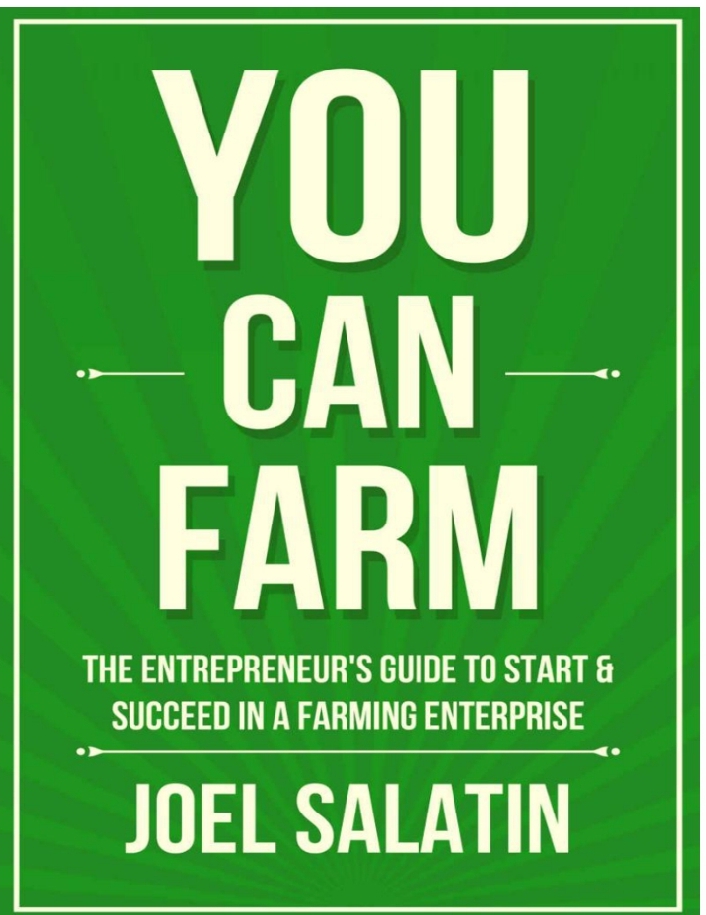
    1. You Can Farm by Joel Salatin

    This is the first farming book I ever read.
    Joel Salatin is one of the most well-known farmers in the world.

    Search his name and you will quickly see his strong views on farming and even politics.

    He has written over 14 books and co-authored others.
    And yes, he is a farmer.

    So much for the idea that farmers are not thinkers.

    You can farm - Farming book by Joel salatin
    You Can Farm by Joel Salatin. The first ever farming book that I read.

    Here’s What You’ll Learn..

    How to develop a vision for your farm.
    Many farmers ignore this at the beginning.
    Later, they are forced to figure it out the hard way.


    The 10 commandments for succeeding in farming.
    These focus on discipline and commitment.
    One key idea he emphasizes is being resourceful, which is something I strongly agree with as I say in my DR.STARR Framework.

    How to start and grow your farm
    You do not have to stay small or repeat the same thing for years.

    2. Your Successful Farm Business by Joel Salatin

    One of the best pieces of advice I ever heard is this: read authors, not just books.

    That is why I picked another book by Joel.

    Compared to You Can Farm, this one focuses on running the farm as a business.

    Here’s What You’re Going To Learn…

    Principles for running a farm business.
    Can you imagine, these include living frugally.
    Many farmers make money, then spend it badly and struggle the next season.


    Direct marketing
    Selling directly to customers is one of the best ways to increase profit.


    Using a team well
    A team is not a problem.
    Think of it like adding a turbo to your farm when managed properly.


    New opportunities in farming
    These include agritourism, edutainment, and farm schools.

    3. Start Your Farm by Forrest Pritchard and Ellen Polishuk

    If you have common questions about farming, this book answers them.

    Ellen and Forrest go deep into beginner concerns.

    This Is What You’ll Learn..

    How to learn farming
    You do not always need formal agricultural school.

    Do you need land to start?
    The answer is not always what people expect.


    The importance of the market
    This is one of the strongest parts of the book.
    It is given a lot of attention for a reason.
    I have talked about this many times.
    The market is often more important than capital.
    Many farmers ignore this, get into production, and struggle later.
    I almost made the same mistake myself.

    4. Mini Farming by Brett L Markham

    If you are concerned about the food you buy and want to produce your own, this book is for you.

    Many people think lack of land is the main problem.

    That is not always true.

    What You’ll Learn In This Book..

    You do not need large land.
    Not 10 acres.
    Not 5.
    Not even 1 acre.
    You can farm on 1/4 acre

    That small space can support crops, poultry, and livestock.

    How to become self-sufficient
    You can produce most of your food at home.


    How to preserve and sell surplus
    Extra production should never go to waste.

    5. Glorious Beef by Pat La Frieda

    Think about this for a moment.

    What if your farm supplied top restaurants and supermarkets in your country?

    That is the level this book shows.

    It is a story of how a small family business grew into a multimillion-dollar company.

    Here’s what You’ll Learn..

    Farming is business
    Decisions matter just as much as production.


    How to grow a serious operation
    You see what it takes to build something big.


    Working with other farmers
    Collaboration can help you scale.


    Understanding product quality
    Knowing what makes the best product (beef, meat, eggs or whatever) is part of the business.

    After reading this, I started thinking differently about the quality of food that I eat,especially beef.

    6. Invisible Giant by Brewster Kneen

    Have you ever heard of Cargill?
    It is one of the largest private companies in the world.

    At one point(2025), it had over 150,000 employees and revenue over $150 billion.

    This book shows what it takes to build something like that.

    Here’s What You’ll Get From It..

    Understand scale.

    Big companies grow through systems and time.


    Applying the lessons on a small farm.
    You can still use these ideas even at a small level.


    Think big
    Growth starts with mindset.
    You may not build something that large.
    Still, the thinking can push you ahead of many farmers.

    7. 40 Chances by Howard G Buffet,with Howard W Buffet, forwarded by Warren E Buffet

    Yes, this is from the Buffett family.

    Three generations connected to business and impact.

    This book focuses on purpose.

    What You’ll Learn..

    You only have a limited number of seasons
    Farming time is not endless.

    About 40 to be exact. Hence the name 40 Chances.


    Purpose matters
    Farming is not just about money or status.


    You need direction
    Vision, mission, and values keep you going when things get hard.


    Farming affects the world
    Food production connects to hunger and global challenges.


    This book helps you see farming in a bigger way.


    These are the 7 books I wanted to share with you.

    As you can see, farming is not just about farming.
    There is business.
    There is self-sufficiency.
    There is purpose.


    I will keep updating this list as I continue learning.

    You only need one idea from a book to change your farm.
    And you never know which book that is.

    Before You Go

    I am currently writing a book for farmers whose main theme is ‘Before You Start Your Farm’

    If you’re reading this after the book is out, make sure you get yourself a copy.


    For now, I have created two simple guides:


    If you want to start a profitable layer poultry farm, get this Free Guide.

    Free beginners guide to starting a profitable layer poultry farm. Step by Step guide.
    Name
    Limited access. Join other serious farmers who have taken the guide and get support.


    If your chicks keep dying in the first month, get the free brooding guide.

    Free Brooding Guide For Poultry Farmers. Zero (Minimal) Mortality Brooding. How To Brood Your Chicks Like A Pro. By Carlos Deche Guide At Secret Layers

    Name
    Limited access. Join other serious farmers who have taken the guide and get support.

    Both are practical and easy to apply.


    See you next Friday!

  • 5 Reasons Why I Will Never Use Azolla Or BSFL On My Farm

    Save feed costs on your poultry farm!
    Use azolla! Use black soldier fly larvae! Use hydroponic fodder!

    These are ideas you hear everywhere as creative ways of lowering poultry feed costs on your farm. In fact, azolla is the most popular of them all and has gained global attention.

    Last week, I made a post about 4 cheap poultry feed options you can use on your poultry farm.

    These feed sources promise many farmers something very attractive. Moreover, the promise is not only for poultry farmers but also for livestock farmers.

    The promise is simple.

    First, they say you will make more profits. Second, they claim you can defeat what I call the biggest monster in poultry farming — feed costs.

    However, is it really true? Do these cheap poultry feed alternatives really increase profits the way marketers claim?

    Meanwhile, businesses have been built around azolla and black soldier fly larvae poultry feed (BSFL). Some entrepreneurs even produce tonnes of BSFL every week.

    In addition, influencers have built entire online brands around azolla farming.

    Therefore the real question becomes this:
    Are these alternative poultry feeds truly helpful, or are they just another gimmick that keeps farmers stuck in the same vicious cycle?

    In this blog post, I will give you five reasons why I would never use alternative poultry feeds on my farm.

    However, there is one condition where I would use them. Keep reading to find out.

    1. They Are For Small Farms

    You have a 10,000 layer chicken farm. Alternatively, imagine running a 100-cow dairy farm.

    Would you consider using black soldier fly larvae poultry feed for your chickens?
    Or would you consider using azolla as cattle feed supplement?

    Maybe you said yes. And honestly, I respect that.

    However, I would not.

    Think about the scale for a moment.

    How many tonnes of BSFL would you need for the chickens? Likewise, how many tonnes of azolla would your cows require?


    To make it worse, how many truckloads of garden or kitchen remains would you need to produce that amount?

    The truth is simple. Most alternative poultry feeds work very well for small farms.

    For example, if you have 500 chickens, azolla and BSFL can significantly reduce your poultry feed costs.

    However, these options become almost useless for large-scale farmers like in the examples above.

    A good example is Dr. Daniel Masaba, one of the most successful layer farmers in Uganda. He once tried using azolla and BSFL to reduce feed costs on his farm.

    However, he later abandoned the idea.
    In one of his videos, he explained that the system was not feasible for a large-scale poultry farm.
    At that time, he had around 7,500 layers.

    The reason is clear. The amount of production required to feed a large flock becomes massive.

    Therefore, without serious infrastructure and capital, producing your own alternative poultry feeds can become more expensive than simply buying commercial poultry feed.

    2. They Are Not Nutritionally Sufficient

    Another problem is that alternative poultry feeds are not replacements for commercial poultry feed.
    Instead, they act as supplements.

    In other words, they are similar to the vitamins and minerals farmers add to feed. However, in this case, you must use larger quantities.

    That is where the problem starts.


    Yes, these feeds may reduce costs. However, by how much?
    Certainly not 50%.

    By the way, tell me in the comments: what percentage of feed costs do you think azolla or BSFL actually reduce?

    Interestingly, many farmers cannot even say exactly how much money they are saving.

    Meanwhile, if azolla, BSFL, and hydroponic fodder could completely replace commercial feed, I would be among the first people to use them.

    Why?
    Because feed prices are brutal right now. Every poultry farmer knows that feed costs are killing profits.

    But the reality is different.
    Even after preparing these alternative feeds, farmers still have to buy commercial poultry feed.

    Therefore the farmer does extra work while still paying the same major cost.
    For me, that is still a tough game.

    3. You Cannot Measure The Nutrients

    Layer chickens and broilers both require very specific nutrition at different stages of growth.

    For example, growing layers need higher protein levels. Later, laying hens require higher calcium levels for strong eggshells.

    Fortunately, commercial feed companies calculate these values very carefully.

    As a result, each bag of poultry feed contains balanced levels of:

    -Protein

    -Energy

    -Calcium

    -Vitamins

    -Minerals

    Because of this system, guessing is removed and errors are very unlikely.

    However, the same cannot be said for most alternative poultry feeds.

    Standard nutrient estimates exist for azolla and BSFL. Unfortunately, those numbers may not match what you actually produce.

    For example, how much protein is in your azolla pond today?

    Even worse, how much protein is in your leftover cabbage or kitchen remains?

    Honestly, you cannot know unless you send the sample to a laboratory.
    As a result, birds may receive insufficient poultry nutrition.

    Eventually, that problem begins to show in production.

    You may start seeing:

    -Fewer eggs

    -Small egg size

    -Weak eggshells

    Sadly, many farmers blame the feed company.
    Meanwhile, the real cause might be the alternative poultry feeds being used.

    4. They Are Hard To Produce Consistently

    Personally, I like simple systems most of the time.

    If you also like simple systems, I created a Free ebook for you.

    It is a guide for starting and running a profitable layer poultry farm.

    Free beginners guide to starting a profitable layer poultry farm. Step by Step guide.
    Name
    Limited access. Join other serious farmers who have taken the guide and get support.

    Gey your copy Now!

    Now let’s compare the effort involved.

    Compared to producing your own formulated poultry feed, raising azolla or BSFL may seem easier.

    However, compare those systems to simply buying ready-made commercial poultry feed.

    In that situation, I would still choose commercial feed.

    The reason is consistency.

    Producing alternative poultry feeds correctly requires several steps:

    -Proper preparation

    -Understanding the nutrient composition

    -Formulating correct feed ratios

    -Maintaining the system daily

    In addition, farmers must do this every single day to keep results stable.
    Therefore the system becomes harder than simply purchasing high-quality poultry feed.

    However, if the benefits clearly outweigh the extra effort, then the work may be worth it.

    Ultimately, that decision becomes a personal choice for each farmer.

    5. Health Risks To Your Chicken

    Imagine trying to reduce feed costs and accidentally killing your chickens.

    That situation would be a farmer’s worst nightmare.

    Fortunately, reported cases of problems from alternative poultry feeds are rare.

    However, rare does not mean impossible.

    Commercial poultry feeds are usually processed under controlled conditions. In addition, they often contain coccidiostats and quality controls.

    Meanwhile, homemade feed systems can introduce new risks.


    For example, kitchen remains might already be decomposing, food remains may contain spices or substances harmful to poultry.

    Azolla can also become dangerous if it grows in dirty or contaminated water.
    Poor storage can also lead to spoilage or fungal growth.

    Meanwhile, black soldier fly larvae can transmit disease if they are reared or stored in unsanitary conditions.
    Although such problems are uncommon, they are still possible.

    Unfortunately, farmers may not even realize that the alternative poultry feed is the real cause of illness in their birds.

    When Would I Use Azolla Or BSFL?

    Those are the five reasons I would not use alternative poultry feeds on my farm.

    However, there is one situation where I might use them.

    That situation is simple.

    I would consider them only if I planned to run a small farm.

    However, that is not my plan.

    In fact, the book I am currently writing contains a full chapter called “Before You Start Your Farm.”

    One key idea in that chapter is this:
    Think big. Build big.

    That message is also central to the Secret Layers community.


    Earlier, I published a post about five powerful solutions to high animal feed costs.

    In that article, my first solution was simple:
    Go big.

    Large-scale farms benefit from economies of scale, better systems, and stronger profit margins.

    Therefore my advice is clear.
    Do not think small.
    Do not stay small.
    Most importantly, do not fall into the trap of farming trends that do not scale.


    See you next Friday!

    secretlayerske@gmail.com
    carlosdeche4040@gmail.com

  • Should You Really Vaccinate Your Chicken? The Truth!

    Should you vaccinate your chicken or not?

    That question has been debated for many years among poultry farmers.
    Although many people think the answer is obvious, the reality on the ground tells a different story.


    Before we go further, let me ask you something.

    Did you get the COVID-19 vaccine?

    If you did, did you complete all the doses?

    As of late 2024, about 70% of the global population received at least one COVID-19 vaccine dose. However, in many low-income countries like Kenya, only about 38.9% received even the first dose.

    Therefore, vaccine hesitancy is not just a chicken problem. It is a human problem too.

    For the record, I received my full COVID-19 vaccination.

    Because I am in my final year of medical school at the University of Nairobi, I understand how vaccines work in both humans and animals.

    Now, let us apply those same principles to poultry farming.


    In this article, I will:

    Explain how vaccines work.


    Address common concerns about chicken vaccination.


    Give five clear reasons why you should vaccinate your chickens.


    Share practical tips to avoid costly mistakes.


    Ultimately, the final decision is yours. However, I encourage you to read carefully so you can protect your birds, your customers, and your profits.

    How Do Vaccines Work?

    Let me simplify how vaccines work.

    Normally, when a disease attacks a chicken, the body produces “soldiers” (antibodies) to fight the virus, bacteria, or parasite. If the chicken’s immunity is strong, those soldiers destroy the disease before serious signs appear.

    However, when immunity is weak, the disease multiplies. As a result, the chicken becomes sick and may die.

    Fortunately, when a chicken survives an infection, the body keeps memory cells. Because of that memory, the body can respond faster if the same disease attacks again.


    So how does a vaccine help?

    Simply put, a vaccine contains a weakened or killed form of a disease. When you give it to a healthy bird, the body produces soldiers without causing full disease.

    Later, if Newcastle disease, Gumboro (Infectious Bursal Disease), Fowl Pox, or Infectious Bronchitis attacks, the bird is already prepared.

    Consequently, the immune system responds quickly and strongly.
    That is the basic science behind chicken vaccination.

    Layer Chicken Vaccination
    Despite what you might have heard, vaccinating your chicken is more beneficial than harmful and honestly, a MUST.

    5 Common Concerns About Poultry Vaccination

    Although vaccines are widely used in layer poultry farming in Kenya, many farmers still have concerns.

    Let us address them honestly.

    1. Vaccines Make Birds Sick And Kill Them

    Yes, vaccines can cause mild reactions. However, serious death from vaccines is rare when birds are healthy.

    In most cases, problems happen because:

    The birds were already sick.

    The wrong dosage was used.

    The vaccine was poorly stored.

    Biosecurity was weak.


    Therefore, proper poultry biosecurity and correct handling are critical.

    2. Vaccines Do Not Work

    It is true that vaccines are not 100% effective. However, no medical intervention in the world is 100%.

    Even so, vaccinated flocks have much lower mortality during outbreaks of Newcastle disease or Gumboro compared to unvaccinated flocks.

    In other words, vaccination reduces risk. It does not eliminate risk completely.

    3. Vaccines Contaminate Eggs And Meat

    Some farmers worry that vaccines remain in the chicken’s body and make eggs unsafe to eat.

    However, approved poultry vaccines are tested for safety. Most do not remain in meat or eggs in harmful amounts when used correctly.

    In fact, vaccination often improves food safety by reducing diseases like Salmonella that can contaminate eggs.Therefore, following proper dosage and observing recommended guidelines ensures both bird health and consumer safety.

    4. Vaccines Are Expensive

    Some farmers believe chicken vaccination increases production costs.
     
    At first glance, that concern makes sense because every input on a poultry farm affects profit.However, vaccines usually make up a very small percentage of total farm costs.
     
    In most layer poultry farms in Kenya, vaccination costs are only a small fraction of feed, housing, and labor expenses.
     
    Therefore, the real question is not “Are vaccines expensive?”
     
    Instead, the better question is, “Compared to what?”
     
    Because disease outbreaks like Newcastle disease or Gumboro can wipe out an entire flock, skipping vaccination is often the more expensive decision in the long run.
    We will look at the actual numbers shortly.

    5. Conspiracy Theories

    Some people say vaccines are brought to kill our birds so that large companies control the egg market.
     
    Others claim vaccines are just a money-making scheme.
     
    However, these simply lack evidence and cannot be supported.

    So, Should You Vaccinate Your Chicken?

    Yes.
    Here are five practical reasons:

    Get this Free Layer Poultry Farming Ebook straight to your inbox if you want to start a profitable farm:

    Free beginners guide to starting a profitable layer poultry farm. Step by Step guide.
    Name
    Limited access. Join other serious farmers who have taken the guide and get support.

    1. To Prevent Disease

    Vaccines were created to prevent disease before it destroys lives or flocks.
     
    For example, vaccination helped eliminate polio in humans and reduce tetanus worldwide.
     
    Similarly, using a proper chicken vaccination schedule protects your birds from deadly poultry diseases.

    2. To Reduce Mortality

    When your birds are protected, fewer die during outbreaks. Meanwhile, unvaccinated farms suffer heavy losses.
     
    Imagine an outbreak of Infectious Bronchitis in your area. In that situation, vaccinated birds are far more likely to survive than the unvaccinated flocks.

    3. Herd Immunity

    When most birds in a flock are vaccinated, disease spreads more slowly. As a result, even birds that missed vaccination may have some protection.
     
    Nevertheless, you should always aim to vaccinate the entire flock properly.

    4. Better Quality Produce

    Food safety matters.
    Although salmonella contamination is a known global problem, proper vaccination and good hygiene reduce the risk significantly.
     
    In fact, some egg buyers and large distributors require proof of a proper chicken vaccination schedule before purchasing eggs.
     
    Therefore, vaccination supports both public health and market access.

    5. To Save And Make Money

    Every poultry farmer is in business to make profit.

    Because disease reduces egg production, increases mortality, and raises treatment costs, it directly eats into your income. Vaccination protects your cash flow.

    Let us look at the numbers..

    Ksh 5,000 for vaccines or Ksh 200,000 loss from total flock death.

    Ksh 5,000 for vaccines or Ksh 50,000 spent on treatment.

    Ksh 5,000 investment or Ksh 500,000 lost egg income over two years.

    Clearly, this is not just about disease prevention. It is about protecting your business.

    As the saying goes, if education is expensive, try ignorance.

    Likewise, if vaccines seem expensive, try treating Newcastle.

    Practical Tips For Vaccinating Your Chicken

    First, remember that proper biosecurity is your strongest protection.

    Second, consult a local poultry vet about common diseases in your area.
     
    Third, vaccinate birds before they get sick. Vaccines prevent disease; they do not cure it.
     
    Finally, get a clear vaccination schedule from a reputable day-old chick supplier.

    Now You Have The Facts

    At this point, the decision is yours.
     
    However, if you are serious about layer poultry farming in Kenya, protecting your flock should be a priority.
     
    So ask yourself again: Should you vaccinate your chicken?
     
    If your goal is healthy birds, safe eggs, and steady profits, the answer is clear.
     
    If you found this helpful, read my detailed guide on the best layer chicken vaccination schedule for layers to choose the one that fits your farm.

    See you next Friday!

    carlosdeche4040@gmail.com

    secretlayerske@gmail.com

  • How Online MarketPlaces Can Save Farmers From Middlemen


    Let me tell you my story. I’m from Tezo, Kilifi County, about 10 km from Kilifi town. Sometimes, I buy one tomato for Ksh.10. On the best days, I’ve bought a single tomato for just Ksh.5.


    For someone who doesn’t know the supply chain for agricultural produce, that may seem normal. However, a deeper look—or just a quick search on Google—reveals the truth. It’s shocking and a little terrifying.


    In 2024, tomato prices in Kirinyaga dropped to Ksh.15 per kilogram. When a farmer sells that kilo for Ksh.15 to a middleman, the price in Kilifi jumps to around Ksh.70–100 per kilogram. That is a huge difference, and it shows how much profit is being captured by middlemen instead of the farmers who grew the tomatoes.


    Imagine if I could check online and see a farmer in Kirinyaga selling tomatoes for Ksh.40 per kilogram. I would buy immediately. I would pay Ksh.30–50 less. At the same time, the farmer would earn Ksh.25 more, which is a 167% increase. This kind of win-win situation is exactly what online marketplaces could make possible.


    It’s not as simple as it sounds. Many farmers in Kenya already use social media like WhatsApp, Facebook, Instagram, and TikTok to sell their produce. It works for some, but there are challenges that make it hard to scale and provide real value for both farmers and consumers.


    Today, let’s focus on farmers online marketplaces, like Mkulima Young, Mkulima Bora, and Mkulima Online. These are different from social media platforms.

    What Can They Do To Help Me Buy 2 kg Of Tomatoes From Kilifi At A Fair Price While Also Ensuring That Farmers Earn More?

    1. Logistics


    Farmers often cannot sell to all individual buyers across the country because transporting small amounts of produce is expensive. If they try to deliver on their own, the cost may wipe out their profits. Middlemen solve this problem by collecting from many farmers and delivering to consumers, but they usually pay farmers very low prices.


    Online marketplaces need a reliable logistics system to solve this problem. They can either build their own delivery network or partner with delivery companies. By solving this hurdle, marketplaces can help farmers sell at fair prices while making sure consumers still pay less than they would at the market.

    2. Trust


    Trust is one of the biggest challenges. No buyer wants to pay for goods that never arrive, and no farmer wants to deliver produce without being paid. Many online platforms in Kenya struggle because buyers and farmers are unsure whether the other party can be trusted.


    Even though M-Pesa exists for safe payments, many buyers prefer to negotiate on WhatsApp. People feel more control and security when they can see and communicate directly with the seller. Platforms like Jumia show that trust can be built over time with consistent service and marketing, but it takes years and a big budget to convince buyers to feel safe using a platform.

    3. Business Model


    Another important challenge is the business model itself. Should online marketplaces sell directly to consumers or focus on mama mbogas? A B2B (business-to-business) model could actually be more effective.


    In this approach, farmers sell at higher prices to the platform. The platform then sells to mama mbogas at lower prices than the middleman would charge. Finally, consumers get fresh produce at lower prices from the mama mbogas. This system ensures that everyone benefits: farmers earn more, mama mbogas pay less, and consumers get better prices.


    Twiga Foods uses a similar model. They buy produce directly from farmers at fair prices and supply mama mbogas reliably. Even though they act like a large middleman, they are more predictable and less exploitative. Online marketplaces could adopt this strategy to create a fairer agricultural supply chain.

    What Next?


    Farmers online marketplaces can succeed if they solve logistics, trust, and business model challenges. Platforms that address these issues will empower farmers, reduce middlemen exploitation, and make fresh produce more affordable for consumers. In the future, these marketplaces could even help farmers export produce across Africa and the world.


    Do you think online marketplaces can really help farmers escape middlemen?

    I’d love to hear your thoughts in the comments.

    Follow my YouTube channel to learn more about how you can start and run a profitable layer poultry farm👇🏿

    https://youtube.com/@secretlayerske?si=nYnAL-jwN6Wc3PlV

    See you next Friday!

    carlosdeche4040@gmail.com

    secretlayerske@gmail.com