Tag: Poultry farming tips

  • 9 Common Layer Chicken Diseases And How To Recognize Them Early

    Diseases in layers can reduce egg production, slow growth, and even kill birds if a farmer does not act early.

    Many problems start with small signs, so it helps to know what to watch for.


    First, always observe your birds every day. Early action saves money and protects the flock.

    These are the common chicken diseases in layers,how to recognize them early and how to treat them.

    1. Marek’s Disease

    Marek’s disease is a viral disease caused by a herpes virus. It spreads when birds inhale infected dust or feathers.

    Signs to look for:

    Paralysis of one leg or both legs.

    Incoordination

    Drooping wings or neck.

    Weight loss and poor appetite.

    Rough feathers .

    Depression.

    Tumors or swellings.

    Drop in egg production.


    Prevention is by vaccination at an early age.

    Mainly given on day one at the hatchery if you buy from reputable hatcheries.

    2. Infectious Bursal Disease (Gumboro)

    This disease is caused by the IBD virus. It weakens the immune system, so birds get sick easily.

    Signs to look for:

    Watery diarrhea.

    Wet and soiled feathers.

    Poor feeding.

    Ruffled feathers.

    Weakness and incoordination.


    Vaccination is the best prevention.

    3. Coccidiosis

    Coccidiosis is a protozoal disease that affects the gut. Birds get it by eating oocysts from contaminated litter or soil.

    Signs to look for:

    Bloody or mucoid diarrhea.

    Low feed intake and weight loss.

    Dehydration.

    Pale comb and wattles.

    Drop in egg production.

    It is usually self limiting – meaning it goes away without treatment so long as the birds are healthy.


    Wet litter increases risk because it helps the parasite multiply.

    Treatment is with anticoccidial drugs, and sometimes antibiotics are used to control secondary infections.

    4. New Castle Disease

    Newcastle disease is a highly contagious viral disease.

    It affects the nerves, breathing system, and egg production.
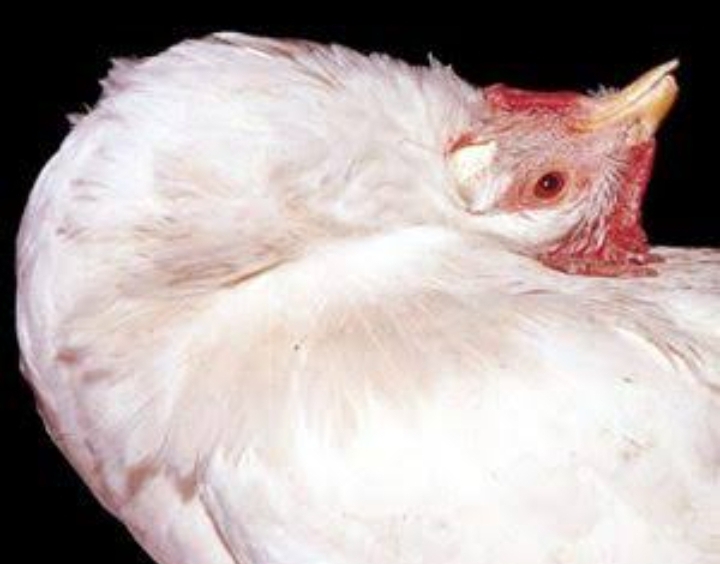
    Neck twisting. Common in New Castle Disease. In a secret layers blog post of 9 Common layer chicken diseases.
    Neck twisting in a chicken. Commonly seen in New Castle’s Disease.

    Signs to look for:

    Twisted neck and circling.

    Wing drooping and paralysis.

    Tremors.

    Sneezing and coughing.

    Greenish diarrhea.

    Soft or deformed eggs.

    Sharp drop in egg production.

    Vaccination is essential for prevention.

    5. Infectious Coryza

    Infectious coryza is a bacterial respiratory disease. It spreads quickly in a flock.

    Signs to look for:

    Facial swelling around the eyes and cheeks.

    Thick, bad-smelling discharge from eyes or nose.

    Noisy breathing or open-mouth breathing.

    Poor appetite.

    Pale combs and wattles.

    Drop in egg production.


    Treatment is with antibiotics and good hygiene.

    6. Fowl Pox

    Fowl pox is a viral disease caused by the avian Pox virus.

    It has two forms:

    Dry Form/Cutaneous

    Scabs or lesions on comb, wattles, and legs.

    Wet Form/Diphtheric

    The wet form is more serious because:

    Lesions form in the mouth and throat.

    Birds have trouble breathing or swallowing.

    Feeding decreases and production drops.


    Vaccination helps prevent this disease.

    7. Infectious Bronchitis

    Infectious bronchitis is another viral respiratory disease.

    Signs to look for:

    Coughing and sneezing.

    Nasal discharge.

    Gasping and breathing sounds.

    Wrinkled or poor-quality eggs.

    Reduced egg production.

    Facial swelling.

    Vaccination and good ventilation help control it.

    8. Worm Infestation

    Worms are internal parasites that affect growth and production.

    Signs to look for:

    Weight loss.

    Diarrhea, sometimes with worms.

    Pale comb and wattles.

    Low egg production.

    Lethargy.

    Regular deworming helps prevent heavy infestation.

    9. Fowl Typhoid

    Fowl typhoid is a bacterial disease that can cause heavy losses.

    Signs to look for

    White diarrhea stuck on feathers.

    Poor feeding and weight loss.

    Weakness and ruffled feathers.

    Pale comb and wattles.

    Reduced egg production.

    Treatment is with antibiotics and strict hygiene.

    Which of these diseases has been disturbing you on your farm?

    Let me know in the comments.

    Treatment Principles

    When disease appears, act quickly.

    First, isolate sick birds to stop spread.

    Next, provide clean water and good feed to support recovery.

    Finally, use vaccination, antibiotics, or other drugs only when appropriate and based on the disease.

    Consult your local veterinary.

    Vaccination Schedule

    After a long period of struggling with the proper vaccination schedule to use for my layers, I researched and found the best one.

    One simple schedule and the Kenchic one.

    Read here to know which is best for your farm👇🏿

    https://secretlayers.co.ke/blog/vaccination-schedule-for-layers-a-simple-guide-for-farmers/

    If you’re yet to start your layer poultry farm, get this Free guide to help you start.

    Name
    Limited access. Join other serious farmers who have taken the guide and get support.

    See you next Friday!

    carlosdeche4040@gmail.com

    secretlayerske@gmail.com
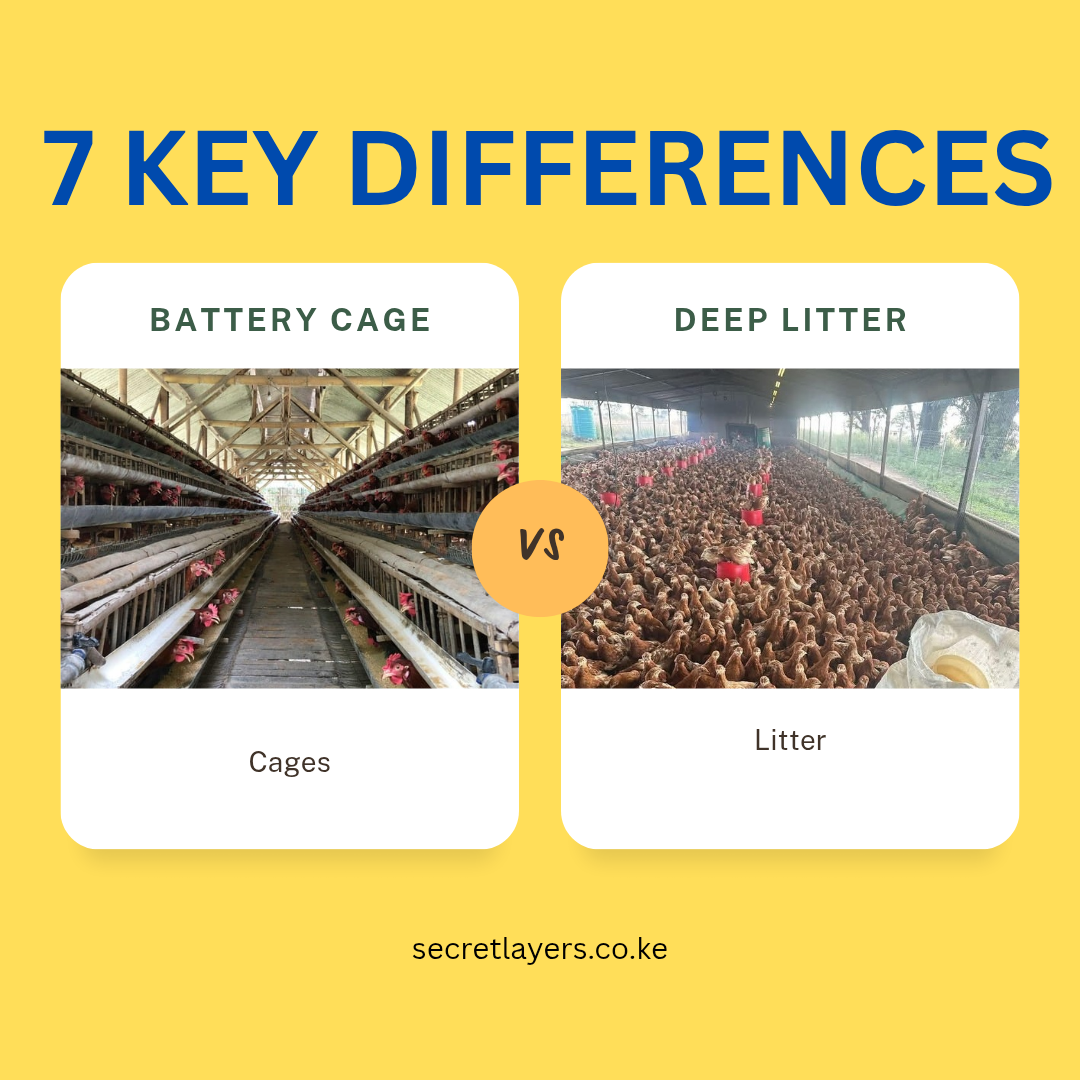
  • Battery Cage Vs Deep Litter : 7 Differences

    Battery cage vs deep litter system is one of the first choices every poultry farmer has to make.

    Many new farmers think they must buy cages to succeed. But the truth is simple: cages don’t lay eggs, birds do!

    So stop postponing your dream farm based on lies. In this post, I’ll show you 7 clear differences between battery cages and the deep litter system. With this, you’ll make the right choice for your farm.

    One of the many decisions a beginner layer farmer has to make.Read to know what to consider when deciding.

    1. SetUp Costs

    Battery cages are more expensive to buy and set up compared to deep litter.

    Why? Cages are made from galvanized metal. Deep litter, on the other hand, can use cheap by-products like coffee husks, rice husks, or wood shavings. While prices differ from place to place, cages will always cost more.

    If you’re short on cash, deep litter is a practical way to start. You can upgrade to cages later. Don’t buy cages just to look fancy and then end up starving your birds.

    2. Ongoing Costs

    The deep litter system has more ongoing costs than battery cages. Buying cages is a one-off cost for a batch of birds. You don’t keep buying them again. However, litter needs frequent replacement to prevent diseases.

    This means the deep litter system can feel more expensive in the long run. On the other hand, the initial investment for cages is heavier, which many farmers struggle with.

    3. Disease Management

    Disease spreads faster in deep litter than in battery cages.

    Since cage birds are separated, one sick hen is less likely to infect the rest. In addition, it’s easier to see and isolate sick birds in cages. In deep litter, birds mix freely, so transmission is quick and hard to control. Therefore, a disease outbreak in deep litter can cause higher losses. However, with proper vaccination, cleaning, and management, both systems can still keep birds healthy.

    4. Ease of Management

    It is generally easier to manage birds in cages than in the deep litter system.

    For example, farmers can vaccinate, count birds, collect eggs, and remove manure more quickly in cages. This reduces labor needs. If you hire workers, you may need fewer staff with cages, which saves money.

    On the other hand, deep litter gives birds more freedom, so management takes more time and effort.

    5. Space Required

    Cages make better use of limited space. Birds need less space per hen because cages are stacked vertically. This allows farmers to keep more layers in the same house. Therefore, if you have little land, cages might be your best solution. However, if you already have plenty of space, the deep litter system can still work well.

    6. Bird Happiness

    Happy birds produce better. Many farmers believe that birds in deep litter are happier because the system is closer to their natural environment. Although cages are more controlled, they limit bird movement. Think of it like life in high school—tight and controlled. Deep litter gives more freedom. However, happy birds do not always mean higher profits, so a farmer must balance welfare with production goals.

    7. Automation

    Automation should be the goal of every farmer who wants to grow big. It separates a business owner from someone who is self-employed. In this area, battery cages win. Because cages create a controlled environment, it is easier to automate egg collection, feeding, and cleaning. Deep litter is harder to automate since birds move freely, and conditions are less uniform.


    There you go! You now know the 7 main differences between battery cage vs deep litter system.

    Remember, there is no good or bad system. The right choice depends on your budget, space, goals, and beliefs. A farmer with limited cash may start with deep litter and upgrade later. Another farmer with limited land may go straight into cages.

    💬Let me know in the comments what you’re planning to use for your farm.

    Now that you’ve made your decision on the system, the next question is: what breed of layers will you keep? Check the top 3 layer breeds and learn the factors to consider when choosing a layer breed

    See you next Friday!

    carlosdeche4040@gmail.com

    secretlayerske@gmail.com