Tag: Entrepreneurship

  • The 7 Farming Books That Will Make You A Millionaire

    So you want to become a successful farmer, and everyone keeps telling you to read books.

    The problem is, most farmers do not have the time for that.

    Over the past two years, I have gone through hundreds of books.
    More than 40 of them were focused on farming.

    Some were practical.

    Others were too focused on specific farms.

    A few were very general.

    Some were investigative.

    Others were memoirs.

    These are the ones I liked most.

    In this post, I will break down 7 of those books into the core lessons you can actually use on your farm.

    Now, I am still in the building and learning phase of my farming journey (as of 2026).

    Most of my time has gone into studying, observing, and learning from successful farmers across Africa and the world.
    That is how I have been preparing to do this the right way.


    If you apply the lessons in this post, you will have a clearer direction and stronger principles for your farm.

    1. You Can Farm by Joel Salatin

    This is the first farming book I ever read.
    Joel Salatin is one of the most well-known farmers in the world.

    Search his name and you will quickly see his strong views on farming and even politics.

    He has written over 14 books and co-authored others.
    And yes, he is a farmer.

    So much for the idea that farmers are not thinkers.
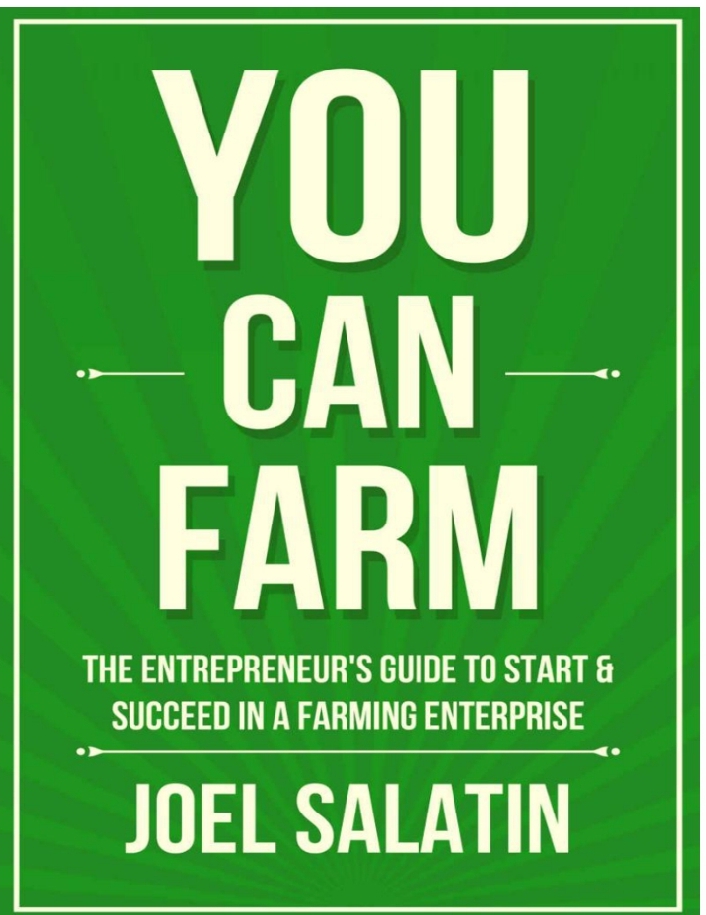
    You can farm - Farming book by Joel salatin
    You Can Farm by Joel Salatin. The first ever farming book that I read.

    Here’s What You’ll Learn..

    How to develop a vision for your farm.
    Many farmers ignore this at the beginning.
    Later, they are forced to figure it out the hard way.


    The 10 commandments for succeeding in farming.
    These focus on discipline and commitment.
    One key idea he emphasizes is being resourceful, which is something I strongly agree with as I say in my DR.STARR Framework.

    How to start and grow your farm
    You do not have to stay small or repeat the same thing for years.

    2. Your Successful Farm Business by Joel Salatin

    One of the best pieces of advice I ever heard is this: read authors, not just books.

    That is why I picked another book by Joel.

    Compared to You Can Farm, this one focuses on running the farm as a business.

    Here’s What You’re Going To Learn…

    Principles for running a farm business.
    Can you imagine, these include living frugally.
    Many farmers make money, then spend it badly and struggle the next season.


    Direct marketing
    Selling directly to customers is one of the best ways to increase profit.


    Using a team well
    A team is not a problem.
    Think of it like adding a turbo to your farm when managed properly.


    New opportunities in farming
    These include agritourism, edutainment, and farm schools.

    3. Start Your Farm by Forrest Pritchard and Ellen Polishuk

    If you have common questions about farming, this book answers them.

    Ellen and Forrest go deep into beginner concerns.

    This Is What You’ll Learn..

    How to learn farming
    You do not always need formal agricultural school.

    Do you need land to start?
    The answer is not always what people expect.


    The importance of the market
    This is one of the strongest parts of the book.
    It is given a lot of attention for a reason.
    I have talked about this many times.
    The market is often more important than capital.
    Many farmers ignore this, get into production, and struggle later.
    I almost made the same mistake myself.

    4. Mini Farming by Brett L Markham

    If you are concerned about the food you buy and want to produce your own, this book is for you.

    Many people think lack of land is the main problem.

    That is not always true.

    What You’ll Learn In This Book..

    You do not need large land.
    Not 10 acres.
    Not 5.
    Not even 1 acre.
    You can farm on 1/4 acre

    That small space can support crops, poultry, and livestock.

    How to become self-sufficient
    You can produce most of your food at home.


    How to preserve and sell surplus
    Extra production should never go to waste.

    5. Glorious Beef by Pat La Frieda

    Think about this for a moment.

    What if your farm supplied top restaurants and supermarkets in your country?

    That is the level this book shows.

    It is a story of how a small family business grew into a multimillion-dollar company.

    Here’s what You’ll Learn..

    Farming is business
    Decisions matter just as much as production.


    How to grow a serious operation
    You see what it takes to build something big.


    Working with other farmers
    Collaboration can help you scale.


    Understanding product quality
    Knowing what makes the best product (beef, meat, eggs or whatever) is part of the business.

    After reading this, I started thinking differently about the quality of food that I eat,especially beef.

    6. Invisible Giant by Brewster Kneen

    Have you ever heard of Cargill?
    It is one of the largest private companies in the world.

    At one point(2025), it had over 150,000 employees and revenue over $150 billion.

    This book shows what it takes to build something like that.

    Here’s What You’ll Get From It..

    Understand scale.

    Big companies grow through systems and time.


    Applying the lessons on a small farm.
    You can still use these ideas even at a small level.


    Think big
    Growth starts with mindset.
    You may not build something that large.
    Still, the thinking can push you ahead of many farmers.

    7. 40 Chances by Howard G Buffet,with Howard W Buffet, forwarded by Warren E Buffet

    Yes, this is from the Buffett family.

    Three generations connected to business and impact.

    This book focuses on purpose.

    What You’ll Learn..

    You only have a limited number of seasons
    Farming time is not endless.

    About 40 to be exact. Hence the name 40 Chances.


    Purpose matters
    Farming is not just about money or status.


    You need direction
    Vision, mission, and values keep you going when things get hard.


    Farming affects the world
    Food production connects to hunger and global challenges.


    This book helps you see farming in a bigger way.


    These are the 7 books I wanted to share with you.

    As you can see, farming is not just about farming.
    There is business.
    There is self-sufficiency.
    There is purpose.


    I will keep updating this list as I continue learning.

    You only need one idea from a book to change your farm.
    And you never know which book that is.

    Before You Go

    I am currently writing a book for farmers whose main theme is ‘Before You Start Your Farm’

    If you’re reading this after the book is out, make sure you get yourself a copy.


    For now, I have created two simple guides:


    If you want to start a profitable layer poultry farm, get this Free Guide.
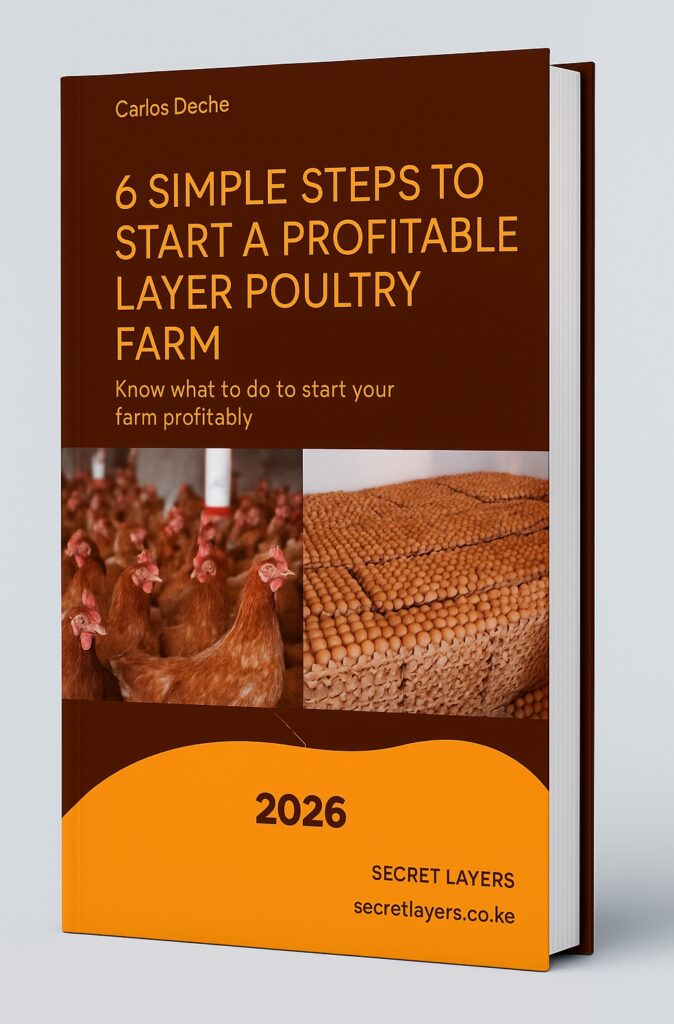
    Free beginners guide to starting a profitable layer poultry farm. Step by Step guide.
    Name
    Limited access. Join other serious farmers who have taken the guide and get support.


    If your chicks keep dying in the first month, get the free brooding guide.
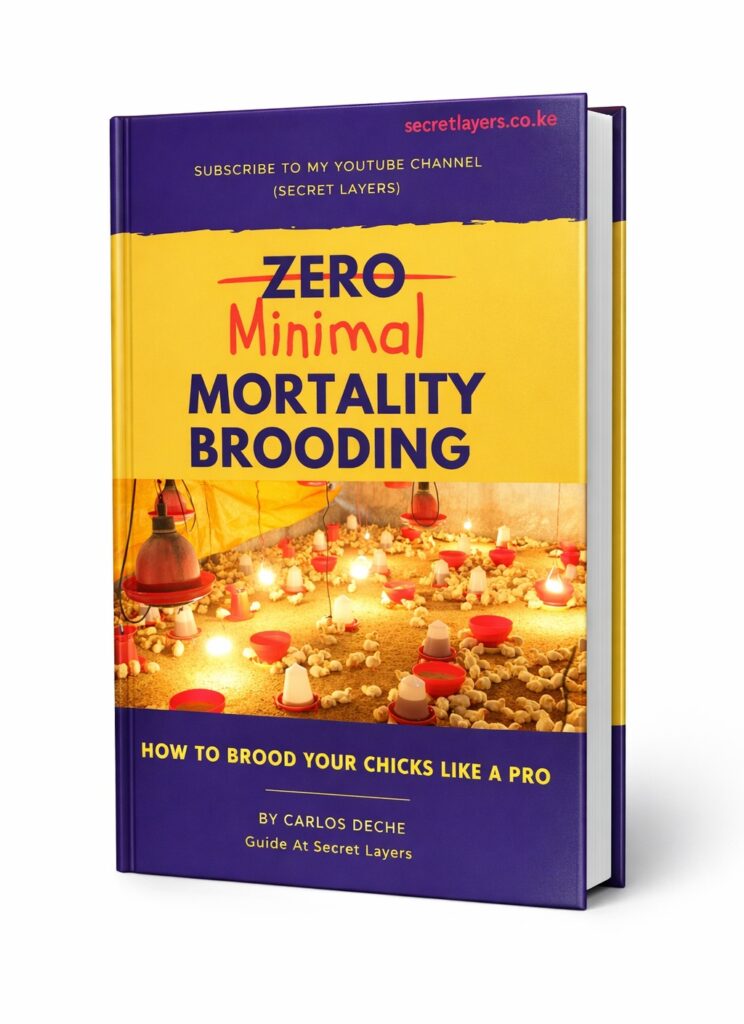
    Free Brooding Guide For Poultry Farmers. Zero (Minimal) Mortality Brooding. How To Brood Your Chicks Like A Pro. By Carlos Deche Guide At Secret Layers

    Name
    Limited access. Join other serious farmers who have taken the guide and get support.

    Both are practical and easy to apply.


    See you next Friday!
  • NYOTA Fund : How I’d Use It To Build A Profitable Business

    If someone gave you Ksh.50,000 today, what would you do with it?

    This is how I would turn Ksh.50,000 (approximately $385) into a thriving business through the NYOTA Program Kenya.

    The government of Kenya, through the NYOTA Program, is offering grants and training to empower Kenyan youth. It’s an amazing opportunity for those who qualify. Unfortunately, I don’t meet the criteria for application, but if I did, here’s exactly how I would use the funds to build a sustainable business.

    Not something lifeless or short-term, but a venture with a real vision of growth.

    It’s sad that many businesses started through such government programs die off within a year. Evidence from the earlier Youth Enterprise Development Fund (YEDF) shows that only a small percentage survive past five years.

    That’s why I decided to share how I would personally use the NYOTA grant and the strategies I would apply to make the business last. I hope you’ll find value in it and maybe borrow a few ideas for your own plan.

    By the way, congratulations if you received the grant!

    Step 1 : Decide And Commit To One Business

    The first thing I would do is make a clear decision and commit to one business. I would choose layer poultry farming — and I have good reasons for it which you can check here👇🏿

    6 Reasons Why I Chose Layers Over Broilers

    It’s something I’ve been studying and researching for a long time, and that focus gives me an edge.

    There are many profitable opportunities out there. However, without clarity, it’s easy to end up confused and scattered.

    So I would decide, commit, and lock in.
    No broilers. No goats. No hotel. No forex.

    Layer poultry farming only.

    Step 2 : Learn

    Before starting, I would spend one to two weeks learning everything about layer poultry farming. That means not just how to raise the birds, but also how to run the business side of things.

    I’d study topics such as:

    ✅Brooding

    ✅Feeding

    ✅Disease management

    ✅Marketing and sales

    ✅Branding and negotiation


    In addition, I would visit established layer farmers and learn directly from their experiences. I’d talk to egg traders — both wholesalers and retailers — to understand the egg business better.

    I’d also reach out to poultry experts for practical advice.

    Meanwhile, I would get a reliable internet connection for a week and binge-watch YouTube videos about layer poultry farming in Kenya. I’d read blogs, success stories, and mistake lists.

    Of course, I would also check X, Facebook, and TikTok pages of farmers to see what works for them.

    Secret Layers is already a good place to start for this kind of information — both technical poultry farming and business.

    To help with this learning phase, I have a Free Layer Poultry Farming Guide you can get here 👇🏿

    Free Layer Poultry Farming Guide

    Another skill I would add is content creation. There are countless free online resources on how to make engaging and educational farming content.

    After one or two weeks, I wouldn’t be an expert yet, but I’d know enough to start my layer farm confidently.

    Step 3 : Start The Farm

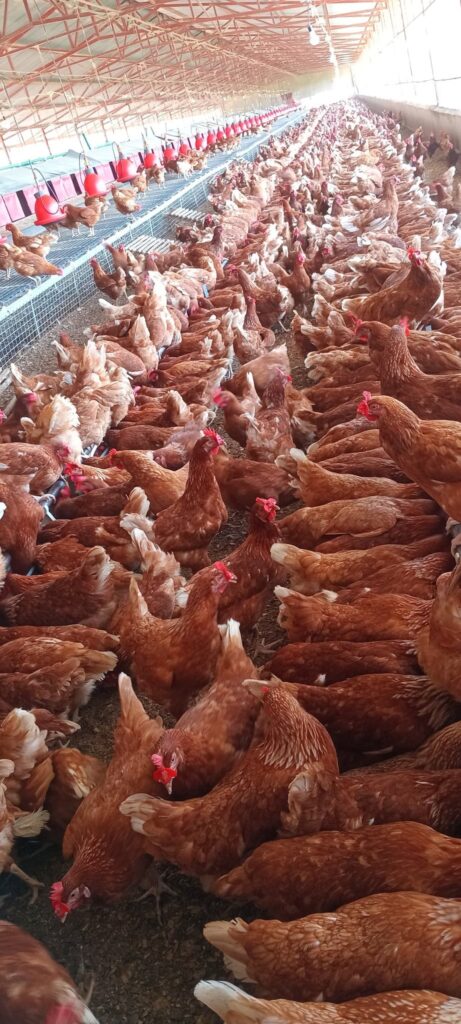
    Many layer chicken kept for eggs in a big poultry house.
    Layer Chicken in a poultry house. While Ksh.50k won’t get you this at first, with a long term business strategy you can get here.

    Next, I would begin the actual farm setup. My plan would be to start with 50 layer chickens. That’s enough to make sense as a business but still manageable for a beginner.

    However, there’s one issue. Starting a 50-bird layer poultry farm in Kenya costs around Ksh.91,000, according to my recent research (see the cost breakdown here👇🏿

    The True Cost Of Starting A Layer Poultry Farm


    Yet, the NYOTA Program grant is only Ksh.50,000.

    So how would I bridge that gap?

    I have a plan — and I’ll share how to make it work. Just trust me and follow the logic to the end.

    I would follow the exact process outlined in my Free guide to set up the farm and get my chicks started.

    At this point, the farm would be running.

    Now, layer chickens take about four and a half months before they begin laying eggs. That means no cash flow for about five months.

    So what next?

    Step 4 : Create Content Around My Farming Journey

    During this waiting period, I would focus on creating content. I’d document my entire journey from day one — every success, failure, and lesson learned.

    Don’t frown yet. Maybe if I say “teach people what I’m learning,” it will sound better. But yes, I’d share my journey publicly.

    This would include content across YouTube, TikTok, Facebook, X, and Pinterest. However, I’d focus mainly on the three I use most — Facebook, X, and YouTube.

    This approach is exactly how Secret Layers started — by teaching and documenting.

    For instance you can watch the YouTube video of this blog post here👇🏿

    https://youtu.be/0B_B0QsqW50?si=7NCNMw7cNJ7jBiQc

    Setting up social media accounts is free. The only small cost would be basic content tools like a ring light, tripod stand, and microphone — not more than Ksh.3,000 ($23).

    There are two main reasons for creating content:

    1. To build a brand around my farm.
    The content would serve as my marketing and branding engine.


    2. To create a potential income stream.
    In time, monetizing these platforms could bring in more money to grow the farm further.


    At that point, I’d have two things running – a real farm and a growing online brand.

    That’s the foundation of a long-term business.

    Now The Secret To Make My Whole Plan To Work

    Step 5 : Partner With Another Beneficiary

    Now, remember that the cost of starting the 50-bird farm is Ksh.91,000, but the grant is only Ksh.50,000.

    Here’s the secret to make it work.

    I would partner with another NYOTA Program beneficiary. Together, we would combine our grants for a total of Ksh.100,000.

    The NYOTA Program includes a training period before the funding phase. I’d use that time to identify a serious, like-minded partner — preferably someone from my area, maybe a friend, or someone who shares my farming vision.

    Finding the right partner isn’t always easy, but it’s the smartest way to make this plan possible. And I would treat it like my life depended on it.


    That’s my blueprint for how I would use the NYOTA Program grant to build a sustainable and profitable business.

    You don’t need millions to start. With focus, learning, and creativity, you can turn Ksh.50,000 into something that grows year after year.

    If you’ve received the NYOTA grant, congratulations again. Use it wisely, and build something that will last beyond five years.


    💡 If you want to start your own layer poultry business..


    Get my Free Guide: 6 Steps to Start a Profitable Layers Poultry Farm here👇🏿

    Free beginners guide to starting a profitable layer poultry farm. Step by step guide.
    Name
    Limited access. Join other serious farmers who have taken the guide and get support.


    And I’d love to hear your thoughts — what would you do with your Ksh.50,000 NYOTA grant?

    Let me know in the comments.

    See you next Friday!

    carlosdeche4040@gmail.com

    secretlayerske@gmail.com

  • The Beach Trip That Changed A Mother’s Life

    Niss : A Farmer At Heart

    Niss had always been a farmer. A vegetable farmer. She planted cabbages, sukumawiki, spinach, and kiswenya — a local herb.

    It was food, yes, but also her little business. Every six weeks she would harvest and sell at the local market.

    When Money Isn’t Enough

    The sales gave her some money to support her kids, but it was never enough.

    And truth be told, she wasn’t even sure if she made profits. She just sold, counted the cash in her hands, and because money came in on market days, she assumed she was doing fine.

    Was she really? She didn’t know.

    Stress That Won’t Let Go

    For the past three weeks, she had been trying to figure out how to get funding for her new idea — layer poultry farming.

    But the more she thought about it, the more her head burned and her heart raced. Stress became her daily companion.

    Sleepless Nights And Strange Fears

    At night, she couldn’t sleep. She tossed and turned, managing barely two hours after the first cock crowed, then nothing until the next night when the cycle repeated.

    Slowly, she started noticing something else: her dresses and skirts felt looser.

    “What is happening to me?” she wondered.

    “Could it be cancer? That’s what causes sudden weight loss, right? Or maybe TB? But I’m not coughing…”

    The Request That Stopped Her

    Before she could untangle her fears, her daughter walked in.

    “Mum, it’s been so long since we went out as a family. Why don’t we go to Bofa Beach tomorrow? Judith and Jay will be there too.”

    Niss stared at her for two minutes, silent, until a housefly almost flew into her open mouth.

    Finally, she said, “No. Why do you kids want a posh life? Don’t you see how we’re struggling? Do you think I’m like your uncle who makes big money off his employees? I’m not spending even a dime on a ‘walk.’ I’m trying to save every shilling so we can start this business!”

    Her voice was sharp, her anger louder than she meant.

    The Kids Take Action

    A few minutes later, she found her kids already packed, neatly dressed, ready to leave. “We’re going to stay at Uncle’s house tonight,” they said. “Tomorrow we’ll go to Bofa with them.”

    Niss’s heart sank. She felt angry, surprised, and pitiful all at once.

    What kind of mother have I become? What happened to taking care of my babies? To the fun we used to have?

    The Beach That Changed Everything

    A mother on a beach with her baby. Relates to Niss trying to escape the harsh layer poultry business struggles and reconnect with nature.
    Go to the beach often. The winds and waves are therapeutic and they help you reconnect with nature.

    That night, those questions wouldn’t let her rest. Finally, she made a decision. The next morning, she took her children to Bofa Beach herself.

    And for the first time in a long while, she laughed. The waves washed her worries, the sun warmed her heart, and she remembered what joy felt like. Watching her daughter talking to a boy, it struck her — her little girl was growing into a young woman, and she had almost missed it.

    If she kept ignoring moments like this, she would wake up one day and her children would be gone, grown, out of reach.

    A Lesson She Couldn’t Forget

    When they returned home that evening, tired but happy, Niss whispered to herself:

    Family first. Money second.”

    That night, she slept early, peacefully.

    And with that, she learned the truth — you should never sacrifice yourself or your family, even while building a business. Know your priorities and give them the importance they deserve. Money can wait. Family cannot.

    To help you prioritize you life as you build your business, also read Finding Purpose On Your Farm

    And get this Free Printable Purpose Planner straight to your email.

    Secret Layers Purpose Planner to help you find a strong why for you layer poultry farm success
    Name
    Limited access. Join other serious farmers who have taken the guide and get support.

    See you on the blog!

    Carlos Deche

    carlosdeche4040@gmail.com

    secretlayerske@gmail.com