Tag: Chicken farming

  • FOMO Farming – Why Most Farms Fail Before They Start

    Most farms do not start because a farmer saw a problem in the market. They start because a farmer saw his neighbour with a farm.

    That is FOMO — Fear Of Missing Out.

    And it is quietly killing farms before they even have a chance.

    The Story Of John And James

    John and James were neighbours. Good neighbours. They did not talk every day, but they had never fought about anything either.

    One Monday morning, John came home from work and noticed something strange. A group of contractors were busy in James’ backyard, building something big.

    He wanted to ask James about it. But they had not spoken in over a week. It felt too intrusive to just walk over and ask.

    So John waited.

    Two weeks later, the structure was complete. It was a chicken house.

    “Interesting”, John thought. “Let me see if he will make any money from this.”

    James Starts To Grow

    James brought in his first batch of chicks. Within three months, he was supplying chicken meat to the local market.

    One afternoon, James knocked on John’s door and asked if he needed chicken meat. Out of friendship — and because he genuinely needed them — John said yes. He became one of James’s regular customers.

    Weeks passed. James kept stocking new batches. His customer base grew steadily. People in the neighbourhood started calling him ‘The chicken guy’.

    John watched all of this quietly. Inside, he felt uneasy.
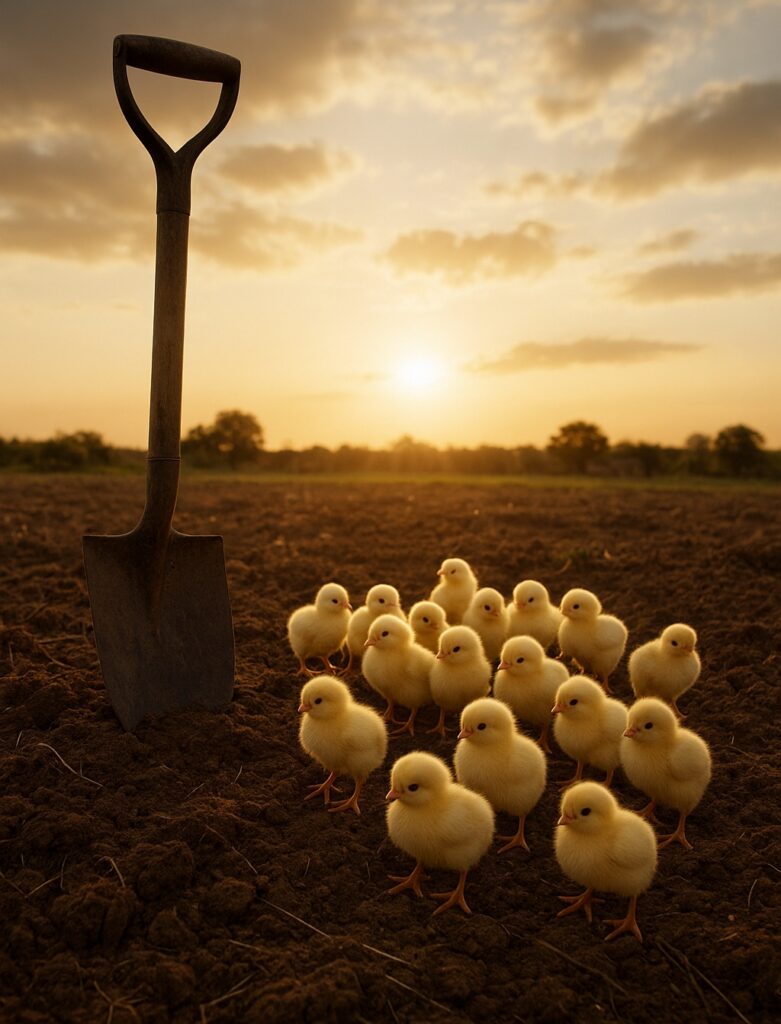
    Yellow day old layer chicks.Definitely still in brooding out on the farm with a spade - a commonly used farm tool/equipment

    The Decision That Changed Everything

    John talked to his wife about it. They both agreed — James must be making serious money. Why else would people keep coming back? Why else would he keep expanding?

    So they made a decision.

    Husband and wife visited the hatchery in the nearby town. They ordered chicks and started building their own chicken house. They did not ask James for advice. That would have felt like trespassing on his business territory.

    Three months later, their first batch matured. They started selling meat, just like James.

    It was hard at first. But slowly, people started buying from them too. Some of James’s loyal customers even switched over. Business felt good.

    When The Numbers Tell The Truth

    At the end of the batch cycle, John and his wife sat down to count their money.

    Something was off.

    They called John’s sister, who worked as an accountant, to help them go through the numbers. She looked at the records carefully and then looked up at them.

    “You have been making losses,” she said. “Your expenses are 15% higher than your revenues. Every month, you are losing money.”

    John was heartbroken.

    But then he asked the question he should have asked from the very beginning.

    What about James? Is poultry farming profitable for him too?

    The Truth About James

    John finally walked over to James’s house and asked him directly. “How is the business really doing? Is poultry farming profitable on your end?”

    James told him the truth.

    The business was not profitable. James had one large hotel outside town that bought most of his eggs and meat in bulk. Whatever was left, he sold to neighbours and the village market. Even with all that, he was only breaking even.

    He could not shut the farm down either. He had taken out a loan to start it. Every month, he farmed just to repay that loan.

    It was a cycle. A vicious one. Farm. Break even. Repay loan. Repeat.

    Not all that glitters is gold.

    Why FOMO Farming Almost Always Fails

    What you just read is not a unique story. It happens every single day across farms big and small.

    People start farming not because they identified a market gap, did a feasibility study, or had a clear business plan. They start farming because someone they know appears to be making money.

    A neighbour. A friend. A random farmer on social media posting about profits every week.

    These people sell a dream. And the dream looks real because you can see the chicken house, the chicks, the customers coming and going. What you cannot see is the loan, the losses, the breaking even, the quiet stress behind the scenes.

    Studies show that up to 70% of agricultural businesses fail in their first three years. Many of those failures trace back to one simple problem — the farmer started for the wrong reason.

    FOMO is a wrong reason.

    What FOMO Does To Your Thinking

    When you see someone else farming and apparently making money, your brain starts running a story.

    He must be making so much money.

    His life must be so much easier now.

    If I start now, I will make that money too.

    If I wait, I will miss this opportunity.

    That last thought is the dangerous one. You feel like the window is closing. Like you have to act right now or you will lose out forever.

    But that is rarely true.

    A farming opportunity that is real today will still be real in six months — after you have done proper research.

    After you have spoken to actual farmers who show you real numbers.

    After you have asked the hard question: Is poultry farming profitable in my specific market, at my specific scale, with my specific resources?

    The Right Way To Start A Farm

    Before you place a single chick order, here are some recommendations you should do.


    1. Talk to a real farmer — and ask for the numbers.
    Not the polished version. The real numbers. Revenue, expenses, loan repayments, labour costs, losses from sick birds, market price fluctuations.

    If a farmer is not willing to show you that, their “success” story is not useful to you.


    2. Study your local market first.

    Who will buy your eggs or meat?

    How many other farmers are already supplying that same market?

    Is the market growing or shrinking?

    Can it absorb one more supplier without everyone’s prices dropping?


    3. Run a simple feasibility test.
    Before spending a single shilling on construction, write down your projected costs and your realistic revenue. Not best-case revenue — realistic revenue.

    If the numbers do not work on paper, they will not work in real life.


    4. Start small and learn.
    A 50-bird first batch teaches you more than any YouTube video. Starting small keeps your losses manageable while you figure out the market, the feeding, the disease management, and the sales cycle.


    5. Have a clear customer before you start.
    James had one hotel that bought in bulk. That one customer kept him alive — even if just barely.

    Before you build a chicken house, find one person or business willing to commit to buying from you consistently.

    There Is Always Another Bus Coming

    There is a famous saying in investing: ‘There is always another bus coming’.

    It means this — missing one opportunity does not mean you have missed everything. Another one is always on its way. The farmer who waits, researches, and starts with a clear plan will almost always outlast the farmer who jumped in because of FOMO.

    So resist the urge. Control the impulse. Do not start a farm just because your neighbour has one and appears to be winning.

    Ask the harder question first: Is poultry farming profitable for me, in my situation, right now?

    If the honest answer is yes — go for it with everything you have.

    If the answer is unclear — do more research before you spend a single coin.

    The Bottom Line


    John lost money. James was trapped in a loan cycle. Neither of them started with a real plan.

    Both of them started because of how things looked from the outside.

    Farming is a real business. It rewards preparation, market knowledge, and patience. It punishes impulse, emotion, and FOMO.

    Before you order those chicks, before you break ground on that chicken house — make sure you are starting for the right reasons.

    Your farm deserves better than FOMO.


    Thinking about starting a layer poultry farm?

    Download my Free Guide and make sure you start your farm the right way.
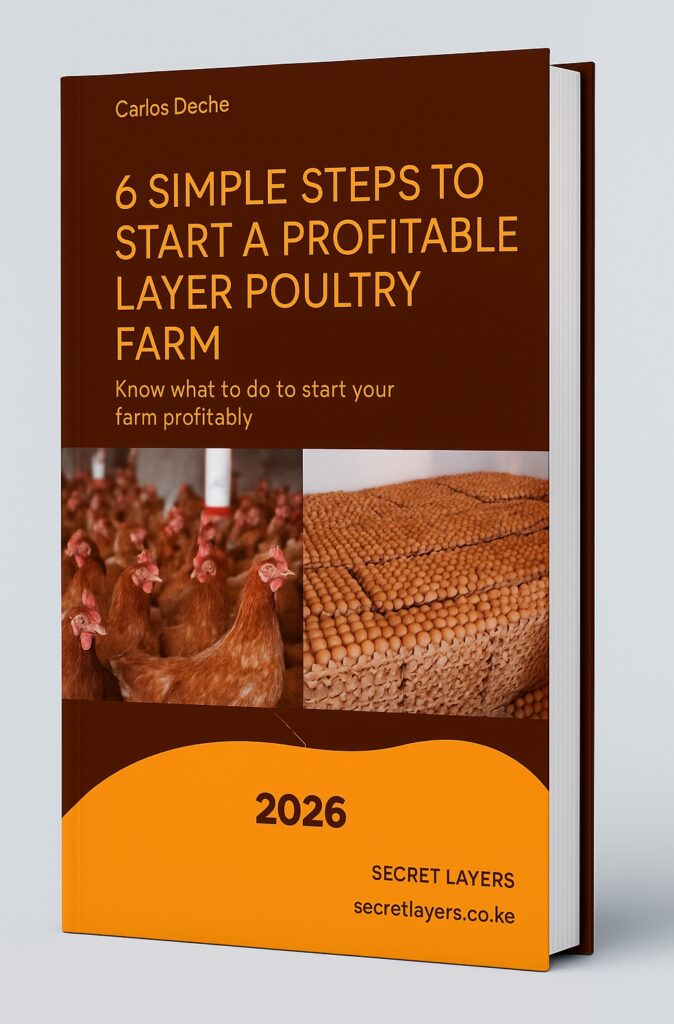
    Free beginners guide to starting a profitable layer poultry farm. Step by Step guide.
    Name
    Limited access. Join other serious farmers who have taken the guide and get support.


    See you next Friday!

  • Everything You Need To Know About Layer Poultry Farming

    Ludwig Wittgenstein
    ‎“The limits of my language mean the limits of my world.”


    ‎You can’t operate expertly in a field if you don’t understand the words that define it.

    ‎This is everything you should know about layer chicken, layer poultry farming and the business of layers.

    ‎The list will be updated every week with new information.

    ‎Please learn.


    Layers – Adult hens raised primarily for egg production. In layer poultry farming, layers are the backbone of your egg business, providing consistent daily eggs once they reach maturity.


    Pullets – Young female chickens, usually under 20 weeks old, that have not yet started laying eggs. Pullets are the future layers of your flock.


    ‎Day-Old Chicks (DOCs) – Newly hatched chicks, only a day old. Farmers buy day-old chicks to rear them into pullets or point-of-lay birds for egg production.


    ‎Point of Lay (POL) – Birds that are about 16–20 weeks old and ready to start laying eggs. Point-of-lay hens are ideal for farmers who want to begin egg production quickly.


    Feeder – A container or tray used to provide feed to your birds. Using the right feeder in layer poultry farming ensures minimal feed wastage and healthy growth.


    DrinkerEquipment that supplies clean water to chickens. Proper drinkers are crucial for layers’ health and optimal egg production.


    Brooding – The process of keeping chicks warm, usually with a heat source, during their first few weeks. Brooding is critical to prevent chick mortality.


    Incubator – A machine used to hatch eggs artificially by maintaining the right temperature and humidity. Incubators allow farmers to hatch chicks without using a broody hen.


    Mortality – The number of birds that die within a flock over a given period. Low mortality rates indicate good management in layer poultry farming.


    ‎Layer Mash – A balanced feed specially formulated for laying hens to maximize egg production and quality. Layer mash provides the nutrients needed for strong shells and healthy layers.


    Bird – A general term for chickens, hens, or roosters in your flock. In layer poultry farming, the term usually refers to your egg-laying hens.


    ‎Feed to Egg Conversion Ratio (FCR) – A measure of how efficiently a layer converts feed into eggs. Lower FCR means better efficiency and higher profitability.


    ‎Ex-Layers / Spent Layers – Hens that have completed their peak laying period and are no longer productive. Farmers often sell them for meat or dispose of them responsibly.


    Debeaking – A management practice where part of a chicken’s beak is trimmed to prevent feather pecking or cannibalism. Debeaking helps protect your flock in crowded layer farms.


    Culling – The process of removing weak, sick, or unproductive birds from the flock. Culling ensures only healthy layers remain for maximum egg production.


    Litter – Bedding material, like wood shavings or straw, used on the poultry house floor. Proper litter management keeps your birds healthy and reduces disease risk.


    Cages – Enclosures used to house layers, especially in commercial layer poultry farming. Cage systems help manage feed, water, and egg collection efficiently.


    ‎Newcastle Disease – A highly contagious viral disease that affects chickens, causing respiratory issues and high mortality. Vaccination is critical to protect your flock.


    ‎Infectious Bronchitis (IB) – A viral disease in poultry that affects the respiratory system and egg production. Proper biosecurity and vaccination reduce the risk.


    ‎Marek’s Disease – A viral disease in chickens that causes tumors and paralysis. Vaccinating day-old chicks helps prevent Marek’s in your flock.


    Deworming – The process of giving chickens medication to remove internal parasites. Regular deworming keeps your layers healthy and improves feed-to-egg efficiency.


    ‎Gumboro (Infectious Bursal Disease– A viral disease affecting young chickens, weakening their immune system. Vaccination protects your flock and supports healthy layer development.


    ‎Starter Mash – A high-protein feed for day-old chicks to ensure healthy growth in the first few weeks. Starter mash is the foundation for strong pullets.


    ‎Grower Mash – Feed given to pullets after the starter stage but before they begin laying eggs. Grower mash ensures proper growth and readiness for point-of-lay.


    ‎Free Range – A system where chickens can roam outdoors for part of the day. Free-range layers often produce healthier eggs and can command a premium price.


    ‎Pasture Raised – Chickens raised primarily outdoors on pasture with access to insects and grasses. Pasture-raised layers provide high-quality, nutrient-rich eggs and enjoy better welfare.

    See you next Friday!

    carlosdeche4040@gmail com

    secretlayerske@gmail.com

  • NYOTA Fund : How I’d Use It To Build A Profitable Business

    If someone gave you Ksh.50,000 today, what would you do with it?

    This is how I would turn Ksh.50,000 (approximately $385) into a thriving business through the NYOTA Program Kenya.

    The government of Kenya, through the NYOTA Program, is offering grants and training to empower Kenyan youth. It’s an amazing opportunity for those who qualify. Unfortunately, I don’t meet the criteria for application, but if I did, here’s exactly how I would use the funds to build a sustainable business.

    Not something lifeless or short-term, but a venture with a real vision of growth.

    It’s sad that many businesses started through such government programs die off within a year. Evidence from the earlier Youth Enterprise Development Fund (YEDF) shows that only a small percentage survive past five years.

    That’s why I decided to share how I would personally use the NYOTA grant and the strategies I would apply to make the business last. I hope you’ll find value in it and maybe borrow a few ideas for your own plan.

    By the way, congratulations if you received the grant!

    Step 1 : Decide And Commit To One Business

    The first thing I would do is make a clear decision and commit to one business. I would choose layer poultry farming — and I have good reasons for it which you can check here👇🏿

    6 Reasons Why I Chose Layers Over Broilers

    It’s something I’ve been studying and researching for a long time, and that focus gives me an edge.

    There are many profitable opportunities out there. However, without clarity, it’s easy to end up confused and scattered.

    So I would decide, commit, and lock in.
    No broilers. No goats. No hotel. No forex.

    Layer poultry farming only.

    Step 2 : Learn

    Before starting, I would spend one to two weeks learning everything about layer poultry farming. That means not just how to raise the birds, but also how to run the business side of things.

    I’d study topics such as:

    ✅Brooding

    ✅Feeding

    ✅Disease management

    ✅Marketing and sales

    ✅Branding and negotiation


    In addition, I would visit established layer farmers and learn directly from their experiences. I’d talk to egg traders — both wholesalers and retailers — to understand the egg business better.

    I’d also reach out to poultry experts for practical advice.

    Meanwhile, I would get a reliable internet connection for a week and binge-watch YouTube videos about layer poultry farming in Kenya. I’d read blogs, success stories, and mistake lists.

    Of course, I would also check X, Facebook, and TikTok pages of farmers to see what works for them.

    Secret Layers is already a good place to start for this kind of information — both technical poultry farming and business.

    To help with this learning phase, I have a Free Layer Poultry Farming Guide you can get here 👇🏿

    Free Layer Poultry Farming Guide

    Another skill I would add is content creation. There are countless free online resources on how to make engaging and educational farming content.

    After one or two weeks, I wouldn’t be an expert yet, but I’d know enough to start my layer farm confidently.

    Step 3 : Start The Farm

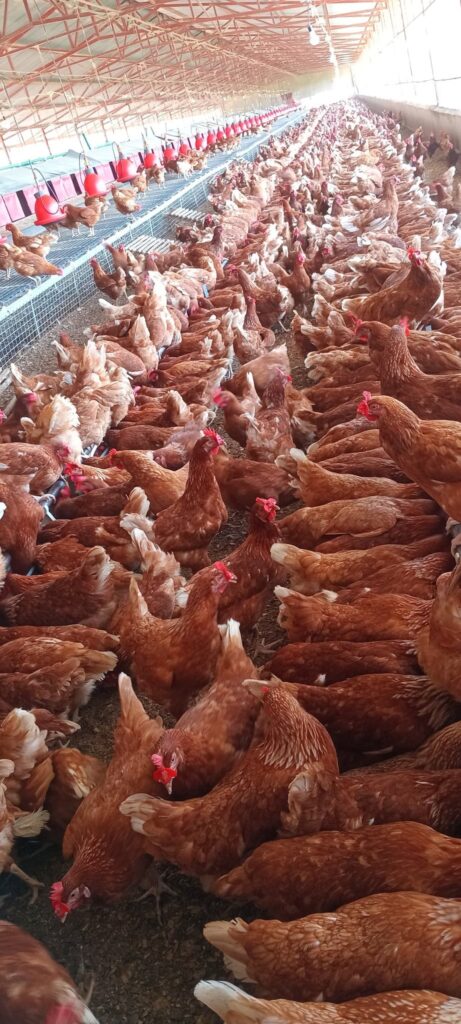
    Many layer chicken kept for eggs in a big poultry house.
    Layer Chicken in a poultry house. While Ksh.50k won’t get you this at first, with a long term business strategy you can get here.

    Next, I would begin the actual farm setup. My plan would be to start with 50 layer chickens. That’s enough to make sense as a business but still manageable for a beginner.

    However, there’s one issue. Starting a 50-bird layer poultry farm in Kenya costs around Ksh.91,000, according to my recent research (see the cost breakdown here👇🏿

    The True Cost Of Starting A Layer Poultry Farm


    Yet, the NYOTA Program grant is only Ksh.50,000.

    So how would I bridge that gap?

    I have a plan — and I’ll share how to make it work. Just trust me and follow the logic to the end.

    I would follow the exact process outlined in my Free guide to set up the farm and get my chicks started.

    At this point, the farm would be running.

    Now, layer chickens take about four and a half months before they begin laying eggs. That means no cash flow for about five months.

    So what next?

    Step 4 : Create Content Around My Farming Journey

    During this waiting period, I would focus on creating content. I’d document my entire journey from day one — every success, failure, and lesson learned.

    Don’t frown yet. Maybe if I say “teach people what I’m learning,” it will sound better. But yes, I’d share my journey publicly.

    This would include content across YouTube, TikTok, Facebook, X, and Pinterest. However, I’d focus mainly on the three I use most — Facebook, X, and YouTube.

    This approach is exactly how Secret Layers started — by teaching and documenting.

    For instance you can watch the YouTube video of this blog post here👇🏿

    https://youtu.be/0B_B0QsqW50?si=7NCNMw7cNJ7jBiQc

    Setting up social media accounts is free. The only small cost would be basic content tools like a ring light, tripod stand, and microphone — not more than Ksh.3,000 ($23).

    There are two main reasons for creating content:

    1. To build a brand around my farm.
    The content would serve as my marketing and branding engine.


    2. To create a potential income stream.
    In time, monetizing these platforms could bring in more money to grow the farm further.


    At that point, I’d have two things running – a real farm and a growing online brand.

    That’s the foundation of a long-term business.

    Now The Secret To Make My Whole Plan To Work

    Step 5 : Partner With Another Beneficiary

    Now, remember that the cost of starting the 50-bird farm is Ksh.91,000, but the grant is only Ksh.50,000.

    Here’s the secret to make it work.

    I would partner with another NYOTA Program beneficiary. Together, we would combine our grants for a total of Ksh.100,000.

    The NYOTA Program includes a training period before the funding phase. I’d use that time to identify a serious, like-minded partner — preferably someone from my area, maybe a friend, or someone who shares my farming vision.

    Finding the right partner isn’t always easy, but it’s the smartest way to make this plan possible. And I would treat it like my life depended on it.


    That’s my blueprint for how I would use the NYOTA Program grant to build a sustainable and profitable business.

    You don’t need millions to start. With focus, learning, and creativity, you can turn Ksh.50,000 into something that grows year after year.

    If you’ve received the NYOTA grant, congratulations again. Use it wisely, and build something that will last beyond five years.


    💡 If you want to start your own layer poultry business..


    Get my Free Guide: 6 Steps to Start a Profitable Layers Poultry Farm here👇🏿

    Free beginners guide to starting a profitable layer poultry farm. Step by step guide.
    Name
    Limited access. Join other serious farmers who have taken the guide and get support.


    And I’d love to hear your thoughts — what would you do with your Ksh.50,000 NYOTA grant?

    Let me know in the comments.

    See you next Friday!

    carlosdeche4040@gmail.com

    secretlayerske@gmail.com