Tag: Carlos Deche

  • FOMO Farming – Why Most Farms Fail Before They Start

    Most farms do not start because a farmer saw a problem in the market. They start because a farmer saw his neighbour with a farm.

    That is FOMO — Fear Of Missing Out.

    And it is quietly killing farms before they even have a chance.

    The Story Of John And James

    John and James were neighbours. Good neighbours. They did not talk every day, but they had never fought about anything either.

    One Monday morning, John came home from work and noticed something strange. A group of contractors were busy in James’ backyard, building something big.

    He wanted to ask James about it. But they had not spoken in over a week. It felt too intrusive to just walk over and ask.

    So John waited.

    Two weeks later, the structure was complete. It was a chicken house.

    “Interesting”, John thought. “Let me see if he will make any money from this.”

    James Starts To Grow

    James brought in his first batch of chicks. Within three months, he was supplying chicken meat to the local market.

    One afternoon, James knocked on John’s door and asked if he needed chicken meat. Out of friendship — and because he genuinely needed them — John said yes. He became one of James’s regular customers.

    Weeks passed. James kept stocking new batches. His customer base grew steadily. People in the neighbourhood started calling him ‘The chicken guy’.

    John watched all of this quietly. Inside, he felt uneasy.

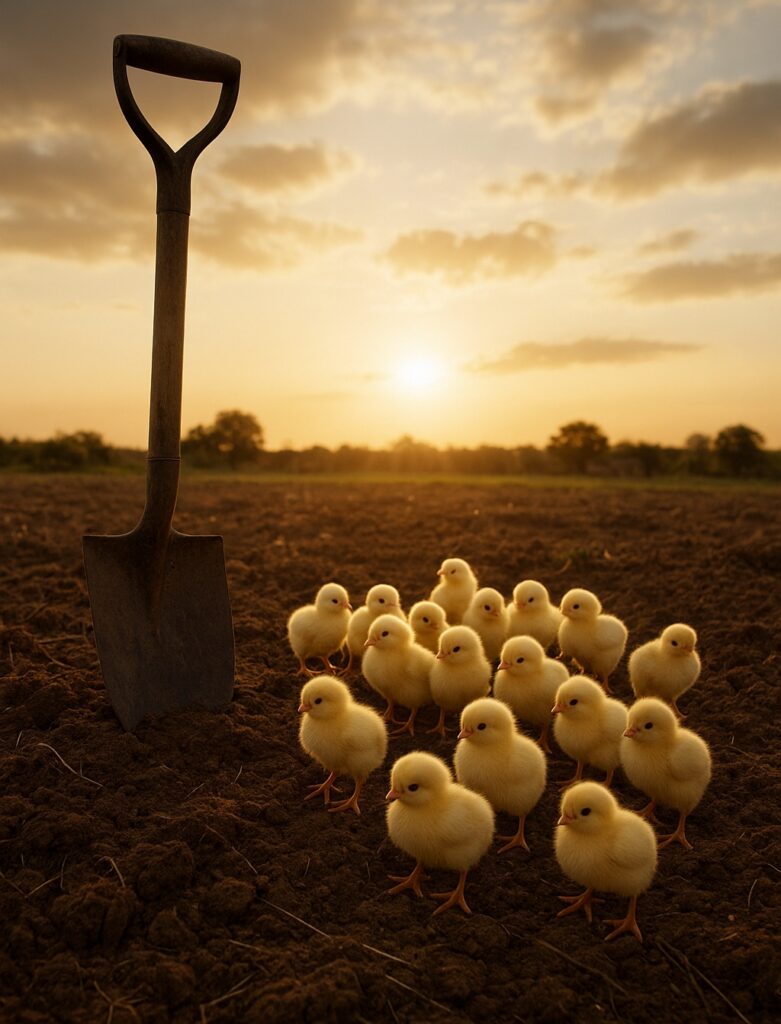
    Yellow day old layer chicks.Definitely still in brooding out on the farm with a spade - a commonly used farm tool/equipment

    The Decision That Changed Everything

    John talked to his wife about it. They both agreed — James must be making serious money. Why else would people keep coming back? Why else would he keep expanding?

    So they made a decision.

    Husband and wife visited the hatchery in the nearby town. They ordered chicks and started building their own chicken house. They did not ask James for advice. That would have felt like trespassing on his business territory.

    Three months later, their first batch matured. They started selling meat, just like James.

    It was hard at first. But slowly, people started buying from them too. Some of James’s loyal customers even switched over. Business felt good.

    When The Numbers Tell The Truth

    At the end of the batch cycle, John and his wife sat down to count their money.

    Something was off.

    They called John’s sister, who worked as an accountant, to help them go through the numbers. She looked at the records carefully and then looked up at them.

    “You have been making losses,” she said. “Your expenses are 15% higher than your revenues. Every month, you are losing money.”

    John was heartbroken.

    But then he asked the question he should have asked from the very beginning.

    What about James? Is poultry farming profitable for him too?

    The Truth About James

    John finally walked over to James’s house and asked him directly. “How is the business really doing? Is poultry farming profitable on your end?”

    James told him the truth.

    The business was not profitable. James had one large hotel outside town that bought most of his eggs and meat in bulk. Whatever was left, he sold to neighbours and the village market. Even with all that, he was only breaking even.

    He could not shut the farm down either. He had taken out a loan to start it. Every month, he farmed just to repay that loan.

    It was a cycle. A vicious one. Farm. Break even. Repay loan. Repeat.

    Not all that glitters is gold.

    Why FOMO Farming Almost Always Fails

    What you just read is not a unique story. It happens every single day across farms big and small.

    People start farming not because they identified a market gap, did a feasibility study, or had a clear business plan. They start farming because someone they know appears to be making money.

    A neighbour. A friend. A random farmer on social media posting about profits every week.

    These people sell a dream. And the dream looks real because you can see the chicken house, the chicks, the customers coming and going. What you cannot see is the loan, the losses, the breaking even, the quiet stress behind the scenes.

    Studies show that up to 70% of agricultural businesses fail in their first three years. Many of those failures trace back to one simple problem — the farmer started for the wrong reason.

    FOMO is a wrong reason.

    What FOMO Does To Your Thinking

    When you see someone else farming and apparently making money, your brain starts running a story.

    He must be making so much money.

    His life must be so much easier now.

    If I start now, I will make that money too.

    If I wait, I will miss this opportunity.

    That last thought is the dangerous one. You feel like the window is closing. Like you have to act right now or you will lose out forever.

    But that is rarely true.

    A farming opportunity that is real today will still be real in six months — after you have done proper research.

    After you have spoken to actual farmers who show you real numbers.

    After you have asked the hard question: Is poultry farming profitable in my specific market, at my specific scale, with my specific resources?

    The Right Way To Start A Farm

    Before you place a single chick order, here are some recommendations you should do.


    1. Talk to a real farmer — and ask for the numbers.
    Not the polished version. The real numbers. Revenue, expenses, loan repayments, labour costs, losses from sick birds, market price fluctuations.

    If a farmer is not willing to show you that, their “success” story is not useful to you.


    2. Study your local market first.

    Who will buy your eggs or meat?

    How many other farmers are already supplying that same market?

    Is the market growing or shrinking?

    Can it absorb one more supplier without everyone’s prices dropping?


    3. Run a simple feasibility test.
    Before spending a single shilling on construction, write down your projected costs and your realistic revenue. Not best-case revenue — realistic revenue.

    If the numbers do not work on paper, they will not work in real life.


    4. Start small and learn.
    A 50-bird first batch teaches you more than any YouTube video. Starting small keeps your losses manageable while you figure out the market, the feeding, the disease management, and the sales cycle.


    5. Have a clear customer before you start.
    James had one hotel that bought in bulk. That one customer kept him alive — even if just barely.

    Before you build a chicken house, find one person or business willing to commit to buying from you consistently.

    There Is Always Another Bus Coming

    There is a famous saying in investing: ‘There is always another bus coming’.

    It means this — missing one opportunity does not mean you have missed everything. Another one is always on its way. The farmer who waits, researches, and starts with a clear plan will almost always outlast the farmer who jumped in because of FOMO.

    So resist the urge. Control the impulse. Do not start a farm just because your neighbour has one and appears to be winning.

    Ask the harder question first: Is poultry farming profitable for me, in my situation, right now?

    If the honest answer is yes — go for it with everything you have.

    If the answer is unclear — do more research before you spend a single coin.

    The Bottom Line


    John lost money. James was trapped in a loan cycle. Neither of them started with a real plan.

    Both of them started because of how things looked from the outside.

    Farming is a real business. It rewards preparation, market knowledge, and patience. It punishes impulse, emotion, and FOMO.

    Before you order those chicks, before you break ground on that chicken house — make sure you are starting for the right reasons.

    Your farm deserves better than FOMO.


    Thinking about starting a layer poultry farm?

    Download my Free Guide and make sure you start your farm the right way.

    Free beginners guide to starting a profitable layer poultry farm. Step by Step guide.
    Name
    Limited access. Join other serious farmers who have taken the guide and get support.


    See you next Friday!

  • 6 Tips For Feeding Your Chicken And Maximize Your Farm Profits (Layers)

    Many poultry farms are dying because of feed.
    Not disease. Not poor management. Feed.


    And here is the part that will shock you even more — many farms are never even started because of feed.

    The fear of high, unpredictable feed prices scares aspiring farmers away before they buy their first chick.


    Feed accounts for 60 to 70% of total expenses on a poultry farm. It is the single largest cost you will carry. So the fact that it is the number one farm killer? That makes sense.


    This is why layer chicken feeding deserves your full attention. If you buy day-old chicks, you will be feeding those birds for almost two years. Every mistake at the feeder costs you money.


    Here are six feed management tips to protect your farm, your birds, and your profits.

    1. Feeding Time and Frequency

    Feed your hens twice a day. Once in the morning. Once in the evening.


    This works for two reasons.

    First, it fits a working farmer’s schedule. You are home in the morning and home in the evening. No complicated mid-day trips to the farm.


    Second, it reduces boredom. Full crops mean calmer birds. Calmer birds means less cannibalism and fewer injuries.


    One more thing— allow the feeders to go completely empty for about two hours each day.

    The best time is midday, during the hottest part of the day. This reduces heat stress, cuts feed wastage, and pushes your birds to eat more during cooler hours when they are comfortable and active.

    2. Feed Quantity

    Give your birds the right amount of feed for their age. Use the feeding schedule from your feed manufacturer or hatchery. Do not guess.


    Do not underfeed trying to cut costs. Underfeeding leads to lower egg production, smaller eggs, and generally sick birds. You will lose more money than you save.

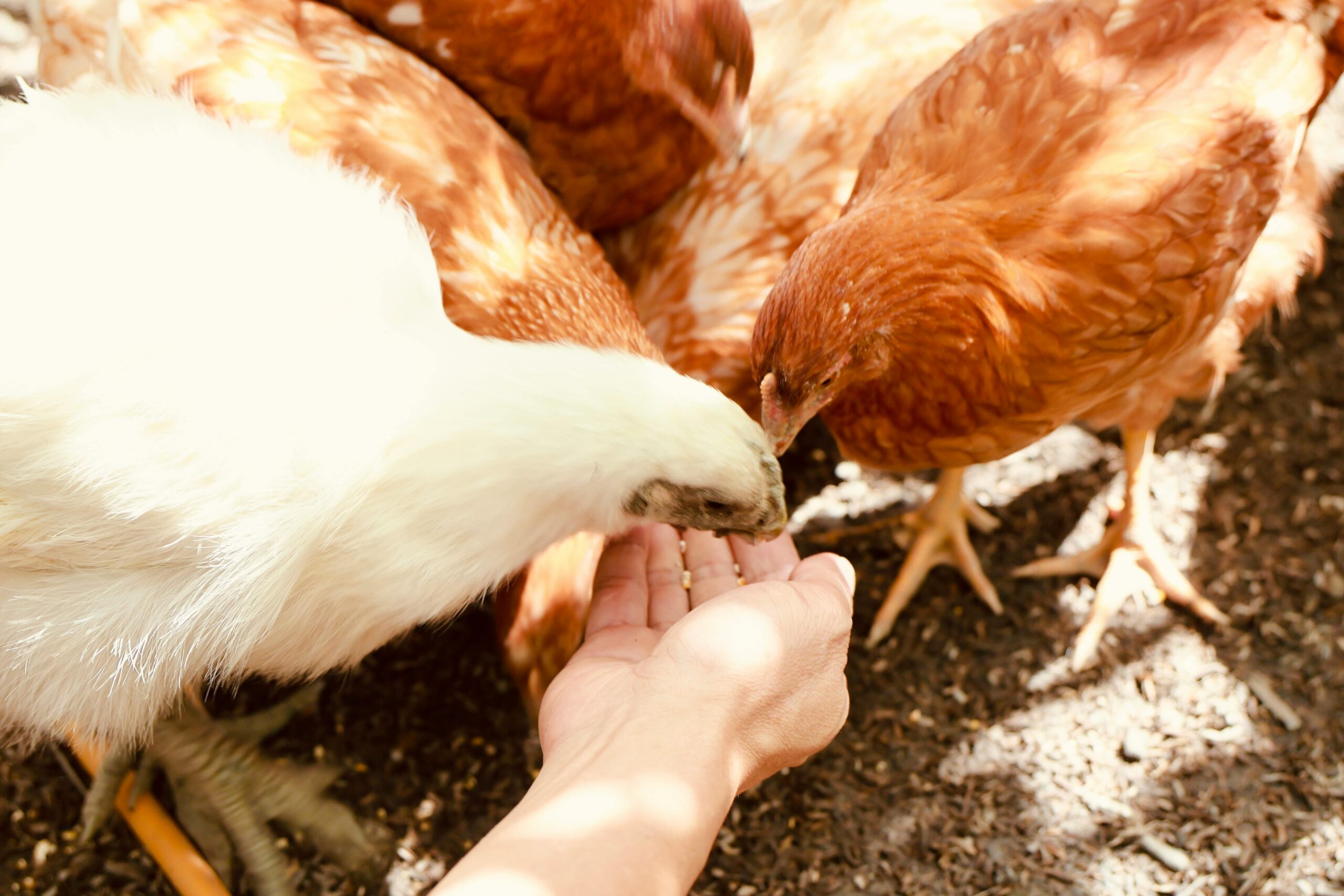
    Feeding chicken by hand.
    Feeding chicken on a farm.


    Do not overfeed either. Obese layers produce fewer eggs. That is not a theory. That is biology.


    Here is a tip most farmers do not know: give 40% of the day’s feed in the morning and 60% in the evening.

    Why? Because calcium from feed is absorbed at night, when the hen is forming the eggshell.

    More feed in the evening means more calcium available when the bird needs it most. Better calcium absorption means stronger shells and better quality eggs.

    3. Feed Quality

    Cheap feed is expensive. Read that again.


    Poor quality feed means poor egg production. Often below break-even.

    Yet very expensive feed can also kill your profits from the other side.

    The goal with layer chicken feeding is to find the sweet spot — good production rate, fair price, healthy profit margin.


    Try different feeds when you are starting out. Record the production results for each one. Then make your own decision based on data, not a salesperson’s pitch.


    Feed companies are in business to make money. Sometimes that is at your expense.

    Choose feeds that work for your farm, not feeds with the most attractive packaging or loudest brand ambassador.

    4. Supplements

    Your layers need more than feed alone.


    Calcium tops the list, especially during the laying phase. Without enough calcium, shell quality drops and birds can develop bone problems.


    Add zinc, vitamins, and amino acids too. These support immunity, bone strength, and consistent egg production.

    If your current feed does not include them, supplement separately.


    Do not skip this step. Supplements are cheap compared to the cost of poor production or sick birds.

    5. Water

    You are right — water is not food.


    That is exactly why it is on this list.
    Water is the most important input on your layer farm. More important than feed.

    Here is proof: if you run out of feed for a day, you can open the coop and let the birds free range. Problem delayed.
    Run out of water? There is no workaround. They will die.


    Ensure your chickens have clean, fresh water available at all times. There is a rule that experienced farmers live by: if you can not drink it, do not give it to your birds.


    Replace water in drinkers daily. Do not let it sit. Still water grows bacteria. Bacteria causes disease. Disease destroys your flock.


    Clean water is the simplest thing you can do for your birds. No excuses.

    6. Feeder And Drinker Management

    Imagine I invited you for dinner. Your favorite meal, perfectly cooked. But I served it on a dirty, crusted plate.
    Would you eat it?


    Your layers will. They have no choice. But dirty feeders and drinkers are dangerous. Mold and harmful bacteria accumulate fast. Once your birds ingest them, disease follows.


    Clean your feeders and drinkers thoroughly once a week.

    Use clean water, soap, and disinfectant.

    Let them air-dry completely before use.

    And if a feeder is visibly dirty before the week is up, clean it. Common sense overrules the calendar.

    A few more tips for drinkers and feeders setup:

    Fill feeders only halfway. Birds that eat from overfilled feeders spill feed. That spilled feed is wasted money. Half-full feeders ration the portion and reduce waste.


    Raise feeders to neck level. Adjust as the birds grow. This reduces spillage and keeps litter out of the feed.


    Space feeders evenly. No bird should walk too far to reach food or water. Poor spacing triggers competition, stress, and energy loss — energy that should be going into egg production.


    Use enough feeders and drinkers. Not too few to cause crowding. Not too many to make cleaning a burden.


    Remember: biosecurity is your first vaccination. Clean equipment is part of biosecurity.

    ….


    Layer chicken feeding is not complicated. But it demands consistency, observation, and discipline.


    Get the timing right. Get the quantity right. Get the quality right. Keep the water clean. Keep the equipment clean. Add the supplements your birds need.


    Do those six things well and your layers will reward you with steady production, strong shells, and a profitable farm.

    If you’re struggling with brooding your day old chicks,

    I put together a Free Brooding Guide covering how to prepare for chick arrival, how to receive day-old chicks, and the 8 brooding principles every farmer needs to know.

    Grab your Free copy here👇🏿

    Free Brooding Guide For Poultry Farmers. Zero (Minimal) Mortality Brooding. How To Brood Your Chicks Like A Pro. By Carlos Deche Guide At Secret Layers
    Name
    Limited access. Join other serious farmers who have taken the guide and get support.


    See you next Friday!

  • The 7 Farming Books That Will Make You A Millionaire

    So you want to become a successful farmer, and everyone keeps telling you to read books.

    The problem is, most farmers do not have the time for that.

    Over the past two years, I have gone through hundreds of books.
    More than 40 of them were focused on farming.

    Some were practical.

    Others were too focused on specific farms.

    A few were very general.

    Some were investigative.

    Others were memoirs.

    These are the ones I liked most.

    In this post, I will break down 7 of those books into the core lessons you can actually use on your farm.

    Now, I am still in the building and learning phase of my farming journey (as of 2026).

    Most of my time has gone into studying, observing, and learning from successful farmers across Africa and the world.
    That is how I have been preparing to do this the right way.


    If you apply the lessons in this post, you will have a clearer direction and stronger principles for your farm.

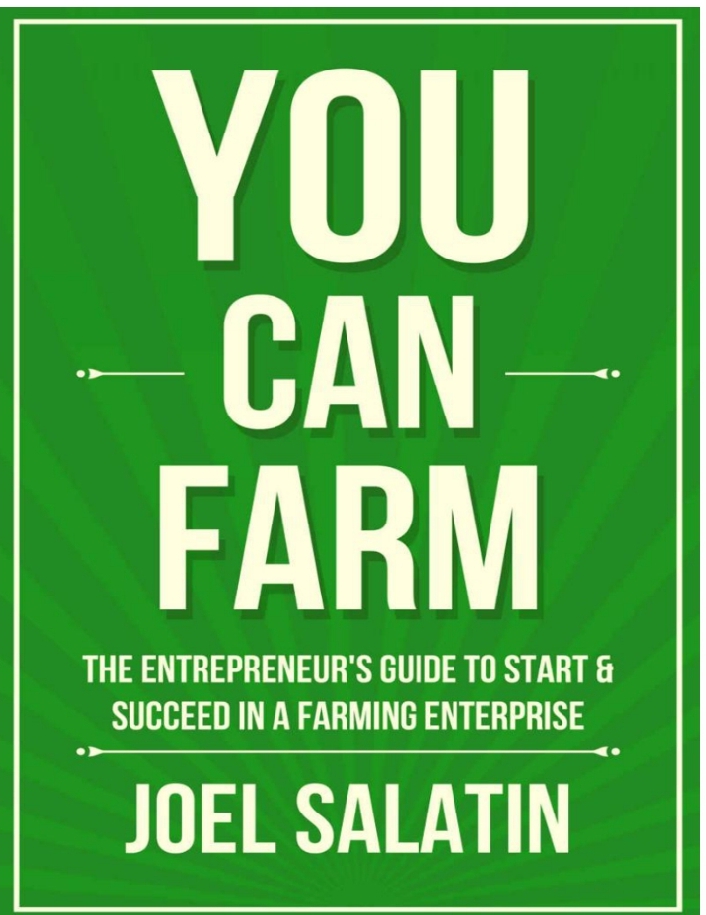
    1. You Can Farm by Joel Salatin

    This is the first farming book I ever read.
    Joel Salatin is one of the most well-known farmers in the world.

    Search his name and you will quickly see his strong views on farming and even politics.

    He has written over 14 books and co-authored others.
    And yes, he is a farmer.

    So much for the idea that farmers are not thinkers.

    You can farm - Farming book by Joel salatin
    You Can Farm by Joel Salatin. The first ever farming book that I read.

    Here’s What You’ll Learn..

    How to develop a vision for your farm.
    Many farmers ignore this at the beginning.
    Later, they are forced to figure it out the hard way.


    The 10 commandments for succeeding in farming.
    These focus on discipline and commitment.
    One key idea he emphasizes is being resourceful, which is something I strongly agree with as I say in my DR.STARR Framework.

    How to start and grow your farm
    You do not have to stay small or repeat the same thing for years.

    2. Your Successful Farm Business by Joel Salatin

    One of the best pieces of advice I ever heard is this: read authors, not just books.

    That is why I picked another book by Joel.

    Compared to You Can Farm, this one focuses on running the farm as a business.

    Here’s What You’re Going To Learn…

    Principles for running a farm business.
    Can you imagine, these include living frugally.
    Many farmers make money, then spend it badly and struggle the next season.


    Direct marketing
    Selling directly to customers is one of the best ways to increase profit.


    Using a team well
    A team is not a problem.
    Think of it like adding a turbo to your farm when managed properly.


    New opportunities in farming
    These include agritourism, edutainment, and farm schools.

    3. Start Your Farm by Forrest Pritchard and Ellen Polishuk

    If you have common questions about farming, this book answers them.

    Ellen and Forrest go deep into beginner concerns.

    This Is What You’ll Learn..

    How to learn farming
    You do not always need formal agricultural school.

    Do you need land to start?
    The answer is not always what people expect.


    The importance of the market
    This is one of the strongest parts of the book.
    It is given a lot of attention for a reason.
    I have talked about this many times.
    The market is often more important than capital.
    Many farmers ignore this, get into production, and struggle later.
    I almost made the same mistake myself.

    4. Mini Farming by Brett L Markham

    If you are concerned about the food you buy and want to produce your own, this book is for you.

    Many people think lack of land is the main problem.

    That is not always true.

    What You’ll Learn In This Book..

    You do not need large land.
    Not 10 acres.
    Not 5.
    Not even 1 acre.
    You can farm on 1/4 acre

    That small space can support crops, poultry, and livestock.

    How to become self-sufficient
    You can produce most of your food at home.


    How to preserve and sell surplus
    Extra production should never go to waste.

    5. Glorious Beef by Pat La Frieda

    Think about this for a moment.

    What if your farm supplied top restaurants and supermarkets in your country?

    That is the level this book shows.

    It is a story of how a small family business grew into a multimillion-dollar company.

    Here’s what You’ll Learn..

    Farming is business
    Decisions matter just as much as production.


    How to grow a serious operation
    You see what it takes to build something big.


    Working with other farmers
    Collaboration can help you scale.


    Understanding product quality
    Knowing what makes the best product (beef, meat, eggs or whatever) is part of the business.

    After reading this, I started thinking differently about the quality of food that I eat,especially beef.

    6. Invisible Giant by Brewster Kneen

    Have you ever heard of Cargill?
    It is one of the largest private companies in the world.

    At one point(2025), it had over 150,000 employees and revenue over $150 billion.

    This book shows what it takes to build something like that.

    Here’s What You’ll Get From It..

    Understand scale.

    Big companies grow through systems and time.


    Applying the lessons on a small farm.
    You can still use these ideas even at a small level.


    Think big
    Growth starts with mindset.
    You may not build something that large.
    Still, the thinking can push you ahead of many farmers.

    7. 40 Chances by Howard G Buffet,with Howard W Buffet, forwarded by Warren E Buffet

    Yes, this is from the Buffett family.

    Three generations connected to business and impact.

    This book focuses on purpose.

    What You’ll Learn..

    You only have a limited number of seasons
    Farming time is not endless.

    About 40 to be exact. Hence the name 40 Chances.


    Purpose matters
    Farming is not just about money or status.


    You need direction
    Vision, mission, and values keep you going when things get hard.


    Farming affects the world
    Food production connects to hunger and global challenges.


    This book helps you see farming in a bigger way.


    These are the 7 books I wanted to share with you.

    As you can see, farming is not just about farming.
    There is business.
    There is self-sufficiency.
    There is purpose.


    I will keep updating this list as I continue learning.

    You only need one idea from a book to change your farm.
    And you never know which book that is.

    Before You Go

    I am currently writing a book for farmers whose main theme is ‘Before You Start Your Farm’

    If you’re reading this after the book is out, make sure you get yourself a copy.


    For now, I have created two simple guides:


    If you want to start a profitable layer poultry farm, get this Free Guide.

    Free beginners guide to starting a profitable layer poultry farm. Step by Step guide.
    Name
    Limited access. Join other serious farmers who have taken the guide and get support.


    If your chicks keep dying in the first month, get the free brooding guide.

    Free Brooding Guide For Poultry Farmers. Zero (Minimal) Mortality Brooding. How To Brood Your Chicks Like A Pro. By Carlos Deche Guide At Secret Layers

    Name
    Limited access. Join other serious farmers who have taken the guide and get support.

    Both are practical and easy to apply.


    See you next Friday!

  • The Story Of Buddha And The Second Arrow


    Once, Buddha was trying to teach his students a lesson.

    So, he sat them under a tree and asked them a question.

    “If I shoot you with an arrow, would it hurt?

    “Yes,” the students said in unison.


    Then, he asked another question.


    “If I shoot you again with a second arrow at the same spot, would it hurt?”

    This time, the students looked shocked.

    “Of course it would,” they replied.

    A Buddha holding an arrow about to shoot. Buddha means enlightened one and this is used in a Secret Layers story to educate farmers.


    At this point, Buddha cleared his throat and continued.


    “In life, we are usually hit with two arrows.”


    First, there is the arrow of life.
    This includes suffering, loss, disease, and disappointment.
    All these things are painful.
    However, most of them are not under our control.


    Then comes the second arrow.
    This is how we respond to the first one
    .
    For example, it is the self-criticism, the overthinking, and the doubt.

    In addition, it is the constant questioning and denial.

    As a result, this second arrow becomes even more painful.

    But here is the most important part.
    The second arrow is totally under your control.


    Therefore, how you react to problems determines your level of suffering.
    As it is often said, pain is inevitable, but suffering is optional.

    Now, What Does This Have To Do With Farming?

    I believe you cannot become a successful farmer before you master yourself.

    You see, life as a farmer will hit you from all sides.

    Anything that can go wrong on your farm will go wrong.

    At the same time, life will also keep happening.

    You will get sick.
    Your family and friends will get sick.
    You might lose your job.
    You will even get into disagreements.


    So, what really matters is not whether these things happen.

    Instead, it is how you respond to them.
    Spending all your time focusing on problems will not help you.


    However, acknowledging what happened and focusing on solutions will.


    That is what separates you from other farmers.


    In fact, as Alex Hormozi and Leila Hormozi often say:
    “F**k your mood. Follow the plan.”

    That is the mindset you need to have.


    By the way, if you have been struggling with early chick deaths within the first one month, I created something for you.

    Get this Free Brooding Guide, and I will also send you a bonus Layer Poultry Farming Guide.

    Free Brooding Guide For Poultry Farmers. Zero (Minimal) Mortality Brooding. How To Brood Your Chicks Like A Pro. By Carlos Deche Guide At Secret Layers
    Name
    Limited access. Join other serious farmers who have taken the guide and get support.


    See you on Friday!


    carlosdeche4040@gmail.com
    secretlayerske@gmail.com

  • 4 Cheap Poultry Feed Options That Will Save You Money

    Feeds will kill your poultry business!

    But cheap poultry feed alternatives could save it.

    This is one of the first lessons farmers learn when they research the poultry business.

    Unfortunately, many beginners never research first. As a result, they pay dearly for that ignorance later.


    The reason is simple. On most poultry farms, feed alone takes 60–70% of the total production cost.
    Even worse, that cost can rise to 80% if feeding is poorly managed.

    Meanwhile, the commercial poultry feed business is a powerful industry on its own. In many cases, it is more profitable than poultry farming itself.


    For example, in 2026 De Heus Nutrition, one of the largest animal nutrition companies in the world, opened a new feed plant in Kenya.

    Interestingly, this happened despite the hundreds of animal feed companies already operating in the country.

    So why would such a big company still invest here?

    Clearly, the answer is simple. Feed demand is enormous.

    And because poultry feed is expensive, farmers have always looked for ways to lower this major cost.

    Therefore, many have experimented with cheap poultry feed alternatives.
    These options help farmers reduce reliance on commercial feeds.

    After all, commercial feeds are often expensive and sometimes unsustainable for small farmers.

    Personally, I have seen some farmers succeed with these alternatives. However, I do not have exact figures showing how much their feed costs dropped or how much their profits increased.

    Nevertheless, this post will introduce several cheap poultry feed alternatives used by farmers.

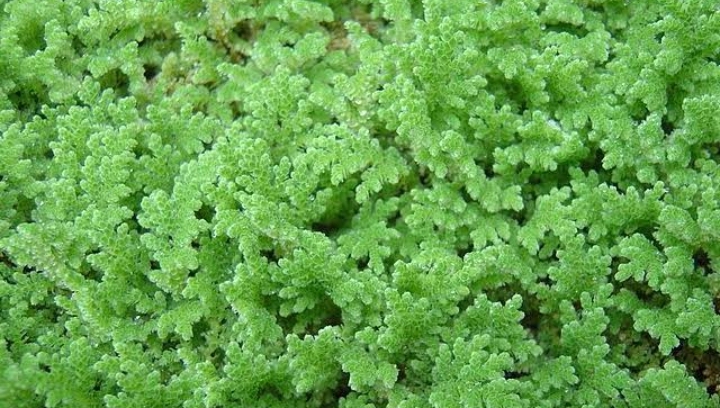
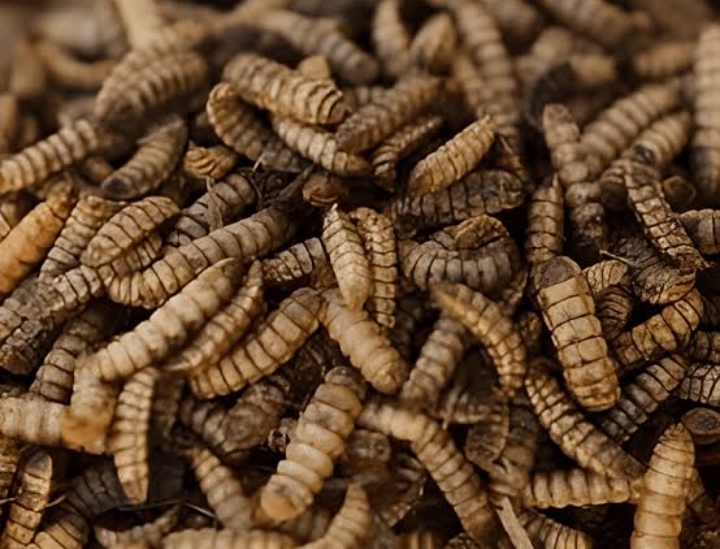
    Black soldier fly larvae vs azolla
    Before we start, which one would you use between these two?
    Let me know in the comments.

    First, let me make something clear.

    From what I have seen, these options work mostly for small poultry farms.

    Large commercial layer farms rarely depend on them.
    Therefore, if you run a small-scale poultry farm, this information will help you.

    1. Azolla

    Among all cheap poultry feed alternatives, Azolla has gained massive attention worldwide.
    In fact, many farmers see it as a small miracle plant.

    Scientifically, Azolla is a small aquatic fern. It grows quickly and can double its size every 72 hours.

    Because of this rapid growth, farmers can produce large amounts with very little space.

    Azolla.A cheap alternative feeds for poultry and livestock farmers.

    Additionally, Azolla contains high levels of protein and other nutrients useful for chickens.

    Another advantage is its simplicity. Farmers can learn how to grow Azolla in just a few hours.

    After harvesting, it can be fed fresh from the pond. Alternatively, farmers can dry it before feeding.

    However, there is one important warning.
    Azolla should only be used as a supplement, not a complete feed.

    Never feed chickens only Azolla.

    2. Black Soldier Fly Larvae

    Black soldier fly larvae

    If Azolla is Breaking Bad, then Black Soldier Fly Larvae are Better Call Saul.
    Although not as popular as Azolla, this option is also powerful.

    Black Soldier Fly larvae come from the black soldier fly insect. Farmers raise these flies using organic waste.

    During feeding, the flies lay eggs. Soon after, the eggs hatch into larvae.

    This process usually takes 10–15 days.

    These larvae contain extremely high protein levels. In fact, they contain more protein than Azolla.

    Because of this, many farmers use them to replace part of the commercial feed protein.


    Moreover, the system is simple. It is also fast and relatively cheap.

    As a result, many farmers consider this one of the best cheap poultry feed alternatives available.

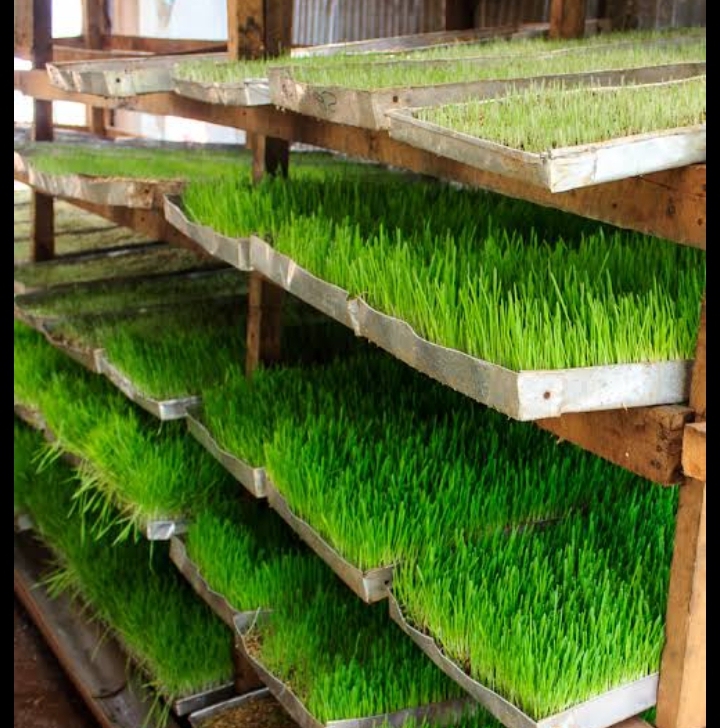
    3. Hydroponic Fodder

    Another interesting option is hydroponic fodder.

    Many people believe hydroponics is part of the future of agriculture.

    Unlike traditional farming, hydroponics grows crops without soil.

    Hydroponic fodder


    In this system, barley seeds are placed in trays and watered regularly.
    Within a few days, the seeds sprout into soft green fodder.

    At that stage, the young plants are fed directly to chickens.

    Unlike Azolla and larvae, hydroponic fodder mainly provides energy.

    Because of this, it can replace part of the energy portion of poultry feed.

    Furthermore, it grows quickly and requires very little land.

    Farmers also need no special degree or training to start.
    With small effort, this method can help reduce feed expenses by big margins.

    Before You See The Last Option,

    Get a Free copy of my Ebook on starting and running a profitable layer poultry farm👇🏿

    Free beginners guide to starting a profitable layer poultry farm. Step by Step guide.
    Name
    Limited access. Join other serious farmers who have taken the guide and get support.

    4. Garden Or Kitchen Food

    At home, I often struggle with free-range chickens during planting season.🥲

    They wait for maize to sprout. Then suddenly, they eat all the young leaves.

    Soon after, the plants grow again.

    Unfortunately, the chickens return and eat them again.

    Clearly, chickens love green plants.

    Because of this, some farmers use greens as another feed source.
    They usually do this in two ways.

    Planting Greens For Chicken

    Green plants are loved by chicken and can be used to lower feed costs.

    First, farmers can plant crops specifically for poultry.

    Common choices include maize, spinach, kales, and different grasses.

    Later, farmers either harvest the leaves or allow chickens to forage directly.

    However, layer chickens are usually kept indoors.Therefore, the farmer simply cuts the greens and carries them to the poultry house.

    Using Kitchen Food Remains

    Using Kitchen Food Remains
    Second, farmers can feed chickens vegetable leftovers from the kitchen.

    After all, most homes produce some food waste every day.

    Instead of throwing it away, farmers can give it to their chickens.


    However, this method has one weakness.

    Kitchen waste is not always reliable.

    For example, what happens when you eat out?

    What happens when you cook less food?

    Because of this, kitchen waste works best as an occasional supplement.

    Finally..

    These are the four main cheap poultry feed alternatives used by many farmers.

    Remember, listing them does not mean every farmer should use them.

    Each option has its own limitations.

    Therefore, you must evaluate what works best for your farm.
    Large layer farms usually prefer commercial feeds or professionally formulated feeds.

    Meanwhile, if you’re a small-scale farmer you can experiment carefully with these alternatives.

    If you want to see my personal recommendations for reducing feed costs, Read Here


    Finally, watch out for my next post.
    In that article, I will explain why I personally will not use any of these alternative feeds.


    See you next Friday!

    secretlayerske@gmail.com

    carlosdeche4040@gmail.com

  • The Samurai Master And The Young Warrior

    Once, there was an old samurai master.

    He had trained for many years. Because of that, people knew him as wise, brave, and full of experience.


    Many young warriors wanted to learn from him. However, it was very hard to become his student. In fact, it was almost impossible.


    One day, he was choosing new students. At that time, a young man who had dreamed of becoming a samurai master all his life stepped forward.


    Master,” he asked, “how long will it take for me to become a master?

    Young warrior in training to become a Samurai. In line with a Zen parable perfect for farmers.
    A young warrior training to be a Samurai master.


    The old master replied, “Ten years.”


    The young man was shocked. So he quickly said, “Ten years is too long! What if I train twice as hard? What if I train day and night? How long will it take then?


    The master looked at him and smiled gently. Then he said, “In that case, it will take twenty years.”


    The young warrior was confused. Therefore, he asked, “Why twenty years?”


    Calmly, the master answered,
    “Because if you have one eye fixed on the destination, you only have one eye left to find your way.”

    What Is The Lesson?

    The lesson is simple.


    To achieve true mastery, you must let go of the goal and embrace the process.


    In other words, do not rush. Instead, focus on learning step by step.

    What This Means For Your Farm..

    This lesson also applies to farming.


    Many people think only about money. Others think about owning large land or having a big herd. However, that is not where mastery begins.


    First, think about planning.
    Next, focus on daily management.
    After that, solve problems as they come.
    Finally, always look for new opportunities.


    Success on the farm does not start with profit. Rather, it starts with good systems and patience.


    So stop thinking only about the money, the land, or the herd. Instead, think about the process every single day.


    That is how true mastery is built.

    In line with that..if you’re planning to start layer poultry farming,

    Get this Free Layer Poultry Farming Guide straight to your inbox.

    Free beginners guide to starting a profitable layer poultry farm. Step by Step guide.
    Name
    Limited access. Join other serious farmers who have taken the guide and get support.

    See you next Friday!

    carlosdeche4040@gmail.com

    secretlayerske@gmail.com

  • How Online MarketPlaces Can Save Farmers From Middlemen


    Let me tell you my story. I’m from Tezo, Kilifi County, about 10 km from Kilifi town. Sometimes, I buy one tomato for Ksh.10. On the best days, I’ve bought a single tomato for just Ksh.5.


    For someone who doesn’t know the supply chain for agricultural produce, that may seem normal. However, a deeper look—or just a quick search on Google—reveals the truth. It’s shocking and a little terrifying.


    In 2024, tomato prices in Kirinyaga dropped to Ksh.15 per kilogram. When a farmer sells that kilo for Ksh.15 to a middleman, the price in Kilifi jumps to around Ksh.70–100 per kilogram. That is a huge difference, and it shows how much profit is being captured by middlemen instead of the farmers who grew the tomatoes.


    Imagine if I could check online and see a farmer in Kirinyaga selling tomatoes for Ksh.40 per kilogram. I would buy immediately. I would pay Ksh.30–50 less. At the same time, the farmer would earn Ksh.25 more, which is a 167% increase. This kind of win-win situation is exactly what online marketplaces could make possible.


    It’s not as simple as it sounds. Many farmers in Kenya already use social media like WhatsApp, Facebook, Instagram, and TikTok to sell their produce. It works for some, but there are challenges that make it hard to scale and provide real value for both farmers and consumers.


    Today, let’s focus on farmers online marketplaces, like Mkulima Young, Mkulima Bora, and Mkulima Online. These are different from social media platforms.

    What Can They Do To Help Me Buy 2 kg Of Tomatoes From Kilifi At A Fair Price While Also Ensuring That Farmers Earn More?

    1. Logistics


    Farmers often cannot sell to all individual buyers across the country because transporting small amounts of produce is expensive. If they try to deliver on their own, the cost may wipe out their profits. Middlemen solve this problem by collecting from many farmers and delivering to consumers, but they usually pay farmers very low prices.


    Online marketplaces need a reliable logistics system to solve this problem. They can either build their own delivery network or partner with delivery companies. By solving this hurdle, marketplaces can help farmers sell at fair prices while making sure consumers still pay less than they would at the market.

    2. Trust


    Trust is one of the biggest challenges. No buyer wants to pay for goods that never arrive, and no farmer wants to deliver produce without being paid. Many online platforms in Kenya struggle because buyers and farmers are unsure whether the other party can be trusted.


    Even though M-Pesa exists for safe payments, many buyers prefer to negotiate on WhatsApp. People feel more control and security when they can see and communicate directly with the seller. Platforms like Jumia show that trust can be built over time with consistent service and marketing, but it takes years and a big budget to convince buyers to feel safe using a platform.

    3. Business Model


    Another important challenge is the business model itself. Should online marketplaces sell directly to consumers or focus on mama mbogas? A B2B (business-to-business) model could actually be more effective.


    In this approach, farmers sell at higher prices to the platform. The platform then sells to mama mbogas at lower prices than the middleman would charge. Finally, consumers get fresh produce at lower prices from the mama mbogas. This system ensures that everyone benefits: farmers earn more, mama mbogas pay less, and consumers get better prices.


    Twiga Foods uses a similar model. They buy produce directly from farmers at fair prices and supply mama mbogas reliably. Even though they act like a large middleman, they are more predictable and less exploitative. Online marketplaces could adopt this strategy to create a fairer agricultural supply chain.

    What Next?


    Farmers online marketplaces can succeed if they solve logistics, trust, and business model challenges. Platforms that address these issues will empower farmers, reduce middlemen exploitation, and make fresh produce more affordable for consumers. In the future, these marketplaces could even help farmers export produce across Africa and the world.


    Do you think online marketplaces can really help farmers escape middlemen?

    I’d love to hear your thoughts in the comments.

    Follow my YouTube channel to learn more about how you can start and run a profitable layer poultry farm👇🏿

    https://youtube.com/@secretlayerske?si=nYnAL-jwN6Wc3PlV

    See you next Friday!

    carlosdeche4040@gmail.com

    secretlayerske@gmail.com

  • 9 Common Layer Chicken Diseases And How To Recognize Them Early

    Diseases in layers can reduce egg production, slow growth, and even kill birds if a farmer does not act early.

    Many problems start with small signs, so it helps to know what to watch for.


    First, always observe your birds every day. Early action saves money and protects the flock.

    These are the common chicken diseases in layers,how to recognize them early and how to treat them.

    1. Marek’s Disease

    Marek’s disease is a viral disease caused by a herpes virus. It spreads when birds inhale infected dust or feathers.

    Signs to look for:

    Paralysis of one leg or both legs.

    Incoordination

    Drooping wings or neck.

    Weight loss and poor appetite.

    Rough feathers .

    Depression.

    Tumors or swellings.

    Drop in egg production.


    Prevention is by vaccination at an early age.

    Mainly given on day one at the hatchery if you buy from reputable hatcheries.

    2. Infectious Bursal Disease (Gumboro)

    This disease is caused by the IBD virus. It weakens the immune system, so birds get sick easily.

    Signs to look for:

    Watery diarrhea.

    Wet and soiled feathers.

    Poor feeding.

    Ruffled feathers.

    Weakness and incoordination.


    Vaccination is the best prevention.

    3. Coccidiosis

    Coccidiosis is a protozoal disease that affects the gut. Birds get it by eating oocysts from contaminated litter or soil.

    Signs to look for:

    Bloody or mucoid diarrhea.

    Low feed intake and weight loss.

    Dehydration.

    Pale comb and wattles.

    Drop in egg production.

    It is usually self limiting – meaning it goes away without treatment so long as the birds are healthy.


    Wet litter increases risk because it helps the parasite multiply.

    Treatment is with anticoccidial drugs, and sometimes antibiotics are used to control secondary infections.

    4. New Castle Disease

    Newcastle disease is a highly contagious viral disease.

    It affects the nerves, breathing system, and egg production.

    Neck twisting. Common in New Castle Disease. In a secret layers blog post of 9 Common layer chicken diseases.
    Neck twisting in a chicken. Commonly seen in New Castle’s Disease.

    Signs to look for:

    Twisted neck and circling.

    Wing drooping and paralysis.

    Tremors.

    Sneezing and coughing.

    Greenish diarrhea.

    Soft or deformed eggs.

    Sharp drop in egg production.

    Vaccination is essential for prevention.

    5. Infectious Coryza

    Infectious coryza is a bacterial respiratory disease. It spreads quickly in a flock.

    Signs to look for:

    Facial swelling around the eyes and cheeks.

    Thick, bad-smelling discharge from eyes or nose.

    Noisy breathing or open-mouth breathing.

    Poor appetite.

    Pale combs and wattles.

    Drop in egg production.


    Treatment is with antibiotics and good hygiene.

    6. Fowl Pox

    Fowl pox is a viral disease caused by the avian Pox virus.

    It has two forms:

    Dry Form/Cutaneous

    Scabs or lesions on comb, wattles, and legs.

    Wet Form/Diphtheric

    The wet form is more serious because:

    Lesions form in the mouth and throat.

    Birds have trouble breathing or swallowing.

    Feeding decreases and production drops.


    Vaccination helps prevent this disease.

    7. Infectious Bronchitis

    Infectious bronchitis is another viral respiratory disease.

    Signs to look for:

    Coughing and sneezing.

    Nasal discharge.

    Gasping and breathing sounds.

    Wrinkled or poor-quality eggs.

    Reduced egg production.

    Facial swelling.

    Vaccination and good ventilation help control it.

    8. Worm Infestation

    Worms are internal parasites that affect growth and production.

    Signs to look for:

    Weight loss.

    Diarrhea, sometimes with worms.

    Pale comb and wattles.

    Low egg production.

    Lethargy.

    Regular deworming helps prevent heavy infestation.

    9. Fowl Typhoid

    Fowl typhoid is a bacterial disease that can cause heavy losses.

    Signs to look for

    White diarrhea stuck on feathers.

    Poor feeding and weight loss.

    Weakness and ruffled feathers.

    Pale comb and wattles.

    Reduced egg production.

    Treatment is with antibiotics and strict hygiene.

    Which of these diseases has been disturbing you on your farm?

    Let me know in the comments.

    Treatment Principles

    When disease appears, act quickly.

    First, isolate sick birds to stop spread.

    Next, provide clean water and good feed to support recovery.

    Finally, use vaccination, antibiotics, or other drugs only when appropriate and based on the disease.

    Consult your local veterinary.

    Vaccination Schedule

    After a long period of struggling with the proper vaccination schedule to use for my layers, I researched and found the best one.

    One simple schedule and the Kenchic one.

    Read here to know which is best for your farm👇🏿

    https://secretlayers.co.ke/blog/vaccination-schedule-for-layers-a-simple-guide-for-farmers/

    If you’re yet to start your layer poultry farm, get this Free guide to help you start.

    Name
    Limited access. Join other serious farmers who have taken the guide and get support.

    See you next Friday!

    carlosdeche4040@gmail.com

    secretlayerske@gmail.com