Once, Buddha was trying to teach his students a lesson.
So, he sat them under a tree and asked them a question.
“If I shoot you with an arrow, would it hurt?”
“Yes,” the students said in unison.
Then, he asked another question.
“If I shoot you again with a second arrow at the same spot, would it hurt?”
This time, the students looked shocked.
“Of course it would,” they replied.
At this point, Buddha cleared his throat and continued.
“In life, we are usually hit with two arrows.”
First, there is the arrow of life. This includes suffering, loss, disease, and disappointment. All these things are painful. However, most of them are not under our control.
Then comes the second arrow. This is how we respond to the first one. For example, it is the self-criticism, the overthinking, and the doubt.
In addition, it is the constant questioning and denial.
As a result, this second arrow becomes even more painful.
But here is the most important part. The second arrow is totally under your control.
Therefore, how you react to problems determines your level of suffering. As it is often said, pain is inevitable, but suffering is optional.
Now, What Does This Have To Do With Farming?
I believe you cannot become a successful farmer before you master yourself.
You see, life as a farmer will hit you from all sides.
Anything that can go wrong on your farm will go wrong.
At the same time, life will also keep happening.
You will get sick. Your family and friends will get sick. You might lose your job. You will even get into disagreements.
So, what really matters is not whether these things happen.
Instead, it is how you respond to them. Spending all your time focusing on problems will not help you.
However, acknowledging what happened and focusing on solutions will.
That is what separates you from other farmers.
In fact, as Alex Hormozi and Leila Hormozi often say: “F**k your mood. Follow the plan.”
That is the mindset you need to have.
By the way, if you have been struggling with early chick deaths within the first one month, I created something for you.
Get this Free Brooding Guide, and I will also send you a bonus Layer Poultry Farming Guide.
But cheap poultry feed alternatives could save it.
This is one of the first lessons farmers learn when they research the poultry business.
Unfortunately, many beginners never research first. As a result, they pay dearly for that ignorance later.
The reason is simple. On most poultry farms, feed alone takes 60–70% of the total production cost. Even worse, that cost can rise to 80% if feeding is poorly managed.
Meanwhile, the commercial poultry feed business is a powerful industry on its own. In many cases, it is more profitable than poultry farming itself.
For example, in 2026 De Heus Nutrition, one of the largest animal nutrition companies in the world, opened a new feed plant in Kenya.
Interestingly, this happened despite the hundreds of animal feed companies already operating in the country.
So why would such a big company still invest here?
Clearly, the answer is simple. Feed demand is enormous.
And because poultry feed is expensive, farmers have always looked for ways to lower this major cost.
Therefore, many have experimented with cheap poultry feed alternatives. These options help farmers reduce reliance on commercial feeds.
After all, commercial feeds are often expensive and sometimes unsustainable for small farmers.
Personally, I have seen some farmers succeed with these alternatives. However, I do not have exact figures showing how much their feed costs dropped or how much their profits increased.
Nevertheless, this post will introduce several cheap poultry feed alternatives used by farmers.
Before we start, which one would you use between these two? Let me know in the comments.
First, let me make something clear.
From what I have seen, these options work mostly for small poultry farms.
Large commercial layer farms rarely depend on them. Therefore, if you run a small-scale poultry farm, this information will help you.
1. Azolla
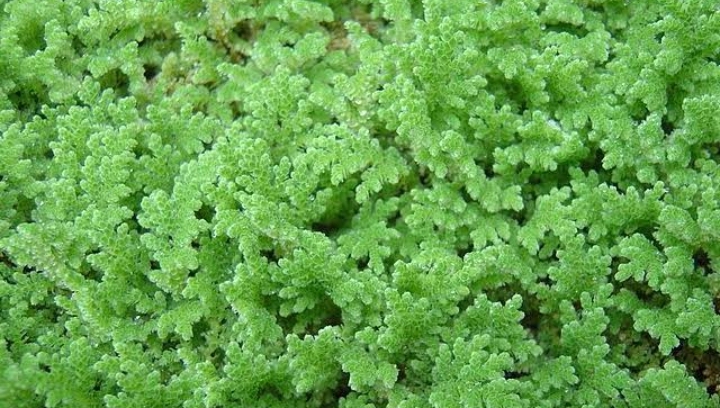
Among all cheap poultry feed alternatives, Azolla has gained massive attention worldwide. In fact, many farmers see it as a small miracle plant.
Scientifically, Azolla is a small aquatic fern. It grows quickly and can double its size every 72 hours.
Because of this rapid growth, farmers can produce large amounts with very little space.
Additionally, Azolla contains high levels of protein and other nutrients useful for chickens.
Another advantage is its simplicity. Farmers can learn how to grow Azolla in just a few hours.
After harvesting, it can be fed fresh from the pond. Alternatively, farmers can dry it before feeding.
However, there is one important warning. Azolla should only be used as a supplement, not a complete feed.
Never feed chickens only Azolla.
2. Black Soldier Fly Larvae
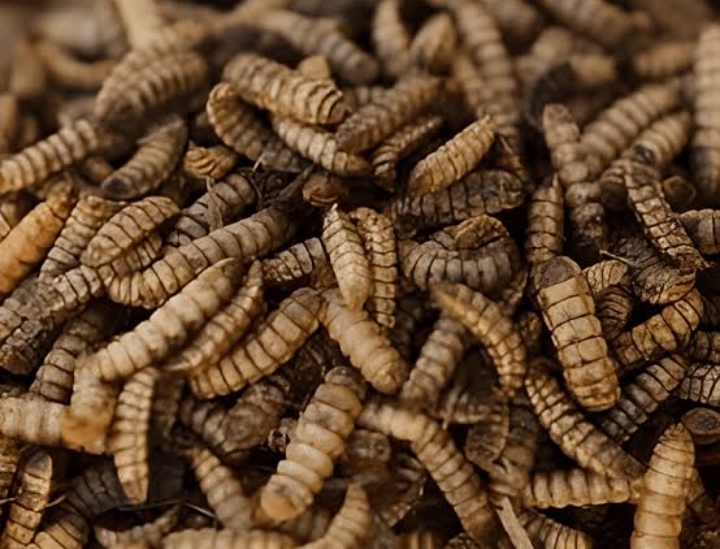
If Azolla is Breaking Bad, then Black Soldier Fly Larvae are Better Call Saul. Although not as popular as Azolla, this option is also powerful.
Black Soldier Fly larvae come from the black soldier fly insect. Farmers raise these flies using organic waste.
During feeding, the flies lay eggs. Soon after, the eggs hatch into larvae.
This process usually takes 10–15 days.
These larvae contain extremely high protein levels. In fact, they contain more protein than Azolla.
Because of this, many farmers use them to replace part of the commercial feed protein.
Moreover, the system is simple. It is also fast and relatively cheap.
As a result, many farmers consider this one of the best cheap poultry feed alternatives available.
3. Hydroponic Fodder
Another interesting option is hydroponic fodder.
Many people believe hydroponics is part of the future of agriculture.
Unlike traditional farming, hydroponics grows crops without soil.
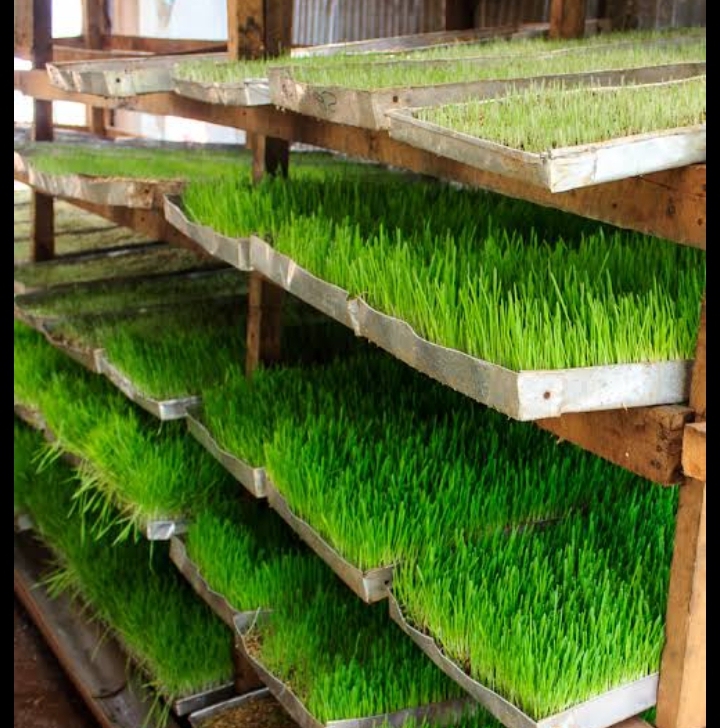
In this system, barley seeds are placed in trays and watered regularly. Within a few days, the seeds sprout into soft green fodder.
At that stage, the young plants are fed directly to chickens.
Unlike Azolla and larvae, hydroponic fodder mainly provides energy.
Because of this, it can replace part of the energy portion of poultry feed.
Furthermore, it grows quickly and requires very little land.
Farmers also need no special degree or training to start. With small effort, this method can help reduce feed expenses by big margins.
Before You See The Last Option,
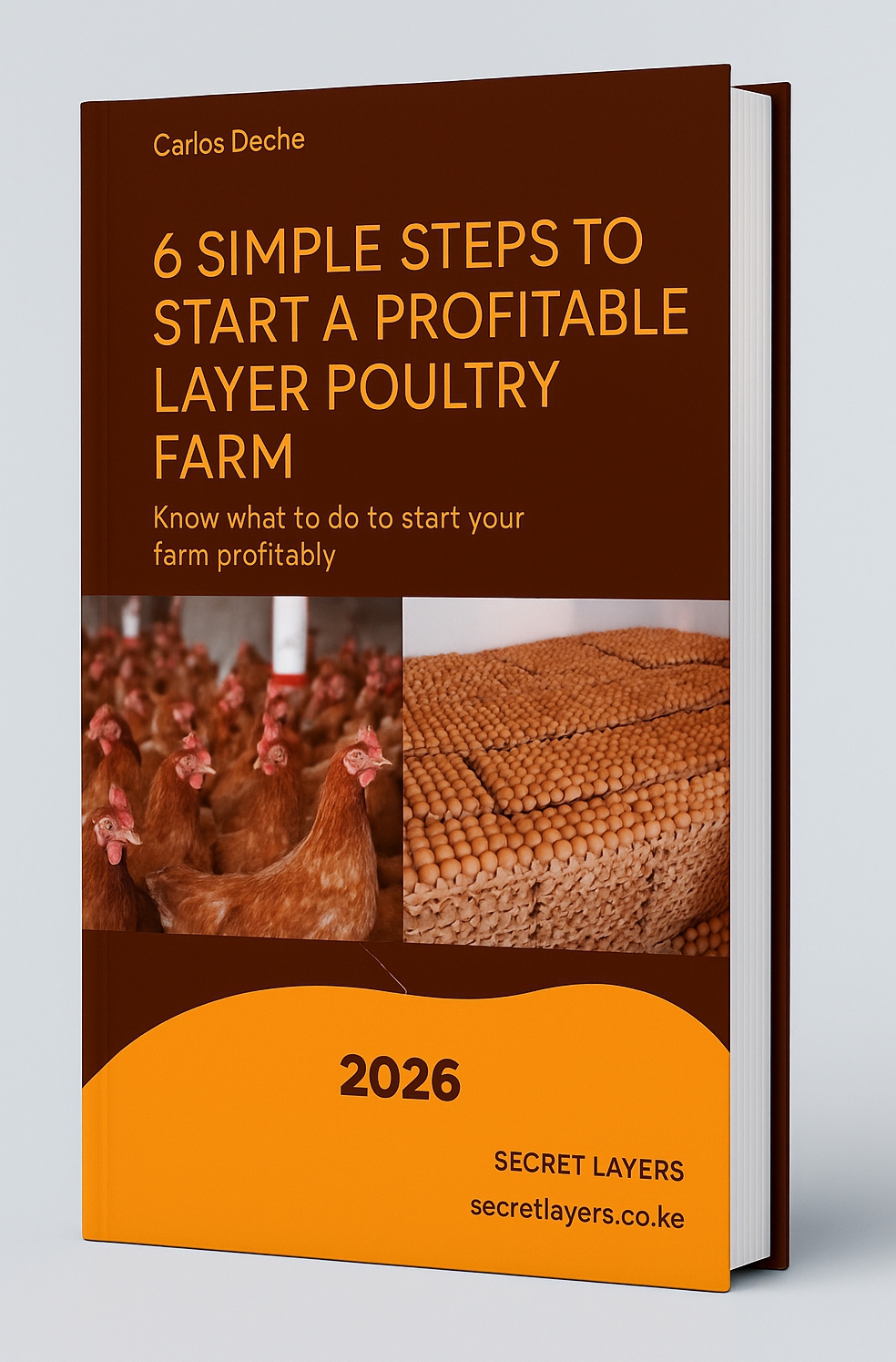
Get a Free copy of my Ebook on starting and running a profitable layer poultry farm👇🏿
4. Garden Or Kitchen Food
At home, I often struggle with free-range chickens during planting season.🥲
They wait for maize to sprout. Then suddenly, they eat all the young leaves.
Soon after, the plants grow again.
Unfortunately, the chickens return and eat them again.
Clearly, chickens love green plants.
Because of this, some farmers use greens as another feed source. They usually do this in two ways.
Planting Greens For Chicken
First, farmers can plant crops specifically for poultry.
Common choices include maize, spinach, kales, and different grasses.
Later, farmers either harvest the leaves or allow chickens to forage directly.
However, layer chickens are usually kept indoors.Therefore, the farmer simply cuts the greens and carries them to the poultry house.
Using Kitchen Food Remains
Using Kitchen Food Remains Second, farmers can feed chickens vegetable leftovers from the kitchen.
After all, most homes produce some food waste every day.
Instead of throwing it away, farmers can give it to their chickens.
However, this method has one weakness.
Kitchen waste is not always reliable.
For example, what happens when you eat out?
What happens when you cook less food?
Because of this, kitchen waste works best as an occasional supplement.
Finally..
These are the four main cheap poultry feed alternatives used by many farmers.
Remember, listing them does not mean every farmer should use them.
Each option has its own limitations.
Therefore, you must evaluate what works best for your farm. Large layer farms usually prefer commercial feeds or professionally formulated feeds.
Meanwhile, if you’re a small-scale farmer you can experiment carefully with these alternatives.
If you want to see my personal recommendations for reducing feed costs, Read Here
Finally, watch out for my next post. In that article, I will explain why I personally will not use any of these alternative feeds.
He had trained for many years. Because of that, people knew him as wise, brave, and full of experience.
Many young warriors wanted to learn from him. However, it was very hard to become his student. In fact, it was almost impossible.
One day, he was choosing new students. At that time, a young man who had dreamed of becoming a samurai master all his life stepped forward.
“Master,” he asked, “how long will it take for me to become a master?”
A young warrior training to be a Samurai master.
The old master replied, “Ten years.”
The young man was shocked. So he quickly said, “Ten years is too long! What if I train twice as hard? What if I train day and night? How long will it take then?”
The master looked at him and smiled gently. Then he said, “In that case, it will take twenty years.”
The young warrior was confused. Therefore, he asked, “Why twenty years?”
Calmly, the master answered, “Because if you have one eye fixed on the destination, you only have one eye left to find your way.”
What Is The Lesson?
The lesson is simple.
To achieve true mastery, you must let go of the goal and embrace the process.
In other words, do not rush. Instead, focus on learning step by step.
What This Means For Your Farm..
This lesson also applies to farming.
Many people think only about money. Others think about owning large land or having a big herd. However, that is not where mastery begins.
First, think about planning. Next, focus on daily management. After that, solve problems as they come. Finally, always look for new opportunities.
Success on the farm does not start with profit. Rather, it starts with good systems and patience.
So stop thinking only about the money, the land, or the herd. Instead, think about the process every single day.
That is how true mastery is built.
In line with that..if you’re planning to start layer poultry farming,
Get this Free Layer Poultry Farming Guide straight to your inbox.
Let me tell you my story. I’m from Tezo, Kilifi County, about 10 km from Kilifi town. Sometimes, I buy one tomato for Ksh.10. On the best days, I’ve bought a single tomato for just Ksh.5.
For someone who doesn’t know the supply chain for agricultural produce, that may seem normal. However, a deeper look—or just a quick search on Google—reveals the truth. It’s shocking and a little terrifying.
In 2024, tomato prices in Kirinyaga dropped to Ksh.15 per kilogram. When a farmer sells that kilo for Ksh.15 to a middleman, the price in Kilifi jumps to around Ksh.70–100 per kilogram. That is a huge difference, and it shows how much profit is being captured by middlemen instead of the farmers who grew the tomatoes.
Imagine if I could check online and see a farmer in Kirinyaga selling tomatoes for Ksh.40 per kilogram. I would buy immediately. I would pay Ksh.30–50 less. At the same time, the farmer would earn Ksh.25 more, which is a 167% increase. This kind of win-win situation is exactly what online marketplaces could make possible.
It’s not as simple as it sounds. Many farmers in Kenya already use social media like WhatsApp, Facebook, Instagram, and TikTok to sell their produce. It works for some, but there are challenges that make it hard to scale and provide real value for both farmers and consumers.
Today, let’s focus on farmers online marketplaces, like Mkulima Young, Mkulima Bora, and Mkulima Online. These are different from social media platforms.
What Can They Do To Help Me Buy 2 kg Of Tomatoes From Kilifi At A Fair Price While Also Ensuring That Farmers Earn More?
1. Logistics
Farmers often cannot sell to all individual buyers across the country because transporting small amounts of produce is expensive. If they try to deliver on their own, the cost may wipe out their profits. Middlemen solve this problem by collecting from many farmers and delivering to consumers, but they usually pay farmers very low prices.
Online marketplaces need a reliable logistics system to solve this problem. They can either build their own delivery network or partner with delivery companies. By solving this hurdle, marketplaces can help farmers sell at fair prices while making sure consumers still pay less than they would at the market.
2. Trust
Trust is one of the biggest challenges. No buyer wants to pay for goods that never arrive, and no farmer wants to deliver produce without being paid. Many online platforms in Kenya struggle because buyers and farmers are unsure whether the other party can be trusted.
Even though M-Pesa exists for safe payments, many buyers prefer to negotiate on WhatsApp. People feel more control and security when they can see and communicate directly with the seller. Platforms like Jumia show that trust can be built over time with consistent service and marketing, but it takes years and a big budget to convince buyers to feel safe using a platform.
3. Business Model
Another important challenge is the business model itself. Should online marketplaces sell directly to consumers or focus on mama mbogas? A B2B (business-to-business) model could actually be more effective.
In this approach, farmers sell at higher prices to the platform. The platform then sells to mama mbogas at lower prices than the middleman would charge. Finally, consumers get fresh produce at lower prices from the mama mbogas. This system ensures that everyone benefits: farmers earn more, mama mbogas pay less, and consumers get better prices.
Twiga Foods uses a similar model. They buy produce directly from farmers at fair prices and supply mama mbogas reliably. Even though they act like a large middleman, they are more predictable and less exploitative. Online marketplaces could adopt this strategy to create a fairer agricultural supply chain.
What Next?
Farmers online marketplaces can succeed if they solve logistics, trust, and business model challenges. Platforms that address these issues will empower farmers, reduce middlemen exploitation, and make fresh produce more affordable for consumers. In the future, these marketplaces could even help farmers export produce across Africa and the world.
Do you think online marketplaces can really help farmers escape middlemen?
I’d love to hear your thoughts in the comments.
Follow my YouTube channel to learn more about how you can start and run a profitable layer poultry farm👇🏿