Tag: Business

  • Why It Might Be Time To Quit Farming And Walk Away – Sunk Cost Fallacy

    What if I tell you maybe it’s time you actually killed that farm of yours.

    Yes. It might be time to sell everything.
    The birds. The animals. The houses. Maybe even walk away and start something new.

    I know. That sounds crazy coming from me.

    For the last 8 months I have been writing this blog, I have shown you my farming journey.
    I have shown you how farming can make you money. I have shown you how it can ultimately give you financial freedom.

    But today, let’s look at things from a different angle.

    Something Strange Was Happening

    Many years ago, economists noticed something odd.
    New businesses were losing money. A lot of money. More than they should.

    You might say — “Carlos, that’s normal. My small business hasn’t made a profit in six months.” And you’re right. Losses happen.

    But this was different.

    These businesses kept losing money for a long time. Way longer than made sense.


    That made the economists ask:
    Didn’t they see it happening?
    Couldn’t they spot the pattern?
    What were they waiting for?

    Then they noticed something else. Governments were doing the same thing. Losing money. Money that could have been saved if someone had acted sooner.

    That’s when the name Sunk Cost Fallacy was coined.

    The Sunk Cost Fallacy

    What Is The Sunk Cost Fallacy?
    It is simple.
    It is when you keep doing something because of what you have already put into it instead of looking at the outcome.
    Even when it is clearly not going to work.

    Time. Money. Effort.

    Here are some good examples..
    You keep watching a boring movie. Why? Because you already paid for it.

    You stay at a job you hate. Why? Because you have already been there 10 years — even though there is no promotion coming.


    You stay in a bad relationship. Why? Because you have already been together for 2 years.

    That is the sunk cost fallacy.

    The $9 Million Board Meeting

    Here is what it looks like in a real business.

    A company puts its best people, its money, and two years into a new product. The product flops. Almost no one buys it. The few who do won’t even tell their friends about it.

    So they have a board meeting..

    Person 1: We should kill this project. It is not working.


    Person 2: I agree. The market doesn’t want it.


    Person 3: But we have already put in so much time. (The beginning of the sunk cost fallacy)


    Person 4: Yes. And so much money. This is one of our biggest projects ever.


    Person 5: Think about all those 20-hour days we worked. Remember the commitment we made?

    They decide to keep going.
    At this point, they have lost $1 million.

    13 Months Later…

    Person 1: I think we should shut it down. It’s not going to work.


    Everyone else: Yeah. Kill it.

    Short meeting. But now they have lost $10 million.

    Why didn’t they stop at the first meeting?

    Sometimes Quitting Is The Right Move

    I believe in hard work. I believe in not giving up.

    But sometimes, quitting is the smartest thing you can do.

    A job. A career. A business. A project.
    Codie Sanchez, author of Main Street Millionaire, once said on her X page: “Quitters are winners.”

    Controversial? Yes. But think about it.

    Winners quit their bad habits. Their bad friends. Their bad environments. Their bad jobs. And then they go on to win with better ones.

    That is what she meant.

    Farmers Are Not An Exception

    Many farmers keep pouring money into a farm that makes zero profit. Whether it’s poultry, livestock or crops. It doesn’t matter.

    The scariest part? Most of them don’t even know they are losing money.

    If that is you right now — it might be time to put the hoe down and walk away.

    African man crying used to illustrate sunk cost fallacy.
    Maybe it’s time to quit that farming project and look for other viable opportunities.

    So How Do You Know When To Quit?

    Here are four things to ask yourself.


    1. Do you hate what you are doing?

    Pushing through something you hate helps no one. Not you. Not the people around you. Find something you actually like doing.


    2. Have you truly tried everything?

    Most people quit too early. They try 10 things and say “it didn’t work.” You need to try an unreasonable number of things first. Different methods. Different tactics. Different experts. Then, if nothing works — you have your answer.
    This is the most important one.


    3. Ask yourself: would I start this again today?

    Forget the past. Forget the money and time you already spent. If you were starting fresh today — would you choose this again?
    If the answer is no, that tells you something.


    4. Set your “kill criteria” before you start.

    Before you begin anything — a farm, a business, a project — decide in advance what will make you walk away. Write it down. When you hit that line, you walk. No guilt. No regrets.


    (This is one of the topics I’m considering to put in the farming bool I’m writing – Before You Farm. Tell me what you think in the comments)


    Quitting Doesn’t Make You A Quitter. It Makes You A Pivoter.

    Walking away from something that is not working does not make you weak.
    It makes you smart.

    For a deeper look at this topic, I recommend the book “Quit: The Power of Knowing When to Walk Away” by Annie Duke.


    What are your personal thoughts on quitting? Drop your thoughts in the comments.

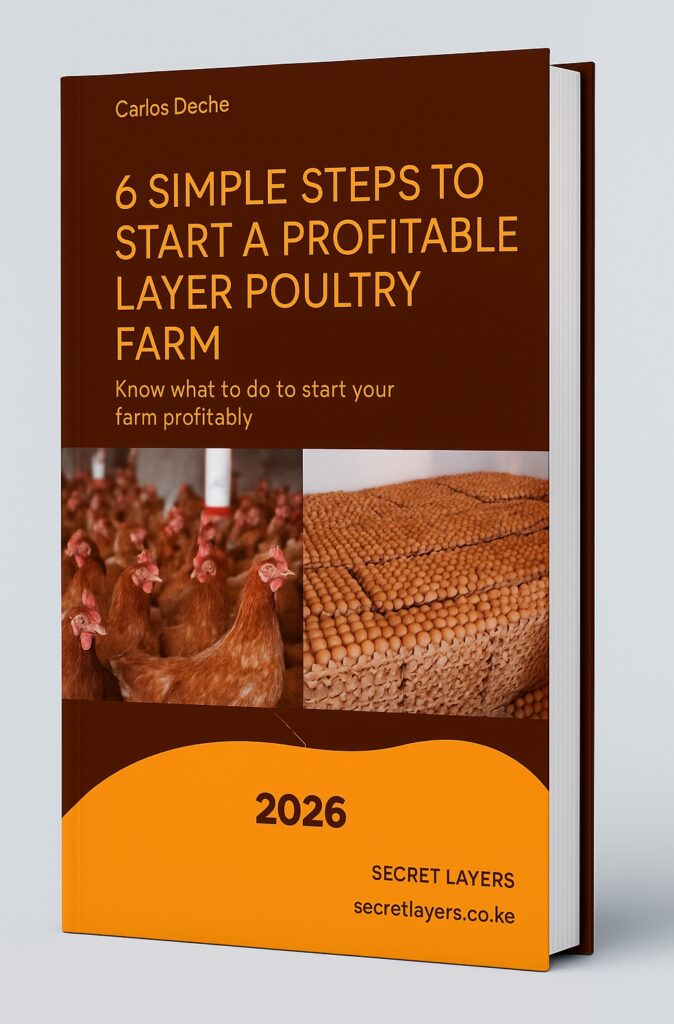
    If you want to learn how to start and run a layer poultry farm profitably — grab the Free Ebook below👇🏿
    Name
    Limited access. Join other serious farmers who have taken the guide and get support.


    See you next Friday!

  • The Story Of The Chinese Farmer And The Horse


    This is a parable from ancient China that teaches us that things are neither good nor bad. They just are.

    A farmer on a horse
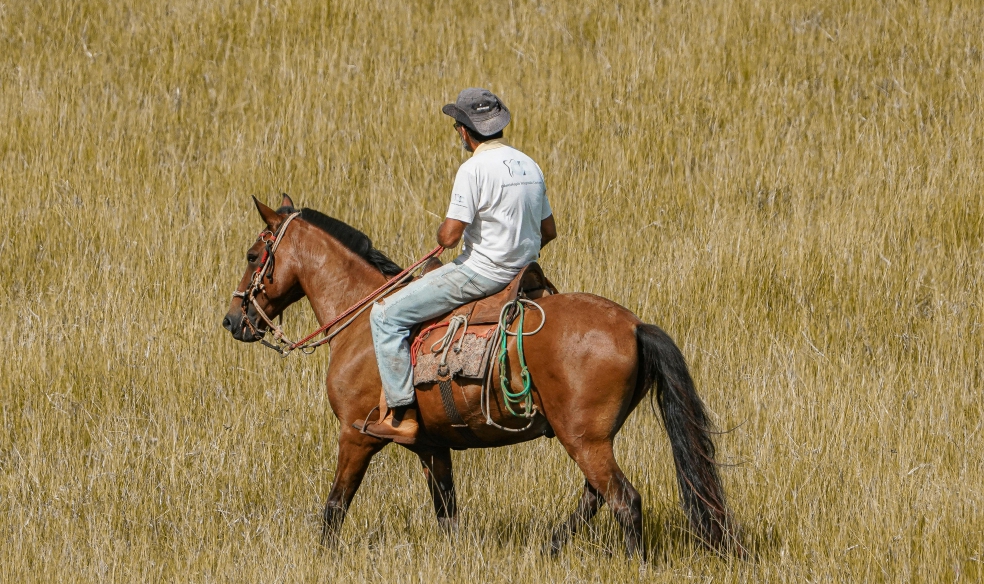
    An image illustration of the Chinese farmer’s eldest boy on a horse


    A farmer in a rural Chinese village bought a horse and brought it home.
    Early the next morning, as he was feeding the horse, it ran away. His neighbors felt sorry for him. They gathered around his farm and said, “We’re so sorry. How unlucky.”

    The farmer calmly replied, “We’ll see.”


    Just before sunset the next day, the horse returned with seven wild horses. The farmer and his family were very happy. The neighbors came back, smiling. “Oh, you’re so lucky! You now have eight horses. Your farm will grow quickly.”

    The farmer replied, “We’ll see.”


    Three days later, the farmer’s eldest son tried to ride one of the wild horses. He couldn’t control it, and the horse threw him over. The boy fell on the rocks and broke his leg. The neighbors said, “You’re so unlucky. The horses weren’t blessings at all. Poor boy. Poor family.”

    The farmer simply said, “We’ll see.”


    The following day, war broke out in the country. The king’s officers came to recruit young men for the army. The farmer’s son was rejected because of his injury. All the neighbors ran to him, saying, “Oh my God! Your son was spared. That’s so fortunate. How lucky!”

    The farmer replied, “We’ll see.”


    Life events are not inherently good or bad. They just happen. Many times, we try to assign meaning to them. We label events as good or bad. In reality, they don’t make sense in isolation.

    Only after time passes, when you look at the bigger picture, does their meaning become clear.

    Why Did I Write This Story On A Layer Poultry Farming Blog?

    Things will happen in your life and on your farm. More than anything, you need a strong mind to get through these situations, whether they seem good or bad.


    You’ll have good seasons, high production, and strong prices. Other times, you may face disease outbreaks, feed price hikes, personal emergencies, or very poor production.

    That doesn’t mean you try to assign meaning to each situation. Instead, focus on solving the problem at hand or enjoying the success at hand.

    That’s all that matters.


    To learn more about resilience in farming, you need to know about DR.STARR a successful layer poultry farmer.

    Get this Free Layer Poultry Farming Guide to learn how to start and run your layer poultry farm profitably.

    Free beginners guide to starting a profitable layer poultry farm. Step by step guide.
    Name
    Limited access. Join other serious farmers who have taken the guide and get support.

    See you next Friday!

    carlosdeche4040@gmail.com

    secretlayerske@gmail.com

  • The Funeral (Part One)

    January 7th, 2025 – Tuesday

    Schools had opened for the new year. The laughter, the shouting, the morning rush — all gone. Now, the neighborhood was dead quiet, like the calm after a storm.

    “You know, Niss,” her friend said, breaking the silence. “That thing we talked about — keeping layers. We should do it. It’s a good idea.”

    “Yeah, absolutely,” Niss replied. “I’ve been preparing. Reading, researching… there’s a ton of information in blogs, articles, even YouTube videos. It looks promising. I think I’m ready to start.”

    “Really? Well, good for you.” Her friend smiled. “How many are you planning to start with?”

    “I don’t know. I don’t mind starting with a hundred birds. It depends on how much money I can get.”

    “A hundred?” Her friend’s eyebrows shot up. Niss suddenly wondered what she’d said wrong.

    “How much profit will you even get from that? So small.”

    “Here’s my plan,” her friend whispered, leaning forward like she was about to share a secret. “I’m planning to start big — massive profits, you know? I want not less than a thousand birds. I heard an expert say anything less than that is pointless.”

    She paused, frowning. “But you know my piece of land — it’s small. If I keep a thousand birds, I’ll have no room left for maize or cassava. So for now, I’m saving. I want to buy a bigger plot. I hear Be Kanze is selling part of his land. That’s what I’m aiming for. When I start, it’ll be big — and fast.”

    “What do you think?” she asked.

    “I think it’s a dead plan,” Niss said flatly. “Let’s start with what we can for now.”

    “Not true. Just wait and see,” her friend replied, folding her arms.

    After a few more rounds of back-and-forth, Niss finally walked back home, unsure if she’d made her point — or lost it.

    The Funeral

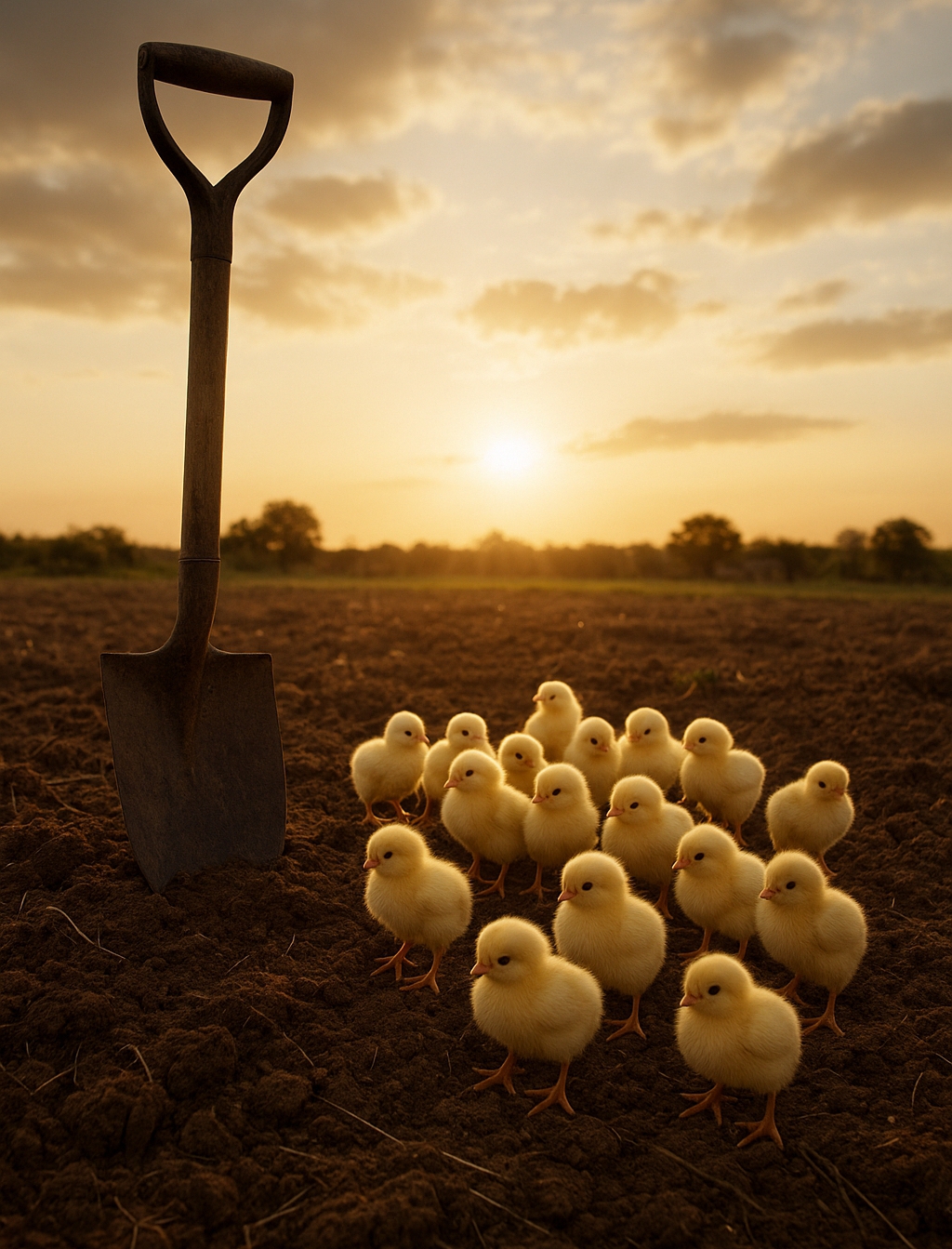
    Yellow day old layer chicks.Definitely still in brooding out on the farm with a spade - a commonly used farm tool/equipment
    It’s heartbreaking seeing your chicks die. Whether on day one of arrival or any other time. It’s so tough.


    April 28th, 2025 – Monday


    “Hey, what’s that?” a voice called out behind her.

    Niss turned. It was her friend.

    “I’m burying two of my chicks. They died overnight,” Niss said quietly.

    “Chicks? Dead? What chicks?” her friend asked, puzzled.

    “Layer chicks — the ones we talked about. I bought a hundred and fifty. Now they’re a hundred and forty. Ten have died so far. I spoke to the vet, and he said a few deaths are normal. But it shouldn’t be too many.”

    “See? I told you. If you’d waited, this wouldn’t be happening. Plus, if you had a thousand birds and lost a hundred, you’d still have nine hundred left. That’s still good money,” her friend said, voice laced with concern.

    “Where are you with your plan?” Niss asked.

    “Oh, I’ve got the land now,” her friend said proudly. “So I’m saving for the next step — the structure, the chicks, equipment, and feeds. I heard prices have gone up again. Once I’ve saved enough, I’ll hire a contractor and buy my chicks.” She smiled, confident.

    “That’s good,” Niss said slowly, “but I think you’re wasting time.”

    “No, I’m not. Just wait and see.”

    Niss sighed and turned away. Maybe she should wait.

    For now.

    But she knew that this was the day she had buried her inexperience in brooding. The day of the funeral..

    (Part 2 drops next week Friday)

    Register below to get this Free Layer Poultry Beginners Guide and Regular Layer Chicken digest tips straight to your email.

    Free beginners guide to starting a profitable layer poultry farm. Step by step guide.
    Name
    Limited access. Join other serious farmers who have taken the guide and get support.

    carlosdeche4040@gmail.com

    secretlayerske@gmail.com