Tag: Brooding chicks

  • Day Old Chicks Vs Point Of Lay


    You’re probably wondering which is more profitable between day old chicks and point of lay birds. Every farmer has an opinion, and you’ve likely heard many. Today, let’s settle this once and for all.

    Before we start, to get the most out of this post, read this guide first:


    👉 5 Things You Should Know Before Starting Layers Farming


    This will help you decide which option suits your farm best.

    In this post, we’ll compare day old chicks (DOC) and point of lay (POL) birds, looking at their advantages and disadvantages. By the end, you’ll know which one fits your goals — whether you want to learn, save time, or make quick profits.


    1. Learning Opportunity

    Raising day old chicks gives you a valuable learning experience that point of lay birds do not. Starting with DOC means you learn everything — brooding, feeding, vaccination, and general poultry management. You’ll understand your birds from the first day until they start laying eggs.

    On the other hand, buying POL hens skips this stage. You get birds ready to lay, but you miss the practical lessons that build your confidence as a poultry farmer.

    If you want fast cash, POL may suit you. However, if you want long-term mastery, DOC offers better training and experience.


    2. Time Investment

    Raising day old chicks takes more time compared to point of lay birds. With DOC, you must care for them for around 18 weeks before they start laying. Those first 5 months are the most crucial and demanding in a bird’s life.

    Meanwhile, POL hens save you that time. Since they’re already mature, they can start laying eggs within a week or two after purchase. Therefore, you begin earning faster, which is ideal for farmers focused on quick returns from their egg production business.

    3. Skills Required

    Handling day old chicks requires more skill than managing point of lay hens. Brooding demands knowledge of temperature control, feed management, and a proper vaccination schedule for layers. Any mistakes at this stage can lead to high chick mortality.

    In contrast, POL layers need fewer technical skills. You mainly feed them, maintain clean housing, and continue a few vaccinations. This makes them suitable for beginners or part-time poultry farmers who have little experience.
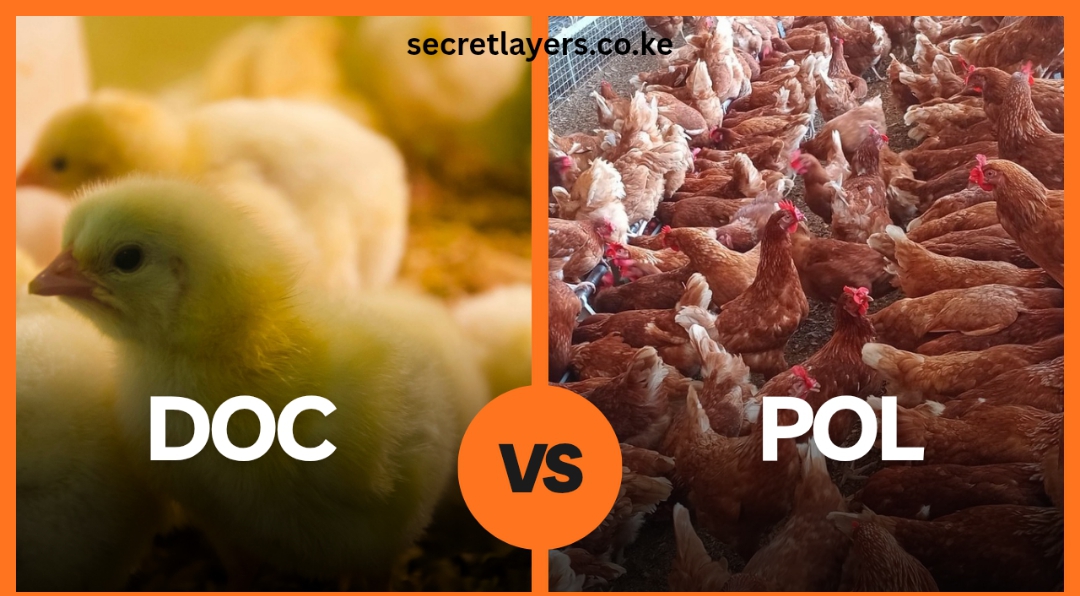
    Day old chicks vs Point of lay image
    Day old chicks vs Point of lay birds

    4. Cost Comparison

    At first glance, buying point of lay birds seems expensive. In 2025, day old chicks cost around Ksh.150 each, while point of lay birds range between Ksh.800 and Ksh.1,500 depending on the age and seller.

    However, when you consider the total cost of rearing DOCs — feed, brooding equipment, electricity, and vaccines — the expenses can add up. Raising them to the point of lay costs much more than buying ready-to-lay birds. So, while POL looks pricey upfront, it can save you time and early-stage costs.


    5. Profit And Return Potential

    The return potential for day old chicks can be higher once you master your system. Initially, it seems easier to buy point of lay hens and start earning immediately. Yet, experienced farmers know that once you perfect your brooding and reduce mortality, profits from DOC can surpass those from POL.

    That’s because you can grow your own chicks, sell some as point of lay to other farmers, and even brood chicks for clients at a fee. These extra income streams make DOC a strong long-term business strategy.


    6. Risk Level

    Every poultry venture has risks. With day old chicks, the main risk is high mortality during brooding. If you lack experience or proper housing conditions, losses can occur quickly.

    On the other hand, point of lay birds come with hidden risks. You may not always know their real age, vaccination history, or overall health status. If you buy from unverified suppliers, you risk bringing diseases to your farm. Always source your POL hens from trusted, certified farms to avoid these issues.


    7. Sourcing And Availability

    Sourcing day old chicks is generally easier. Kenya has many verified hatcheries supplying healthy DOCs every week. You can book and collect your chicks without much hassle.

    However, finding reliable point of lay birds can be stressful. You may need to buy from different farmers to reach your desired number. That process takes time, increases risk, and sometimes affects flock uniformity — an important factor in layers egg production.


    8. The Fun Factor

    If it’s not fun, we’re not doing it — that’s one of our core values at Secret Layers. Raising day old chicks is much more rewarding and exciting than buying point of lay birds. Watching your chicks grow from tiny neonates to full layers gives unmatched satisfaction.

    For farmers who enjoy seeing results from their hard work, DOC farming brings more joy. But if you prefer less hustle and instant results, POL might suit you better.


    9. Business Opportunity (Bonus)

    There’s a growing business opportunity in point of lay production. Many farmers buy day old chicks, raise them to POL, and then sell them at a profit. Others brood chicks for clients for a fee, turning their poultry knowledge into an extra income stream.

    Therefore, whether you choose DOC or POL, the key is to plan your farm as a real business, not just a hobby.


    Both day old chicks and point of lay birds can be profitable depending on your goals, experience, and resources. If you want to learn and build a long-term business, start with DOC. But if your priority is fast income with minimal effort, go for POL.

    I’ll soon share a detailed post on what I personally chose — and why. Watch out for it!

    Get my Free Layer Poultry Farming Guide here👇🏿

    Just register and I’ll send it straight to your inbox.

    Free beginners guide to starting a profitable layer poultry farm. Step by step guide.
    Name

    See you next Friday!

    carlosdeche4040@gmail.com

    secretlayerske@gmail.com

  • The 8 Brooding Principles Every Poultry Farmer Must Know

    Brooding chicks is the make-or-break stage for any poultry farmer. Get it wrong, and you could lose over 80% of your flock — that’s future profit gone. Get it right, and mortality drops to below 5%, which is the accepted standard in poultry farming.

    If you’ve ever struggled with brooding or just want to perfect your skills, this guide is for you. You’ll learn the 8 essential brooding principles that ensure healthy chicks and minimal losses — from temperature control to security.

    I’ve referenced layers in this post because that’s all Secret Layers is about. But, whether you’re into layer poultry farming or broilers, these principles apply to all. Only slight timing and quantity adjustments differ. Let’s dive in. 🐥


    1. Temperature Regulation

    Temperature control is the heart of brooding chicks. It ensures your birds stay comfortable, active, and healthy.

    Start your brooding temperature at 28–30°C on day one, then reduce by about 2°C every week. However, always follow your hatchery’s specific temperature guidelines — some breeds may vary.

    Monitor temperature daily using a thermometer. But also read your chicks’ behavior:

    Crowded near heat source: Too cold — increase heat.

    Far from heat source: Too hot — reduce heat.

    Evenly spread: Perfect temperature
    .


    Consistent temperature management during the brooding period prevents heat or cold stress and sets the foundation for strong growth.

    Day old chicks starting their brooding phase.They have everything they need - light,heat for temperature,feed and water.
    Master your brooding. Master your your profits. See the various aspects of brooding present in this setup.

    2. Lighting

    Light is more than visibility; it affects chick behavior and growth. During the first week, provide 24 hours of light to help chicks find feed and water easily. This continuous light encourages constant feeding, which supports rapid growth.

    As they grow, gradually reduce light to about 18 hours a day by the end of the brooding period. However, avoid bright or harsh lighting — it may trigger feather pecking or cannibalism.

    Proper lighting promotes calm, active feeding behavior and balanced growth — vital for your chicks.

    3. Feed And Water

    In chicken farming, feed and water are everything. Healthy chicks depend on consistent access to clean water and quality feed.

    Keep feeders and drinkers filled and refreshed regularly. Chicks need feed available at all times, especially during the first few weeks. As they grow, increase the feed amount gradually to match their size and appetite using supplier standards.

    Use starter mash from trusted suppliers and avoid cheap, low-quality feeds that may harm your birds’ long-term production. Feed too little and they’ll starve or weaken; feed too much and you’ll waste money or cause obesity.

    For water, remember: if you can’t drink it, don’t give it to your chicks. Provide clean, fresh water at all times to prevent disease.

    4. Disease Management

    Diseases are the most unpredictable threat in poultry farming. They strike without warning and can wipe out an entire flock in one day. To protect your chicks, you must combine vaccination and biosecurity.

    Vaccination

    Follow a proper vaccination schedule from your hatchery or local vet. Vaccines are for prevention, not cure. Therefore, vaccinate even when your chicks appear healthy.

    Biosecurity

    Prevent disease entry and spread by enforcing strict hygiene:

    ✅Disinfect before entering the brooder.

    ✅Limit access to authorized personnel only.

    ✅Clean feeders and drinkers daily.

    ✅Control pests like rats and mites.

    ✅Isolate and treat sick birds immediately.


    Following these steps reduces disease risks and keeps your flock safe and productive.

    I’ll publish a post on all the biosecurity measures to enforce on your farm soon.

    5. Litter Management

    Litter provides warmth and comfort — but if poorly managed, it can kill your chicks. Keep it dry and fluffy, removing wet or caked areas regularly. Wet litter breeds germs and raises ammonia levels, which can harm chicks’ respiratory systems.

    The brooding period for layers lasts about six to eight weeks, so complete litter changes may not always be necessary. However, if it becomes too wet or muddy, change it immediately. Regularly turning the litter keeps it dry and healthy.

    Proper litter management means cleaner air, fewer diseases, and happier chicks.


    6. Spacing

    Did you like high school? Remember how good it felt when you finally left? Your chicks feel the same when given enough space.

    Cramped brooders cause stress, slow growth, and higher mortality. Ensure adequate space per chick, depending on your heat source and brooder design. As your chicks grow, expand the brooder to maintain comfort.

    Overcrowding increases competition for feed and water, while too much space wastes litter and heat. The goal is balance — efficient use of space that keeps chicks active and comfortable.

    7. Ventilation

    Brooders hold many chicks, producing heat, carbon dioxide, and ammonia. Poor ventilation traps these gases and endangers your flock.

    Ensure your brooder is well-aerated to allow fresh air in and remove stale air. During hot days, open windows for natural airflow. However, cover them at night or when it’s cold to prevent chills.

    If you can smell ammonia or feel stuffiness, ventilation is poor. Good air circulation keeps chicks healthy and reduces respiratory stress.

    8. Security

    Finally, protect your chicks. Not from disease — but from predators and theft. Rats, snakes, cats, dogs, and even people can destroy your hard work overnight.

    Secure your chicken house with strong materials, close holes, and maintain clean surroundings. Use dogs for protection, cats for rodent control, and, if possible, simple CCTVs or motion lights for extra security.

    Without proper security, all your other efforts in brooding chicks can go to waste.


    The 8 Brooding Principles Recap

    1️⃣ Temperature Regulation – Maintain proper warmth and observe chick behavior.

    2️⃣ Lighting – Adjust light hours for feeding and calm growth.

    3️⃣ Feed & Water – Always provide clean water and quality feed.

    4️⃣ Disease Management – Combine vaccination and biosecurity.

    5️⃣ Litter Management – Keep litter dry, clean, and well-turned.

    6️⃣ Spacing – Expand brooder area as chicks grow.

    7️⃣ Ventilation – Ensure fresh air and control ammonia buildup.

    8️⃣ Security – Protect chicks from predators and theft.


    And that’s it — your 8 brooding principles for raising strong, healthy chicks. Follow them and you’ll never fear the brooding period again.

    No more risky business of buying point-of-lay hens just because brooding feels hard. You’ll raise your own chicks, grow them into profitable layers, and keep every bit of the profit yourself.

    Then you can even sell quality Point of Lay birds of you want to😅

    Keep learning, keep improving, and always innovate — that’s how you grow in layer poultry farming.

    > Remember ;
    Master your brooding. Master your profits.


    Get my Free Layer Poultry Farming Guide and receive regular Layer Chicken Digest tips straight to your inbox.

    Free beginners guide to starting a profitable layer poultry farm. Step by step guide.
    Name

    See you next Friday!

    carlosdeche4040@gmail.com

    secretlayerske@gmail.com