It was one of those cold mornings that make you hug your jacket tighter. Niss woke up refreshed. She’d slept deeply, peacefully. Nothing special had happened, but she felt calm inside — ready for another day on her layer poultry farm.
She went to her storage room to measure feed for her 22-week-old layer chickens. The morning was quiet.Too quiet.
Even as she neared the chicken house, not a single cluck or flutter broke the silence.
> “They must have slept well… just like me,” Niss thought with a smile.
But her smile faded. Her birds were never this quiet during feeding time. Her heart began to race.
A Silent Chicken House
After disinfecting her shoes, she opened the door…..
and froze.
Inside, her chickens lay still on the litter. Not one moved. Not one made a sound.
She felt dizzy. Her chest tightened. She reached for one bird — cold. Another — the same. All gone.
623 layer chickens. Silent. Dead.
Tears rolled down her face. She had done everything right — all vaccines, feeding schedules, and hygiene routines. There hadn’t been any sign of a disease outbreak nearby.
When Everything You Did Right Still Fails
Niss called the vet, her voice shaking. He arrived quickly, calm but serious. > “Did you notice any signs of disease?” he asked.
“No,” Niss said. “They were fine last night. Though they didn’t finish their feed… and one bird looked sleepy, but it woke up.”
The vet took a few samples for postmortem testing and left her with words she would never forget.
Lessons No One Talks About
One day your chicken might all die. Not because you did something wrong, but because it just happens sometimes. You have to be ready so you don’t give up.
✅ Diseases still attack even when birds are vaccinated.
✅ Vaccines are not 100% effective — always watch your flock closely.
✅ Isolate any sick-looking bird and call a poultry vet immediately.
✅ Never eat dead birds — you don’t know what killed them. It’s not safe for you.
✅ Sometimes, even when you do everything right, bad things just happen.
That day broke Niss’s heart. But it also reminded her that farming isn’t just about feed and vaccines. It’s about expecting for the worst and being ready, patience, discipline, and resilience.
Because sometimes, you can do everything right… and still lose. What matters is what you do next.
💬 Your Turn
Have you ever lost birds suddenly on your farm? Share your experience in the comments — your story might help another poultry farmer avoid the same pain.
👉 Get a Free copy of my Layer Poultry Farming Guide and regular Layer Chicken Digest Tips here👇🏿
If someone gave you Ksh.50,000 today, what would you do with it?
This is how I would turn Ksh.50,000 (approximately $385) into a thriving business through the NYOTA Program Kenya.
The government of Kenya, through the NYOTA Program, is offering grants and training to empower Kenyan youth. It’s an amazing opportunity for those who qualify. Unfortunately, I don’t meet the criteria for application, but if I did, here’s exactly how I would use the funds to build a sustainable business.
Not something lifeless or short-term, but a venture with a real vision of growth.
It’s sad that many businesses started through such government programs die off within a year. Evidence from the earlier Youth Enterprise Development Fund (YEDF) shows that only a small percentage survive past five years.
That’s why I decided to share how I would personally use the NYOTA grant and the strategies I would apply to make the business last. I hope you’ll find value in it and maybe borrow a few ideas for your own plan.
By the way, congratulations if you received the grant!
Step 1 : Decide And Commit To One Business
The first thing I would do is make a clear decision and commit to one business. I would choose layer poultry farming — and I have good reasons for it which you can check here👇🏿
It’s something I’ve been studying and researching for a long time, and that focus gives me an edge.
There are many profitable opportunities out there. However, without clarity, it’s easy to end up confused and scattered.
So I would decide, commit, and lock in. No broilers. No goats. No hotel. No forex.
Layer poultry farming only.
Step 2 : Learn
Before starting, I would spend one to two weeks learning everything about layer poultry farming. That means not just how to raise the birds, but also how to run the business side of things.
I’d study topics such as:
✅Brooding
✅Feeding
✅Disease management
✅Marketing and sales
✅Branding and negotiation
In addition, I would visit established layer farmers and learn directly from their experiences. I’d talk to egg traders — both wholesalers and retailers — to understand the egg business better.
I’d also reach out to poultry experts for practical advice.
Meanwhile, I would get a reliable internet connection for a week and binge-watch YouTube videos about layer poultry farming in Kenya. I’d read blogs, success stories, and mistake lists.
Of course, I would also check X, Facebook, and TikTok pages of farmers to see what works for them.
Secret Layers is already a good place to start for this kind of information — both technical poultry farming and business.
To help with this learning phase, I have a Free Layer Poultry Farming Guide you can get here 👇🏿
Another skill I would add is contentcreation. There are countless free online resources on how to make engaging and educational farming content.
After one or two weeks, I wouldn’t be an expert yet, but I’d know enough to start my layer farm confidently.
Step 3 : Start The Farm
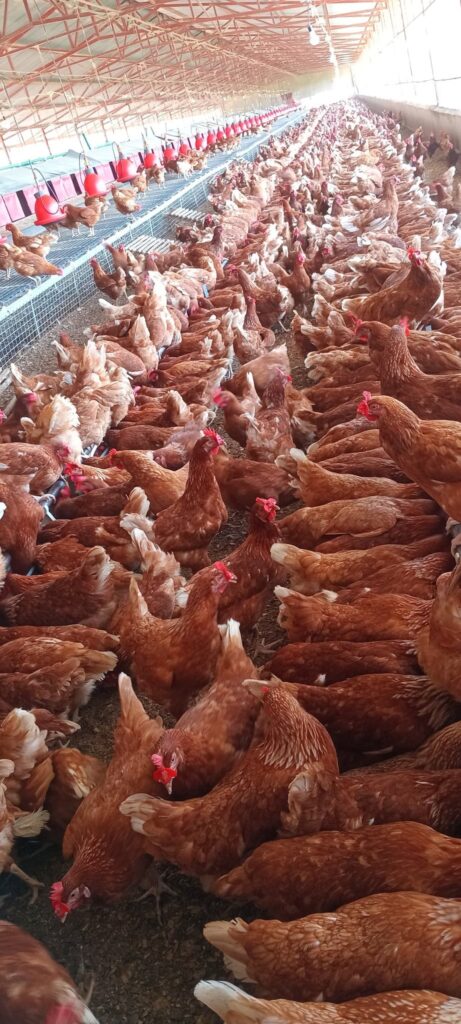
Layer Chicken in a poultry house. While Ksh.50k won’t get you this at first, with a long term business strategy you can get here.
Next, I would begin the actual farm setup. My plan would be to start with 50 layer chickens. That’s enough to make sense as a business but still manageable for a beginner.
However, there’s one issue. Starting a 50-bird layer poultry farm in Kenya costs around Ksh.91,000, according to my recent research (see the cost breakdown here👇🏿
I have a plan — and I’ll share how to make it work. Just trust me and follow the logic to the end.
I would follow the exact process outlined in my Free guide to set up the farm and get my chicks started.
At this point, the farm would be running.
Now, layer chickens take about four and a half months before they begin laying eggs. That means no cash flow for about five months.
So what next?
Step 4 : Create Content Around My Farming Journey
During this waiting period, I would focus on creating content. I’d document my entire journey from day one — every success, failure, and lesson learned.
Don’t frown yet. Maybe if I say “teach people what I’m learning,” it will sound better. But yes, I’d share my journey publicly.
This would include content across YouTube, TikTok, Facebook, X, and Pinterest. However, I’d focus mainly on the three I use most — Facebook, X, and YouTube.
This approach is exactly how Secret Layers started — by teaching and documenting.
For instance you can watch the YouTube video of this blog post here👇🏿
Setting up social media accounts is free. The only small cost would be basic content tools like a ring light, tripod stand, and microphone — not more than Ksh.3,000 ($23).
There are two main reasons for creating content:
1. To build a brand around my farm. The content would serve as my marketing and branding engine.
2. To create a potential income stream. In time, monetizing these platforms could bring in more money to grow the farm further.
At that point, I’d have two things running – a real farm and a growing online brand.
That’s the foundation of a long-term business.
Now The Secret To Make My Whole Plan To Work
Step 5 : PartnerWith Another Beneficiary
Now, remember that the cost of starting the 50-bird farm is Ksh.91,000, but the grant is only Ksh.50,000.
Here’s the secret to make it work.
I would partner with another NYOTA Program beneficiary. Together, we would combine our grants for a total of Ksh.100,000.
The NYOTA Program includes a training period before the funding phase. I’d use that time to identify a serious, like-minded partner — preferably someone from my area, maybe a friend, or someone who shares my farming vision.
Finding the right partner isn’t always easy, but it’s the smartest way to make this plan possible. And I would treat it like my life depended on it.
That’s my blueprint for how I would use the NYOTA Program grant to build a sustainable and profitable business.
You don’t need millions to start. With focus, learning, and creativity, you can turn Ksh.50,000 into something that grows year after year.
If you’ve received the NYOTA grant, congratulations again. Use it wisely, and build something that will last beyond five years.
💡 If you want to start your own layer poultry business..
Get my Free Guide: 6 Steps to Start a Profitable Layers Poultry Farm here👇🏿
And I’d love to hear your thoughts — what would you do with your Ksh.50,000 NYOTA grant?
Niss had just sold off her first batch of ex-layers. It had been a successful run — her birds maintained an impressive 80% laying rate the entire period. For a first-time farmer, that was nothing short of amazing.
Now, she was taking a one-month break before bringing in her next batch. The chicken house needed time to dry after disinfection — an essential step to prevent disease transmission to new chicks.
But that also meant no income for a whole month.
She didn’t have enough savings to build another chicken house. And for a moment, she wondered, What will I do now?
Voices In The Dark
That night, around midnight, Niss was woken by faint voices outside her house. A woman’s voice. It sounded like she was talking to herself. “Is that the village witch?” Niss thought, half terrified.
She sprang out of bed and crept toward the door. As she reached the hallway, the voices grew louder — but now there were two people.
Her heart pounded hard, pumping litres of blood to her legs, ready to sprint for her still-short dear life.
Then it hit her. Wait. That’s coming from my daughters’ room.
She froze. Are they—? She didn’t want to finish that thought.
Listening closer, she realized the voices were indeed her two daughters.
When she asked why they were awake at midnight, their answer confused her even more. Something about a “masterclass” and “techniques” and “digital something.”
Niss didn’t get it — not that night. She went back to bed, uneasy but curious.
The Morning Revelation
By morning, after another round of questioning, she finally understood: Her daughters had been attending an online masterclass on professional knitting.
That surprised her — but it also sparked a thought. What if I did the same?
What if she taught others what she already knew so well — layer poultry farming?
She had seen people online making money teaching what they knew. Some even lived lavishly — nice cars, big houses, flashy lifestyles.
Before she could dream too far, her daughters interrupted her thoughts. > “Mama, stop there,” they said. “That internet life is a lie. But you can make money from YouTube — not to buy a sports car, but enough to cover slow months like this.”
That was all Niss needed to hear.
“Then show me how,” she said eagerly. “I want to start right now!”
Her daughters laughed.
> “Chill, Mama. Take it slow. Remember how you prepared before starting your layer farm? That’s what you need to do for this too.”
They were right.
Before she started her poultry business, Niss had done months of research — visiting farms, asking questions, taking notes. Skipping that process now would be against her own rules.
She had to learn again — this time, about content creation and online education.
The Turning Point
That morning, Niss made up her mind. She would teach poultry farming online, just like she raised her chicks — step by step, carefully, consistently.
She would share her knowledge through videos, blog posts, and stories that help other farmers grow.
Maybe it would work. Maybe it wouldn’t. But she was determined to earn that extra income — while teaching others the craft she loved.
Why Don’t You Try It?
If you’re a farmer, you probably have mountains of knowledge and experience others would love to learn from.
And sometimes, there are slow months — when you’re between flocks, waiting for the next batch, or the market is just quiet.
That’s when creating content can become your second source of income. You teach, you inspire, and you make a little extra money — all while building your farm into a loveable, trusted brand.
So why not try it yourself? Start small. Start real. And remember, every great farm — and every great brand — starts with a single story.
Get a Free copy of my Beginner Layer Poultry Farming Guide here.
“Yes, that’s true,” Niss said confidently. “I spend crazy amounts of money on feed.”
“And I figured out the best way to cut that cost,” her friend went on, “is to make your own feed.”
She sounded proud. “So now I’m talking to some farmers and companies — maize, soybeans, sunflower — trying to make deals so I can get the raw materials. That way, I’ll make my own feed. If I cut that cost, I’ll get more profit. These feed companies are exploiting us. I won’t be one of their victims.”
Niss nodded politely.
“Anyway, have a good day,” her friend said, turning toward home.
Niss just stood there. Her mind echoed one word: Why. Why. Why.
The Funeral (2)
October 15th, 2025– Wednesday
Niss’s phone rang. It was her friend again.
She picked it up half-heartedly.
“Guess what, Niss! I’ve gotten the contract!”
“What contract?” Niss asked, confused.
“For Ngerenya Secondary School! I talked to the principal. I told him I’m starting a one-thousand-bird layer farm and that I’d like to supply them eggs every week. And he said yes! I’m so happy.”
She went on, voice bubbling with excitement. “Now I just need two more schools, and all my eggs will have a market once I start producing. I won’t even struggle.”
Niss felt heat rising in her chest. Her hands trembled. Anger boiled inside her — not hate, but the kind that burns when someone just doesn’t get it.
She took a deep breath and said it.
“Friend. Number one — the principal lied to you. Number two — and most important — start your damn farm.
Which eggs will you sell? Who will you be making the feeds for? Which chickens did you buy the land for?
Brooding can feel like the scariest monster in poultry farming, yet receiving day old chicks doesn’t have to be terrifying if you know exactly what to do. Many farmers give up—or never start—because they fear brooding.
It is the most sensitive period in a chicken’s life, just like the first 28 days for humans.
The first day especially is critical. On day one, a small mistake can turn your joy into despair if all your chicks die. But I don’t want that for you. If you’ve read the 28 Equipment List and How to prepare for day old chicks arrival,now you must be ready for the moment your day old chicks arrive. This post walks you through receiving day old chicks, step by step, so there’s no guesswork when your chicks arrive (or when you pick them).
1. Pre-heat the brooder
Since day old chicks lack enough feathers, you need to control the brooding temperature carefully. Brooding is a temperature-sensitive phase, especially on day one.
Heat the brooder 2 to 3 hours before the chicks arrive. Aim for about 30–33 °C (this may vary by region and supplier).
If it’s cool, use your heat source; if hot, increase ventilation by adjusting windbreakers or openings.
2. Prepare glucose in water
Transport stresses chicks. They might arrive dehydrated and weak. So before they arrive, mix glucose in water. This gives them quick energy and helps them recover from the journey.
This simple act may mean the difference between 100% survival and full mortality. Be ready—this solution must already be in place when the chicks arrive. Consult your vet for recommended doses.
3. Count your chicks
Once your day old chicks arrive, firstcount them. Whether the supplier brings them or you pick them up, counting ensures you got the number you ordered. Some may die during transit, so count.
Some suppliers often compensate or replace dead chicks later.
4. Weigh your chicks
Weighing helps track uniform growth. Though the hatchery may have done this, it’s best practice to weigh again on your farm. For most breeds, a day-old chick should weigh around 45 grams. Record this as your baseline for later comparisons.
5. Dip their beaks in water
When placing chicks into the brooder, gently dip their beaks into the glucose water. This teaches them how to drink and helps them find the water.
If you have helpers, have them assist in this step so it’s efficient and calm.
6. Introduce feed
Allow the chicks 2–3 hours after arrival to hydrate and calm down. Then begin introducing feed. Use brooder paper (newspapers, carton, etc.). Put feed in their feeders and also sprinkle some on the paper so they can see and find it easily. Within a short time, they’ll move to the feeders on their own.
7. Monitor crop fill
Several hours later (and then at least twice that day), check the crop of each chick. The crop is that small pouch in their neck. Inspect it to confirm they are feeding and drinking.
Full & soft → good (they ate and drank)
Empty → no feed or water yet
Full & hard → ate but did not drink
Full & very soft → drank but not ate
Your goal: at least 80% of chicks with full and soft crops indicates most chicks have found water and feed.
8. Provide light
Chicks need light to find feed and water. During day one of brooding, ensure there is enough light—even if they arrive in the evening or in darkness.
For layers, start with ~21 hours of continuous light for a few days, then gradually reduce to 14–16 hours daily.
9. Monitor closely
One day old chicks received today in a proper brooder with light,heat,water and feed.
Receiving day old chicks is just the start. The real work lies in ongoing care. Monitor:
Brooder temperature
Feed and water intake via crop checks
Growth (weigh daily or often)
Mortality
Consistent monitoring separates good farmers from those who rely only on remote advice.
10. Vaccinate
If your chicks weren’t vaccinated against Marek’s disease at the hatchery, make sure you do it on day one. This vaccine protects them from a deadly viral infection that causes paralysis and poor growth. Always confirm with your supplier, and if it hasn’t been done, call your vet to administer it immediately.
Don’t delay this step—it’s one of the most important early protections for your day old chicks.
This guide gives you a clear, step-by-step plan for receiving day old chicks. No confusion, no guesswork. Yes, some chicks might die—that’s expected—but with this approach, mortality should be far lower than going in blind.
Schools had opened for the new year. The laughter, the shouting, the morning rush — all gone. Now, the neighborhood was dead quiet, like the calm after a storm.
“You know, Niss,” her friend said, breaking the silence. “That thing we talked about — keeping layers. We should do it. It’s a good idea.”
“Yeah, absolutely,” Niss replied. “I’ve been preparing. Reading, researching… there’s a ton of information in blogs, articles, even YouTube videos. It looks promising. I think I’m ready to start.”
“Really? Well, good for you.” Her friend smiled. “How many are you planning to start with?”
“I don’t know. I don’t mind starting with a hundred birds. It depends on how much money I can get.”
“A hundred?” Her friend’s eyebrows shot up. Niss suddenly wondered what she’d said wrong.
“How much profit will you even get from that? So small.”
“Here’s my plan,” her friend whispered, leaning forward like she was about to share a secret. “I’m planning to start big — massive profits, you know? I want not less than a thousand birds. I heard an expert say anything less than that is pointless.”
She paused, frowning. “But you know my piece of land — it’s small. If I keep a thousand birds, I’ll have no room left for maize or cassava. So for now, I’m saving. I want to buy a bigger plot. I hear Be Kanze is selling part of his land. That’s what I’m aiming for. When I start, it’ll be big — and fast.”
“What do you think?” she asked.
“I think it’s a dead plan,” Niss said flatly. “Let’s start with what we can for now.”
“Not true. Just wait and see,” her friend replied, folding her arms.
After a few more rounds of back-and-forth, Niss finally walked back home, unsure if she’d made her point — or lost it.
The Funeral
It’s heartbreaking seeing your chicks die. Whether on day one of arrival or any other time. It’s so tough.
April 28th, 2025 – Monday
“Hey, what’s that?” a voice called out behind her.
Niss turned. It was her friend.
“I’m burying two of my chicks. They died overnight,” Niss said quietly.
“Chicks? Dead? What chicks?” her friend asked, puzzled.
“Layer chicks — the ones we talked about. I bought a hundred and fifty. Now they’re a hundred and forty. Ten have died so far. I spoke to the vet, and he said a few deaths are normal. But it shouldn’t be too many.”
“See? I told you. If you’d waited, this wouldn’t be happening. Plus, if you had a thousand birds and lost a hundred, you’d still have nine hundred left. That’s still good money,” her friend said, voice laced with concern.
“Where are you with your plan?” Niss asked.
“Oh, I’ve got the land now,” her friend said proudly. “So I’m saving for the next step — the structure, the chicks, equipment, and feeds. I heard prices have gone up again. Once I’ve saved enough, I’ll hire a contractor and buy my chicks.” She smiled, confident.
“That’s good,” Niss said slowly, “but I think you’re wasting time.”
“No, I’m not. Just wait and see.”
Niss sighed and turned away. Maybe she should wait.
For now.
But she knew that this was the day she had buried her inexperience in brooding. The day of the funeral..
(Part 2 drops next week Friday)
Register below to get this Free Layer Poultry Beginners Guide and Regular Layer Chicken digesttips straight to your email.
You’ve decided to go into poultry farming, but now you’re stuck between layers and broilers, unsure of their differences.
You don’t want to invest your hard-earned money blindly and fail because of limited information. That would be costly ignorance. The choice you make—whether to keep layers or broilers—will influence your time involvement, the costs you incur to start and manage your poultry farm, your profitability, and ultimately your happiness as a farmer.
This guide aims to remove confusion by explaining 10 key differences between layers and broilers and adding a profitability score for both. Make the right choice for your poultry farm.
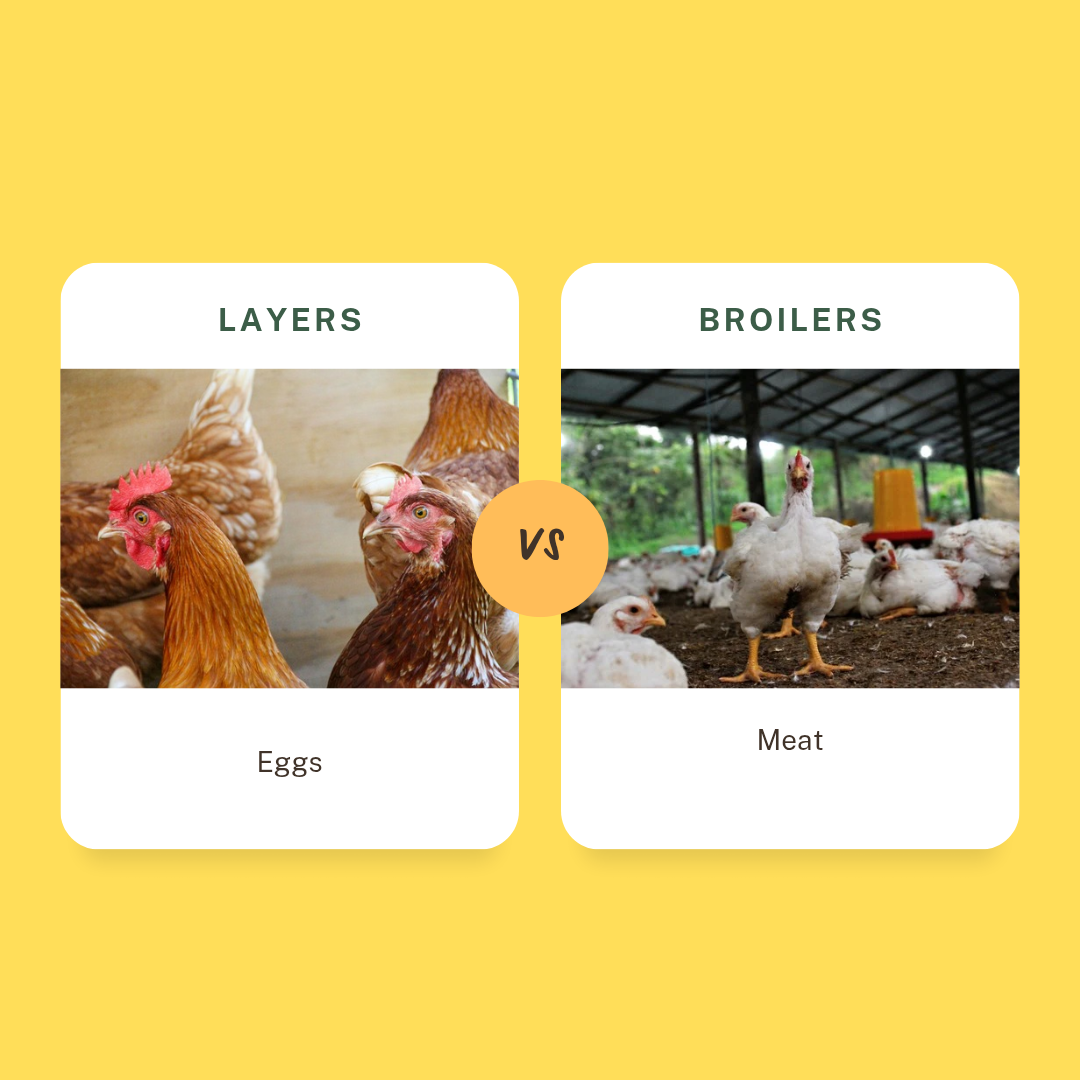
Layer vs broiler chicken side by side – see the physical differences clearly.
What Are Layer Chickens vs Broiler Chickens? Before diving into differences, let’s define these two types of poultry. Broilers – Chickens bred and raised primarily for meat production. Layers – Chickens kept mainly for egg production.
Here’s a quick Layers vs Broilers comparison.More details below:
Feature
Layers
Broilers
Main Purpose
Eggs
Meat
Startup Costs
Higher
Lower
Time to harvest
Start laying at 18 weeks
Ready for sale 6-9 weeks
Market Stability
Stable demand
Demand fluctuates
Housing System
Battery cage or deep litter
Mostly deep litter
Vaccine Schedule
Longer
Shorter
Spacing
Bigger(2-3sq ft/bird)
Smaller(1-2 sq ft/bird)
Feeds
Starter Grower Layer
Starter Finisher
Profit Type
Daily income Continuous
Quick One time batch
Management Level
More skilled Long term
Easier Short term
Lighting
Less 14-18 hrs
More 24 hrs
Profitability Score
8.3
7.5 (Check below for how it was compiled)
(Layers vs broilers differences table) With that in mind, here are the 10 key differences in details. 1. Startup Costs Startup costs for layers are significantly higher compared to broilers.
This is because layers require more housing space, higher-priced chicks, a longer vaccination program, and more feed in their early months. For example, in Kenya in 2025, starting with 100 broilers costs approximately KSh 100,000, whereas 100 layers could cost upwards of KSh 300,000.
These figures are estimates and can vary based on region, type of housing, and market fluctuations. (Tip: I’ll soon publish a full, accurate cost breakdown for starting a layer poultry farm.)
2. Time Commitment Layers require more time and commitment than broilers.
While broilers are typically raised for a short period—6 to 9 weeks before slaughter—layers stay on the farm for up to 2 years as long as they remain productive. Because layers stay longer, they need continuous care, including vaccination follow-ups, debeaking, egg collection, and regular health monitoring.
Broilers, on the other hand, have a shorter but more intensive cycle, allowing you to free up your time after each batch. 3. Market Dynamics The market for eggs is generally more stable than for broiler meat.
In Kenya, there are significantly more broiler farmers than layer farmers, which means meat supply often outpaces demand. This can lead to price drops during peak seasons. Eggs, however, have a steady demand from institutions, hotels, retail shops, and households.
Even better,layers give you more time to plan because they start laying at about 18 weeks (4.5 months), whereas broilers must be sold within 6 weeks. That short sales window for broilers means you should find your market before buying your chicks. 4. Housing Systems Layers can be raised in both battery cages and deep litter systems, providing flexibility depending on your budget and management style. Broilers, however, are mostly raised on deep litter systems only. Imagine broilers in cages—uncommon and impractical due to their rapid growth and space requirements. If you want options for expansion or automation, layers offer more choices.
Get detailed guides on layer chicken here 5. Vaccination Programs Because layers live longer, their vaccination schedule is more extensive.
Vaccines for layers typically include Marek’s, Newcastle, Infectious Bronchitis, Gumboro, Fowl Pox, and periodic deworming. Broilers, on the other hand, have shorter lifespans and need fewer vaccines—mainly Marek’s, Newcastle, and Infectious Bronchitis.
This makes broilers easier and cheaper to manage from a health perspective, especially for beginners. 6. Space Requirements Layers need more space per bird compared to broilers.
They are active, long-lived, and require at least 2–3 square feet per bird. Broilers, by comparison, only need about 1–2 square feet per bird. This difference directly affects your housing investment. A larger poultry house for layers means higher construction costs upfront. If your available space is limited, broilers might be easier to start with. 7. Feed and Nutrition Feeding layers is more expensive in the long run because they go through multiple feed stages—starter, growers mash, and layers mash.
Additionally, their feed must be rich in calcium and other minerals to support eggshell production, while protein levels stay moderate (16–18%). Broilers only need starter and finisher feeds, formulated with high protein levels (around 23%) to promote fast muscle growth. Because their cycle is short, their total feed cost per cycle is often lower, making broilers appealing for quick-turnaround ventures.
Find more details on broilers best practices here 8. Profitability Potential Both layers and broilers can be profitable, but the pattern of profitability differs.
Broilers deliver quick, one-time profits per batch, ideal if you want fast cash flow.
Layers, however, offer stable long-term income through daily egg sales once production starts. Layers often have a higher profit margin because you buy birds once and earn from them continuously for about 22 months.
Broilers require you to restock every 6 weeks, which can be labor-intensive but gives multiple opportunities to adjust market strategy. 9. Management Skills Required Managing layers is more demanding than managing broilers.
Layers need specialized skills, including handling vaccinations, debeaking, egg collection, and monitoring productivity over a long period. However, once your layers are established, you don’t need to buy new birds for almost two years. Broilers are simpler in terms of management but require high attention during their short growth period. They need constant monitoring for weight gain, proper feeding, and quick marketing decisions. 10. Lighting Requirements Lighting needs also differ significantly. Layers require controlled lighting, typically 14–18 hours daily, to maintain egg production. Broilers, however, need near-constant lighting (24 hours) to encourage continuous feeding and rapid weight gain. This difference impacts your power costs and infrastructure decisions.
ProfitabilityScore
Criteria
Layers (Score 1-10)
Broilers (Score 1-10)
Startup Costs
6 (Higher but worth it)
8 (Lower)
Time to returns
7 (Slower)
9 (Fast)
Profit Stability
10 (Very stable)
6 (Seasonal
Market Demand
10 (Strong & Steady)
7 (Fluctuating)
Management Complexity
7 (Challenging but rewarding
8 (Simpler)
Long Term Profit
10 (Excellent)
7 (Moderate)
Average Score
8.3
7.5
(Layers vs broilers differences in profitability)
Layers have it🥳
If you’ve already decided it’s layers, I have a step by step guide on how to start your layer chicken farm the right way here
And to start you off,
Enter your details to grab a copy of my free printable guide and regular Layer Chicken Digest tips via email:
Which Option Carries More Risk? Risk depends on your resources and experience.
Layers require more startup capital, long-term commitment, and skilled management, but they also provide steady income after maturity. You won’t see returns until after 4.5 months when they start laying, so patience is necessary. Broilers carry a different risk. Their short cycle means that if you fail to secure a market quickly, your birds continue eating expensive feed while gaining weight beyond market standards.
Unfortunately, most buyers won’t pay extra for heavier birds, leaving you with slimmer profit margins—or even losses.
Which Should You Choose? The decision between broilers and layers depends entirely on your goals.
If you prefer long-term, stable income and are willing to invest more time and capital upfront, layers are ideal. If you want quick turnover and have a reliable meat market, broilers may suit you better. Think about your financial resources, available space, time commitment, skill level, and long-term vision. Choose what aligns with your goals, even imagining what you’d be comfortable managing for the next decade—eggs or meat? Common Questions Beginner Farmers Ask 1. Can you keep both layers and broilers together? Yes, you can keep both on the same farm, but never in the same house. Maintain two separate poultry houses at a safe distance to prevent disease transmission. 2. Layers vs broilers—Which is Better? There’s no universal answer. The better choice is the one that matches your current financial position, skill level, and business goal. Carefully weigh startup costs, time involvement, and market potential before deciding. 3. Which is best for small farms? For small farms with limited capital, broilers are often the better starting point because of lower upfront costs and faster returns. Finally, The layers vs broilers differences go beyond just eggs versus meat. They influence your time, money, and long-term profitability. Understand your goals clearly and then choose the option that matches your situation. If you want to explore layers further, check out for my upcoming detailed guide on the cost of starting a layer poultry farm. It will include cost by cost breakdown and projected revenue and profits.
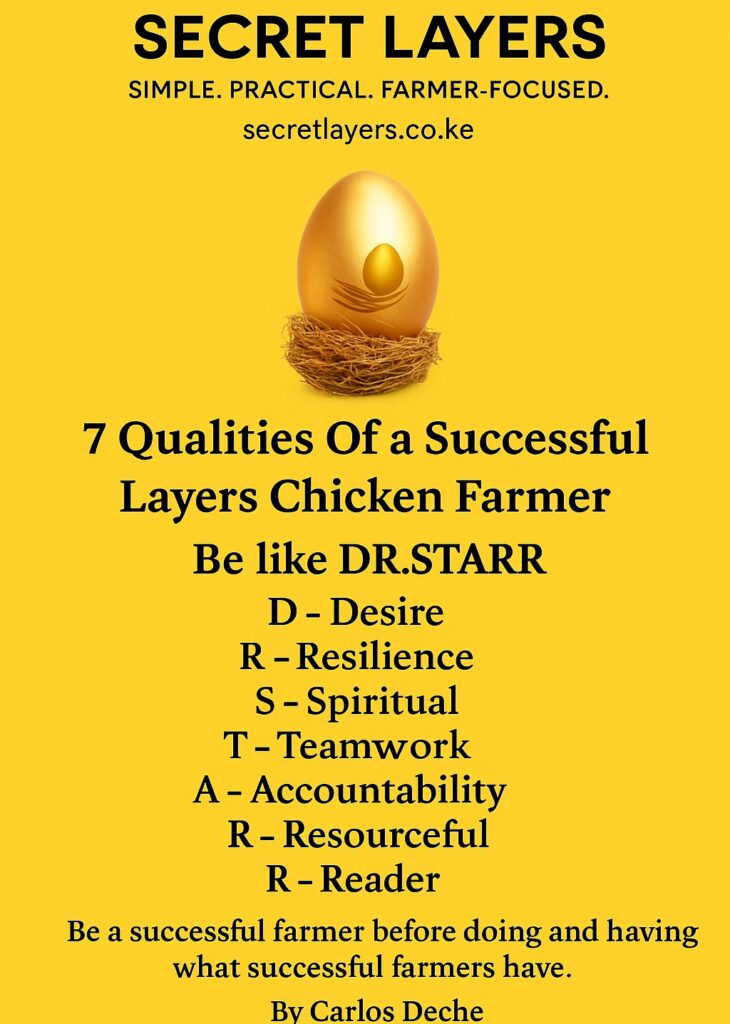
Be like DR.STARR and master the 7 qualities of a successful layer chicken farmer required for a profitable and sustainable layer farm.
Remember the quail farming craze of 2010?
Kenyan farmers invested heavily, only for many to lose millions when the market crashed.
One farmer even released 3,000 quails into the wild because he could not sustain the business.
But what was the real problem?
Were quails themselves a bad idea?
Not really. Some people actually became millionaires during that time. So why did some farmers succeed while others failed?
The difference often lies in character, values, and qualities rather than just resources. Sometimes success comes not from what you have but from who you are.
In this post, I’ll show you how adopting the DR. STARR framework can transform your layer farming journey.
DR. STARR is an acronym representing 7 qualities of a successful layer chicken farmer – essential traits every farmer must have.
1.DESIRE
Napoleon Hill, in Think and Grow Rich, calls desire “the starting point of all achievement—the first step toward riches.”
You don’t necessarily need deep passion for chickens to succeed in poultry farming, but you must cultivate a strong desire to succeed in keeping layers.
Wishing for success is not enough. Instead, develop a desire so strong it becomes an obsession. Then plan definite ways to achieve your goal and back those plans with persistent action. When your mind obsesses over success, it naturally finds ways to make it real.
Look around you.
Every great achievement you’ve ever had probably began as a thought—a simple desire in your mind. Your layer chicken farm is no different: desire first, then achievement.
2.RESILIENCE
Resilience is the ability to recover quickly from difficulties.
Poultry farming, like any business, comes with challenges. Birds may die from disease, feed prices may spike, or theft might wipe out your flock.
What will you do when these setbacks happen? Quit? Blame the government, imported eggs, or bad luck? Or will you come back stronger?
The answer defines success. Those who quit easily never see profits. In contrast, resilient farmers adapt and rebuild after every challenge.
For instance, Dr. Daniel Masaba, a successful Ugandan layer farmer with 30,000 birds today, once lost 700 birds (Almost half of his flock at the time) in a disease outbreak. Instead of giving up, he rebuilt with improved biosecurity.
Today, his farm thrives because of his resilience.Persistence keeps you moving forward; resilience helps you rise after falling. Together, they keep you in business long enough to see the “crazy profits.”
3.SPIRITUALITY
Surprisingly, spirituality plays a significant role in farming success. Here, spirituality involves two things: Mission and Faith.
Mission:
Why does your farm exist? Is it just for money, or does it serve a bigger purpose?
While earning KES 100,000 a month is a great financial goal, having a purpose beyond money gives you drive even when challenges arise.
It keeps you motivated before the money comes and even after it arrives.
Faith:
Faith is believing in things you cannot yet see.
You already exercise faith daily—when you go to sleep trusting you’ll wake up or travel believing you’ll arrive safely. Likewise, you must believe you can succeed in poultry farming even before it happens.
When faith combines with mission, your farm gains a powerful foundation. You’re not just running a business; you’re pursuing a purposeful calling.
To be a leader, you must first be a good follower.
And being a good follower involves working as a team and following the teams goals and mission.
That lesson applies directly to farming because you’ll interact with many people: employees, customers, suppliers, and even government officers.
Lack of teamwork often creates unnecessary workload, employee turnover, and lost partnerships.
Successful poultry farmers, on the other hand, know how to work well with others and build strong professional relationships.
Here’s a tip I use to promote teamwork: treat everyone as a partner in your business. Listen to them, ask better questions, and encourage collaboration. Even friends can offer valuable insights when you view them as informal consultants. Remember, we always go farther together.
5.ACCOUNTABILITY
Accountability is one of the toughest yet most valuable qualities to develop.
It’s different from responsibility.
Responsibility means admitting you made a mistake.
Accountability goes further: learning from that mistake and preventing it from happening again
For example, if feed prices rise, accountability means acknowledging you failed to stock up when prices were low, then creating a plan to buy in bulk next time.
If an employee ignores biosecurity rules and your flock dies, accountability means accepting you hired and trained poorly—then improving your hiring and training process.
Mastering accountability forces you to create systems and solutions that strengthen your farm, ensuring mistakes are not repeated. It’s a powerful habit not just in business but in life.
6.RESOURCEFUL
Being resourceful doesn’t mean having plenty of resources; it means making the most of what you have.
Imagine you need to travel from Nairobi to Mombasa but can’t afford a plane ticket. What do you do? You take a bus. You still reach Mombasa, just in a different way. That’s resourcefulness—finding alternatives when things get tough.
On your layers farm, money may run out, customers may switch suppliers, or markets may slow down. Will you give up, or will you find creative solutions to keep moving forward?
Resourcefulness often awakens your creativity.
You begin to see possibilities where others see dead ends. That ability keeps your farm alive and thriving when others fail.
7.READER
If you’ve reached this part of the blog, congratulations—you’re already a reader!
And that’s an essential quality.
Elon Musk once said he learned how to build rockets by reading two books a day. Similarly, farmers who continuously learn stay ahead of the curve. Reading exposes you to new concepts, tools, and opportunities that others miss.
Even dedicating 10 minutes a day to reading about best poultry farming practices can compound into significant knowledge over time.
With today’s fast-changing agriculture industry, staying informed is crucial to staying competitive.
Start with reliable sources: books, research papers, credible blogs, newsletters, and even worksheets like the ones we offer at Secret Layers.
(If you haven’t already, sign up for our free Layer Starter Kit,weekly poultry tips and tutorials- It’s totally FREE)
Being like DR. STARR—having Desire, Resilience, Spirituality, Teamwork, Accountability, being Resourceful, and becoming a Reader—makes you more than just a farmer.
It positions you as a successful, future-ready poultry entrepreneur.They are the qualities of a successful layer chicken farmer you’ve been looking for – the ‘cheatcode’ for success in the poultry business.
These qualities may seem personal, but they directly influence how you run your farm, how you handle challenges, and how quickly you grow.
Start working on them today. Build the poultry business mindset first, then apply the skills. Combine your character with knowledge and watch your layers farm thrive—regardless of market challenges.
And if you haven’t already:
> 📩 Register below for free for access to Secret Layers resources: