Category: Tools

  • 5 Mindset Books Every Farmer Must Read

    Your farm is not your biggest problem.
    Your mind is.

    Jim Rohn once said: “The mind is like a factory. Whatever you think about all day long pours ingredients into this mental factory. Can you imagine pouring trash into this factory every day and expecting a rich, positive life? It can’t be done.”

    That hit me hard the first time I heard it.


    Over the years, I have come to believe one thing. Success in farming — and in life — is 80% mindset and 20% work. That means you win or lose the game before it even starts.


    Most farmers are small not because of bad strategy. Not because they can’t market. And not because they lack systems.
    Those things matter. But they are the 20%.
    The real problem is mindset.


    Some farmers just want a small side hustle. But can a side hustle mindset build real wealth? No. It can’t.


    Others say things like: “I don’t have the capital.” Or: “I don’t have the right connections.”

    What do you mean?
    Who told you that?

    But this is not your mistake. I was there too.

    I believed that rich people were corrupt. I thought you had to come from money to make money. Those are lies. And the right books will show you exactly that.


    Reading changed everything for me. And in this post, I want to share the 5 best books for that fixed my mindset as a farmer and they can fix yours too.


    This post is a sequel to my earlier post: The 7 Farming Books That Will Make You a Millionaire Farmer.

    1. Think and Grow Rich – Napoleon Hill

    This is the classic starting point. First published in 1937.

    Almost every successful person starts here.
    Napoleon Hill introduced a bold idea. You can think your way to riches. That is the whole heart of mindset.


    In this book, Hill gives 13 steps to riches. These steps cover not just mindset but also planning, persistence, and principles for building wealth.

    Here’s what you’ll learn..

    -Desire is the first step to riches. Not just any desire. Definite desire.


    -That desire must be followed by specialized knowledge and organized planning.


    -Persistence is not optional. It is required.


    -The people around you matter more than you think. Step 9 — the Power of the Mastermind — shows how skilled people are key to your journey.


    -And also, Hill also talks about how you can harness sexual energy to fuel your drive toward riches. That is Step 10.

    I will leave that for you to discover.
    This is one of the best mindset books farmers can use to build wealth.

    2. Rich Dad Poor Dad – Robert Kiyosaki

    Another classic. And one I almost rejected.

    The first time I read this book, I was angry at it. I disagreed with almost everything. Especially the part where Robert says school, degrees, and PhDs don’t make you rich.

    I had a fixed mindset at the time.
    But then reality hit me. I looked around and saw it was true.

    Here’s what Robert teaches..

    -Saying “I can’t do that” keeps most people poor.

    -Asking “How can I do that?” opens doors.

    -The story of his poor but educated biological father versus his rich, less-educated friend’s father shows the clear contrast between how the poor and the rich think.

    How many opportunities have you walked past because you said you couldn’t do it?

    This is one of the best books on business mindset you need as a farmer because it challenges the exact thinking that keeps small farmers small.

    Read it. It is a classic for a reason.

    3. The Millionaire Fastlane – MJ DeMarco

    After the first two books, this one gave me my biggest “aha” moment.

    Publishers rejected this book. They said it was too blunt. So MJ self-published it. And it still became a bestseller.
    That tells you something.

    Books for farmers.The Millionaire Fastlane by MJ Demarco
    The Millionaire Fastlane by MJ DeMarco.
    One of the books that gave me an ‘Aha moment’


    MJ says there are 3 lanes in life:

    The Sidewalk

    The poverty lane. Few people are here, but the number is growing.

    The Slowlane

    The mediocrity lane. Most of the world lives here. And honestly, 99% of farmers are in this lane.

    The Fastlane

    The wealth lane. Very few people are here. And there is a difference between being rich and being wealthy.
    Most so-called rich people are still in the Slow Lane or the Sidewalk.


    As a farmer, your goal is the Fast Lane.
    If you doubt that statement, that is exactly why you need to read this book.

    MJ also gives a clear framework for building a profitable Fast Lane business from scratch.

    This is one of the most powerful business books for any farmer ready to stop playing small.

    4. The Diary Of A CEO – Steven Bartlett

    Steven Bartlett is the founder and host of one of the top business podcasts in the world(The Diary Of A CEO)

    In this book, he shares the 4 pillars of success in business and in life.


    Guess what the first pillar is?
    Self. You. Your mindset. Fix yourself first.

    The other three pillars — story, philosophy, and team — come after that.

    One part of this book stands out for me.
    Steven talks about filling 5 buckets in your life — in this exact order:
    1. Your knowledge
    2. Your skills
    3. Your network
    4. Your resources
    5. Your reputation

    Notice something? Money is not at the top. It’s not even in the list.

    Neither is your product or your market.
    Every great success book points to the same truth. You have to start with yourself.

    5. Entrepreneur Revolution – Daniel Priestley

    This is my favorite book on this list. And my favorite author.

    Daniel Priestley will open your eyes to a big shift happening in the world. And most farmers are completely missing it.

    Some farmers think small. They want 5 acres, a few animals or crops, and to sell to their neighbours. That thinking will keep you stuck.


    Other farmers think too big. They think they need 100 hectares and John Deere tractors and a factory to succeed. That is also wrong.

    Daniel talks about the global small business.

    Here is what that means. Even with 1 acre, you can reach and serve customers all over the world. You can make millions. All through digital media.

    No massive land. No tractors. No factory.

    This is one of the most eye-opening books for small-scale farmers who want to grow beyond their local market.

    If you have ever felt like your farm is too small to matter, this book will completely change your mind.

    The Common Theme

    Have you noticed the pattern in all 5 books?

    These books all start with Mindset.

    Every single one starts with you. Not your land. Not your capital. Not your market.
    You.

    That is the 80%. Fix your mindset first, and the strategies — the 20% — will fall into place.


    These are the best mindset and business books perfect for farmers that I have read. And they have shaped how I think about farming, wealth, and building something that lasts.

    What Next?

    Get a Free Brooding Guide — if your chicks keep dying in the first month of life, this guide will show you exactly what to do.
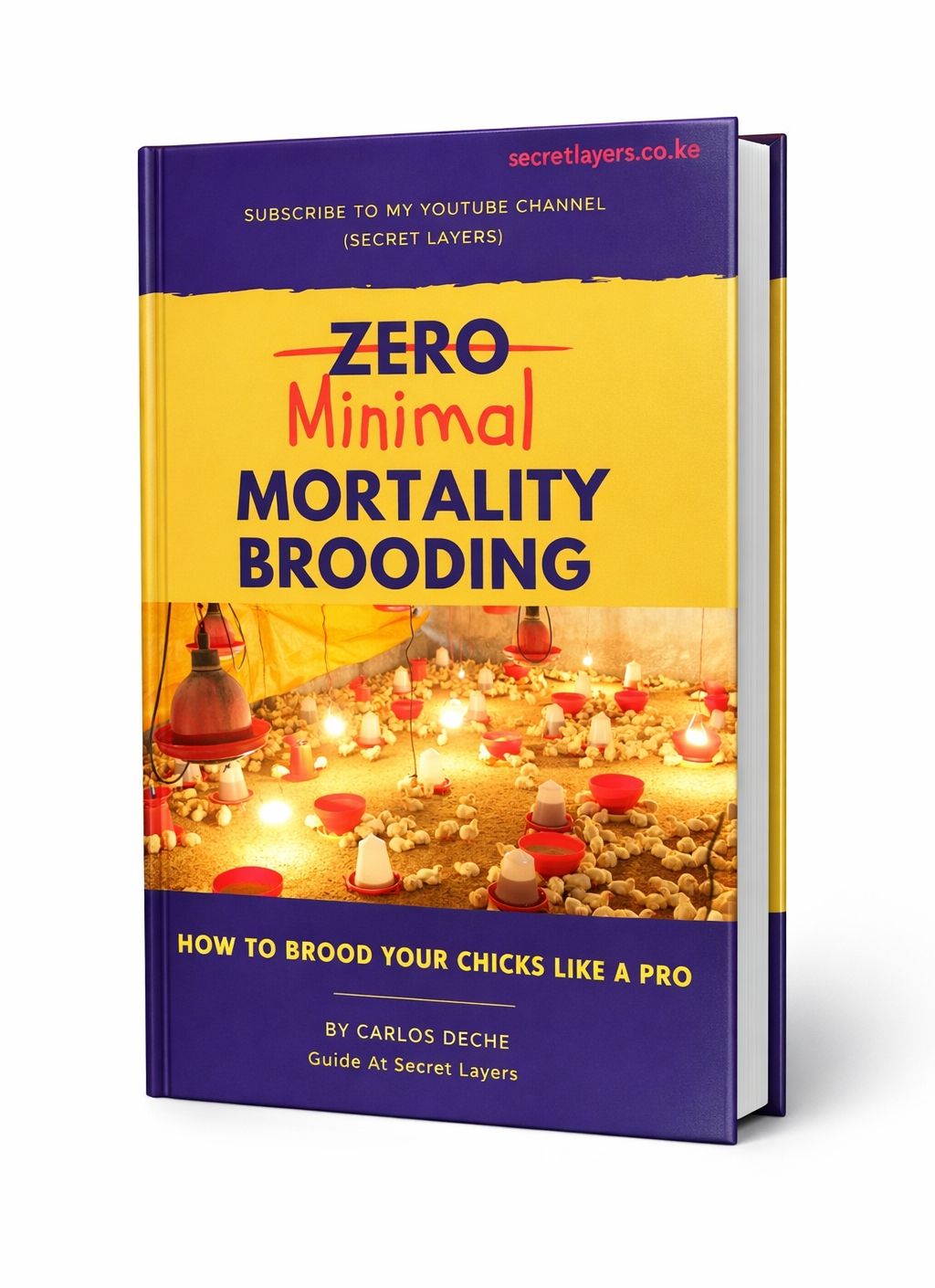
    Free Brooding Guide For Poultry Farmers. Zero (Minimal) Mortality Brooding. How To Brood Your Chicks Like A Pro. By Carlos Deche Guide At Secret Layers
    Name
    Limited access. Join other serious farmers who have taken the guide and get support.

    I am also writing a book on everything you need to know and do before you start your farm.

    It is going to be packed with the mindset frameworks, practical steps, and honest lessons that most farming books skip.

    If you’re reading this after the book is out, make sure you grab a copy.


    See you next Friday!
  • 28 Essential Layer Farm Equipment

    They say Abraham Lincoln once remarked, “Give me six hours to chop down a tree, and I will spend the first four sharpening the axe.” It’s a powerful reminder that preparation always beats raw effort.

    But here’s the truth — before you sharpen, you need an axe in your hands. The same applies to poultry farming. You can buy the best chicks and dream of collecting trays of fresh eggs every morning. Yet without the right layer chicken farming equipment, your farm will struggle before it even begins.

    Many beginners rush to buy birds first, only to realize later they don’t have feeders, drinkers, or even a proper house. This mistake wastes money and puts the flock at risk. The right poultry equipment may look simple, but it is the foundation of a profitable layer poultry farm.

    In this guide, I’ll walk you through all the essential equipment for layer chicken farming every beginner needs before starting a poultry farm.

    Think of this as your starter kit — a farmer-focused guide to help you prepare, avoid costly mistakes, and set your farm up for success.

    Just to be clear, this is not the exclusive list. And most important, you don’t need to buy all of these items before you kick off your farm. You can buy some later, and you can improvise to fit your needs. Don’t wait until you have everything. Start with what you can, and build from there.

    I. Housing

    1. Structure

    Your birds need a house with enough space. That’s a no-brainer. Include space for storing feed as well. You want this store to be cool, dry, and secure.

    Construct your house with a foot dip at the entrance for biosecurity. Always add disinfectant, not just soapy water. Another thing farmers often forget is perches. Birds need a place to rest and play. Try to give them as natural an environment as possible. All lay and no play makes layers dull girls.

    2. Litter

    If you plan to use the deep litter system, prepare dry litter about 4 inches thick. Depending on what’s available, you can use sawdust, coffee husks, or rice husks.

    3. Cages

    If you plan to use cages, have them ready before the birds arrive. This system is easier to manage but more expensive than deep litter.

    To decide which is better for you between cages and deep litter read here

    4. Windbreaker

    On the open wire-mesh sides, cover them to reduce strong winds, dust, or even rain. You can use curtains, polyethylene sheets, shade nets, or even sacks 😂. Remember DR.STARR— he was resourceful.

    II. Brooding

    Brooding is a temperature-sensitive stage. Without the right poultry farm equipment, chicks will not survive.

    5. Heat Source

    You’ll need a reliable source of heat. Options include a brooding jiko, charcoal stove, or infrared lamp.

    6. Water Source

    Never buy chicks without a water source on your farm. Birds will die without clean water. Ensure you have a municipal supply, water tanks, or a plan to buy water when needed.

    7. Feeders

    Feeders are where birds eat. Commercial ones reduce wastage, which is the highest cost on a farm. Homemade ones are cheaper but often waste more feed.

    8. Drinkers

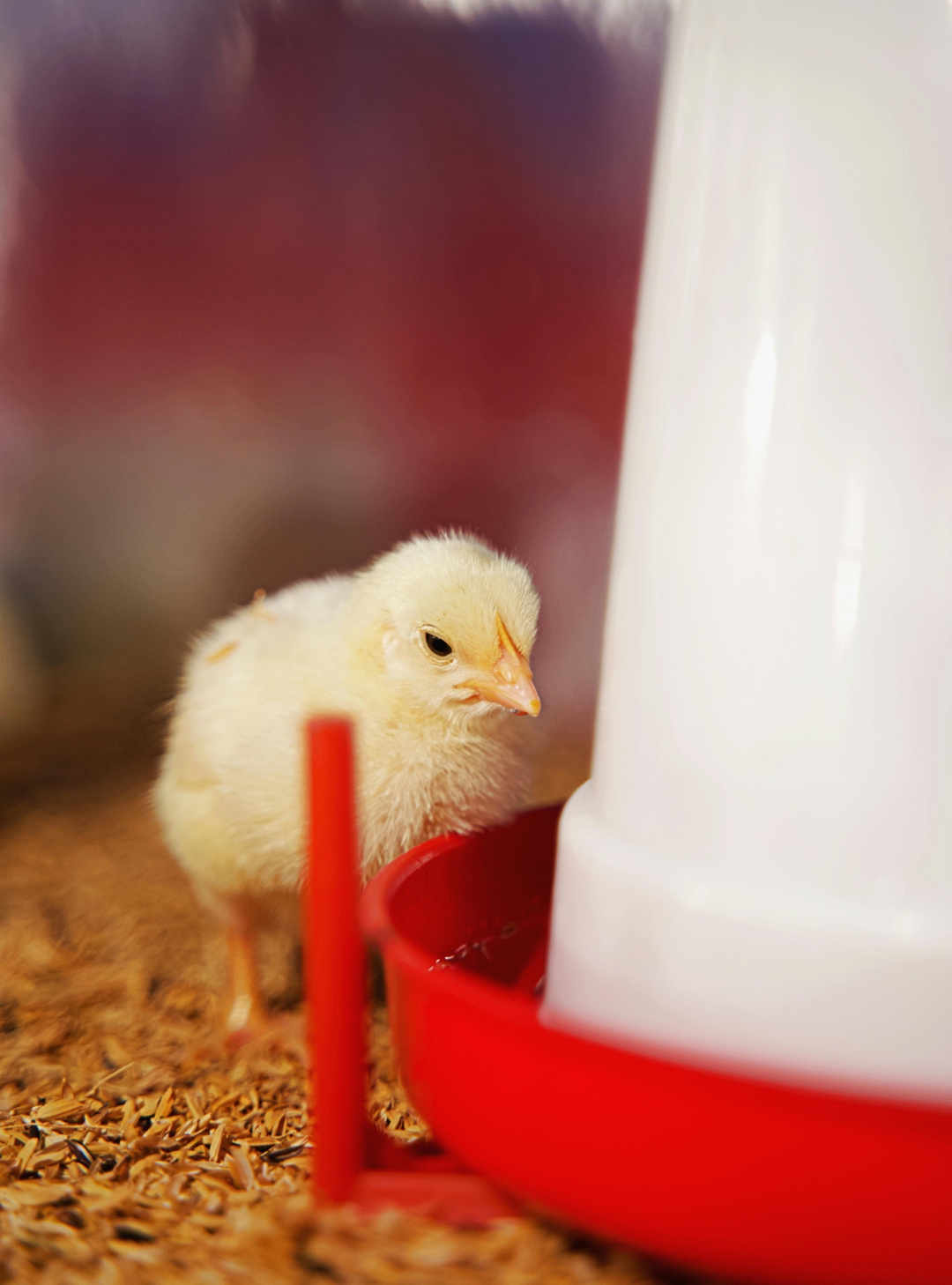
    Drinkers hold water. Both chick and adult drinkers are important, though adults can also serve chicks.

    A chick in a deep litter house system standing nest to one of the most important poultry farm equipment.A drinker.
    A chick chilling next to a drinker.

    9. Light Source

    Light matters. Layers need about 18 hours of light per day. The sun gives 12 hours, so you must provide the other 6 using electricity or solar bulbs.

    10. Plywood

    This is the main material for brooders. You’ve seen round areas where chicks are kept — that’s plywood at work. Still, many farmers improvise with cardboards or simple small rooms, and chicks survive just fine.

    11. Brooder Paper

    Cover litter with brooder paper or newspapers to stop chicks from eating it on day one.

    12. Thermometer

    Observation helps, but it’s not accurate. A thermometer lets you monitor brooder temperature properly.

    III. Growing Stage

    When chicks start growing into pullets, you need more chicken farming tools.

    13. Weighing Scale

    Monitor the birds’ weight to make sure they are not underweight or overweight. This affects laying performance. Weighing also helps detect poor feed intake and sick birds.

    14. Beak Trimmers

    Layers can become cannibalistic, pecking each other or breaking eggs. Since eggs are money, invest in debeaking equipment. Modern tools make it humane.

    15 & 16. Syringes and Needles

    Vaccines are a must. Some require injections or wing stabs. Keep syringes and needles ready, and ask your vet for guidance.

    IV. Laying Stage

    When birds reach laying age, equipment needed for starting a layer farm becomes more essential. It’s the money period.

    17. Laying Boxes

    Layers need quiet, dark places to lay eggs comfortably.

    18. Egg trays

    Where will you put your eggs? On trays — simple and safe.

    19. Means Of Transport

    Transport is optional but useful. Having your own reduces costs when moving eggs, chicks, or supplies.

    V. Security

    You must protect both your birds and your investment.

    20. Sprayer

    Disinfect the house before bringing in birds and between batches. A sprayer makes this easy.

    21 & 22. Human and Animal Surveillance

    Theft is real. Consider guards, CCTV, or dogs for human intruders and cats, fences or traps for animal intruders like rats,wild animals e.t.c

    Not everyone will like your success — it’s human nature.

    VI. Clothing

    Your safety and biosecurity come first.

    23, 24, 25 and 26. Protective Clothing

    I put these separately because they are crucial to your health and your birds health. Each and everyone of them.

    Gloves, gumboots, masks, and overalls are necessary. Keep one set for farm use only, and remove it immediately when leaving. Ignoring this increases disease risk.

    VI. Record Keeping

    A farm without records is a farm headed for failure.

    27. Record Keeping Tools

    Record everything — mortality, feed use, bird weights, egg numbers, sales, credits, and finances. Use a notebook or software. At Secret Layers, we don’t have record-keeping tools yet (2025), but we’ll release them soon.

    VII. Other Tools

    Simple tools make work easier.

    28. Farm Tools

    A spade, jembe, and wheelbarrow will help you mix feed, change litter, and dispose of manure.

    IX. Not Equipment, But Still Important

    Some essentials don’t fit into equipment but are crucial.

    Feeds: Without quality feed, nothing works.

    Workers: You may do it alone or hire extra help.

    Glucose and disinfectant: Prepare these before chicks arrive.

    Marketing Material : Decide how to sell eggs. Use airtime, internet, and social media.

    Chicks:Finally, don’t forget the birds themselves 😂

    Read this if your undecided on which chicken breed to buy.

    That’s everything you need for your layers poultry farming journey. This complete list of equipment for poultry farming will help you avoid mistakes, save money, and prepare like a professional.

    If you think I missed anything important, type it in the comments and I’ll add it.

    We need to make sure every farmer is ready before they start.Remember, you don’t need all the layer chicken farming equipment at once. Some items can wait, and you can improvise on others to save costs.

    Don’t postpone your dream just because you don’t have gumboots. That’s not what entrepreneurship is.Now go out there, start your farm, and live your dream.

    See you next Friday!

    carlosdeche4040@gmail.com

    secretlayerske@gmail.com