Category: Diseases

  • Should You Really Vaccinate Your Chicken? The Truth!

    Should you vaccinate your chicken or not?

    That question has been debated for many years among poultry farmers.
    Although many people think the answer is obvious, the reality on the ground tells a different story.


    Before we go further, let me ask you something.

    Did you get the COVID-19 vaccine?

    If you did, did you complete all the doses?

    As of late 2024, about 70% of the global population received at least one COVID-19 vaccine dose. However, in many low-income countries like Kenya, only about 38.9% received even the first dose.

    Therefore, vaccine hesitancy is not just a chicken problem. It is a human problem too.

    For the record, I received my full COVID-19 vaccination.

    Because I am in my final year of medical school at the University of Nairobi, I understand how vaccines work in both humans and animals.

    Now, let us apply those same principles to poultry farming.


    In this article, I will:

    Explain how vaccines work.


    Address common concerns about chicken vaccination.


    Give five clear reasons why you should vaccinate your chickens.


    Share practical tips to avoid costly mistakes.


    Ultimately, the final decision is yours. However, I encourage you to read carefully so you can protect your birds, your customers, and your profits.

    How Do Vaccines Work?

    Let me simplify how vaccines work.

    Normally, when a disease attacks a chicken, the body produces “soldiers” (antibodies) to fight the virus, bacteria, or parasite. If the chicken’s immunity is strong, those soldiers destroy the disease before serious signs appear.

    However, when immunity is weak, the disease multiplies. As a result, the chicken becomes sick and may die.

    Fortunately, when a chicken survives an infection, the body keeps memory cells. Because of that memory, the body can respond faster if the same disease attacks again.


    So how does a vaccine help?

    Simply put, a vaccine contains a weakened or killed form of a disease. When you give it to a healthy bird, the body produces soldiers without causing full disease.

    Later, if Newcastle disease, Gumboro (Infectious Bursal Disease), Fowl Pox, or Infectious Bronchitis attacks, the bird is already prepared.

    Consequently, the immune system responds quickly and strongly.
    That is the basic science behind chicken vaccination.
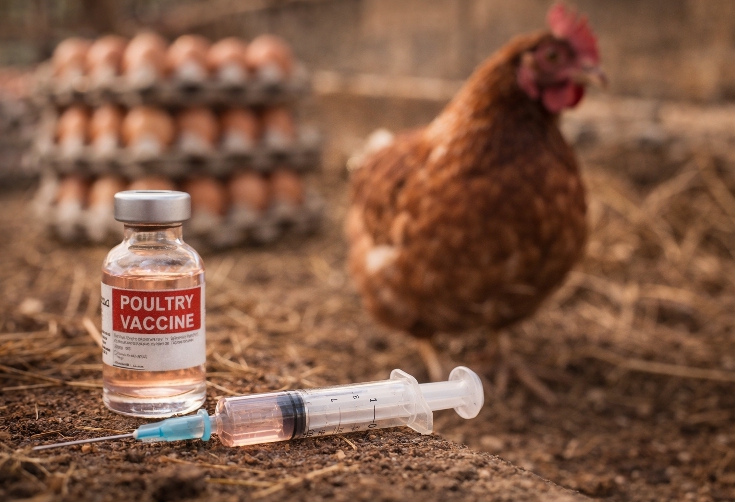
    Layer Chicken Vaccination
    Despite what you might have heard, vaccinating your chicken is more beneficial than harmful and honestly, a MUST.

    5 Common Concerns About Poultry Vaccination

    Although vaccines are widely used in layer poultry farming in Kenya, many farmers still have concerns.

    Let us address them honestly.

    1. Vaccines Make Birds Sick And Kill Them

    Yes, vaccines can cause mild reactions. However, serious death from vaccines is rare when birds are healthy.

    In most cases, problems happen because:

    The birds were already sick.

    The wrong dosage was used.

    The vaccine was poorly stored.

    Biosecurity was weak.


    Therefore, proper poultry biosecurity and correct handling are critical.

    2. Vaccines Do Not Work

    It is true that vaccines are not 100% effective. However, no medical intervention in the world is 100%.

    Even so, vaccinated flocks have much lower mortality during outbreaks of Newcastle disease or Gumboro compared to unvaccinated flocks.

    In other words, vaccination reduces risk. It does not eliminate risk completely.

    3. Vaccines Contaminate Eggs And Meat

    Some farmers worry that vaccines remain in the chicken’s body and make eggs unsafe to eat.

    However, approved poultry vaccines are tested for safety. Most do not remain in meat or eggs in harmful amounts when used correctly.

    In fact, vaccination often improves food safety by reducing diseases like Salmonella that can contaminate eggs.Therefore, following proper dosage and observing recommended guidelines ensures both bird health and consumer safety.

    4. Vaccines Are Expensive

    Some farmers believe chicken vaccination increases production costs.
     
    At first glance, that concern makes sense because every input on a poultry farm affects profit.However, vaccines usually make up a very small percentage of total farm costs.
     
    In most layer poultry farms in Kenya, vaccination costs are only a small fraction of feed, housing, and labor expenses.
     
    Therefore, the real question is not “Are vaccines expensive?”
     
    Instead, the better question is, “Compared to what?”
     
    Because disease outbreaks like Newcastle disease or Gumboro can wipe out an entire flock, skipping vaccination is often the more expensive decision in the long run.
    We will look at the actual numbers shortly.

    5. Conspiracy Theories

    Some people say vaccines are brought to kill our birds so that large companies control the egg market.
     
    Others claim vaccines are just a money-making scheme.
     
    However, these simply lack evidence and cannot be supported.

    So, Should You Vaccinate Your Chicken?

    Yes.
    Here are five practical reasons:

    Get this Free Layer Poultry Farming Ebook straight to your inbox if you want to start a profitable farm:
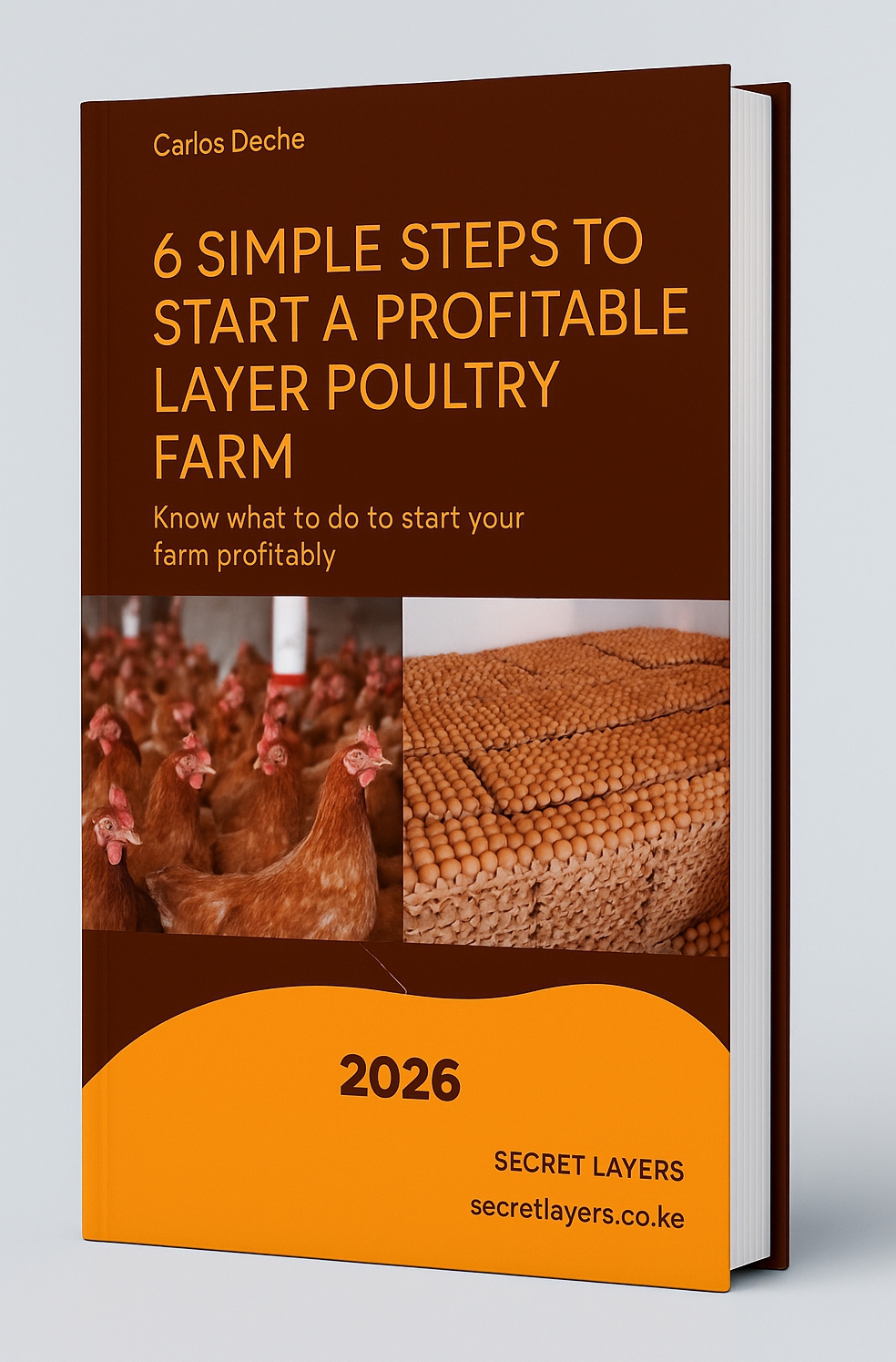
    Free beginners guide to starting a profitable layer poultry farm. Step by Step guide.
    Name
    Limited access. Join other serious farmers who have taken the guide and get support.

    1. To Prevent Disease

    Vaccines were created to prevent disease before it destroys lives or flocks.
     
    For example, vaccination helped eliminate polio in humans and reduce tetanus worldwide.
     
    Similarly, using a proper chicken vaccination schedule protects your birds from deadly poultry diseases.

    2. To Reduce Mortality

    When your birds are protected, fewer die during outbreaks. Meanwhile, unvaccinated farms suffer heavy losses.
     
    Imagine an outbreak of Infectious Bronchitis in your area. In that situation, vaccinated birds are far more likely to survive than the unvaccinated flocks.

    3. Herd Immunity

    When most birds in a flock are vaccinated, disease spreads more slowly. As a result, even birds that missed vaccination may have some protection.
     
    Nevertheless, you should always aim to vaccinate the entire flock properly.

    4. Better Quality Produce

    Food safety matters.
    Although salmonella contamination is a known global problem, proper vaccination and good hygiene reduce the risk significantly.
     
    In fact, some egg buyers and large distributors require proof of a proper chicken vaccination schedule before purchasing eggs.
     
    Therefore, vaccination supports both public health and market access.

    5. To Save And Make Money

    Every poultry farmer is in business to make profit.

    Because disease reduces egg production, increases mortality, and raises treatment costs, it directly eats into your income. Vaccination protects your cash flow.

    Let us look at the numbers..

    Ksh 5,000 for vaccines or Ksh 200,000 loss from total flock death.

    Ksh 5,000 for vaccines or Ksh 50,000 spent on treatment.

    Ksh 5,000 investment or Ksh 500,000 lost egg income over two years.

    Clearly, this is not just about disease prevention. It is about protecting your business.

    As the saying goes, if education is expensive, try ignorance.

    Likewise, if vaccines seem expensive, try treating Newcastle.

    Practical Tips For Vaccinating Your Chicken

    First, remember that proper biosecurity is your strongest protection.

    Second, consult a local poultry vet about common diseases in your area.
     
    Third, vaccinate birds before they get sick. Vaccines prevent disease; they do not cure it.
     
    Finally, get a clear vaccination schedule from a reputable day-old chick supplier.

    Now You Have The Facts

    At this point, the decision is yours.
     
    However, if you are serious about layer poultry farming in Kenya, protecting your flock should be a priority.
     
    So ask yourself again: Should you vaccinate your chicken?
     
    If your goal is healthy birds, safe eggs, and steady profits, the answer is clear.
     
    If you found this helpful, read my detailed guide on the best layer chicken vaccination schedule for layers to choose the one that fits your farm.

    See you next Friday!

    carlosdeche4040@gmail.com

    secretlayerske@gmail.com
  • 9 Common Layer Chicken Diseases And How To Recognize Them Early

    Diseases in layers can reduce egg production, slow growth, and even kill birds if a farmer does not act early.

    Many problems start with small signs, so it helps to know what to watch for.


    First, always observe your birds every day. Early action saves money and protects the flock.

    These are the common chicken diseases in layers,how to recognize them early and how to treat them.

    1. Marek’s Disease

    Marek’s disease is a viral disease caused by a herpes virus. It spreads when birds inhale infected dust or feathers.

    Signs to look for:

    Paralysis of one leg or both legs.

    Incoordination

    Drooping wings or neck.

    Weight loss and poor appetite.

    Rough feathers .

    Depression.

    Tumors or swellings.

    Drop in egg production.


    Prevention is by vaccination at an early age.

    Mainly given on day one at the hatchery if you buy from reputable hatcheries.

    2. Infectious Bursal Disease (Gumboro)

    This disease is caused by the IBD virus. It weakens the immune system, so birds get sick easily.

    Signs to look for:

    Watery diarrhea.

    Wet and soiled feathers.

    Poor feeding.

    Ruffled feathers.

    Weakness and incoordination.


    Vaccination is the best prevention.

    3. Coccidiosis

    Coccidiosis is a protozoal disease that affects the gut. Birds get it by eating oocysts from contaminated litter or soil.

    Signs to look for:

    Bloody or mucoid diarrhea.

    Low feed intake and weight loss.

    Dehydration.

    Pale comb and wattles.

    Drop in egg production.

    It is usually self limiting – meaning it goes away without treatment so long as the birds are healthy.


    Wet litter increases risk because it helps the parasite multiply.

    Treatment is with anticoccidial drugs, and sometimes antibiotics are used to control secondary infections.

    4. New Castle Disease

    Newcastle disease is a highly contagious viral disease.

    It affects the nerves, breathing system, and egg production.

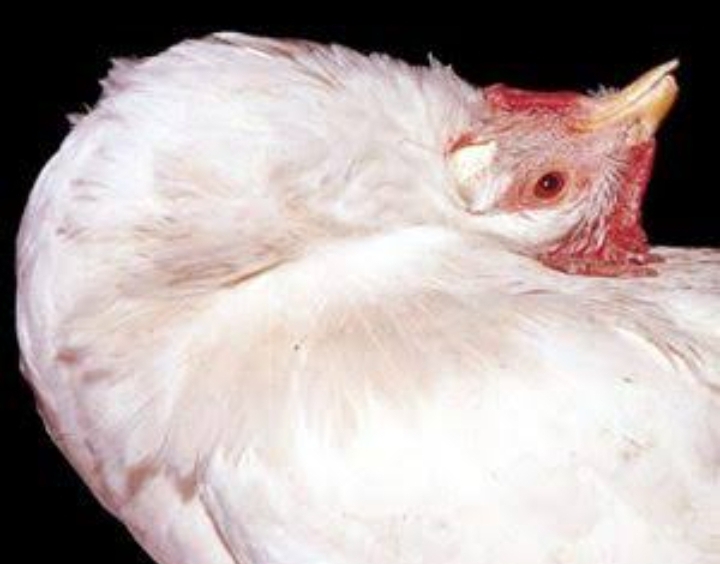
    Neck twisting. Common in New Castle Disease. In a secret layers blog post of 9 Common layer chicken diseases.
    Neck twisting in a chicken. Commonly seen in New Castle’s Disease.

    Signs to look for:

    Twisted neck and circling.

    Wing drooping and paralysis.

    Tremors.

    Sneezing and coughing.

    Greenish diarrhea.

    Soft or deformed eggs.

    Sharp drop in egg production.

    Vaccination is essential for prevention.

    5. Infectious Coryza

    Infectious coryza is a bacterial respiratory disease. It spreads quickly in a flock.

    Signs to look for:

    Facial swelling around the eyes and cheeks.

    Thick, bad-smelling discharge from eyes or nose.

    Noisy breathing or open-mouth breathing.

    Poor appetite.

    Pale combs and wattles.

    Drop in egg production.


    Treatment is with antibiotics and good hygiene.

    6. Fowl Pox

    Fowl pox is a viral disease caused by the avian Pox virus.

    It has two forms:

    Dry Form/Cutaneous

    Scabs or lesions on comb, wattles, and legs.

    Wet Form/Diphtheric

    The wet form is more serious because:

    Lesions form in the mouth and throat.

    Birds have trouble breathing or swallowing.

    Feeding decreases and production drops.


    Vaccination helps prevent this disease.

    7. Infectious Bronchitis

    Infectious bronchitis is another viral respiratory disease.

    Signs to look for:

    Coughing and sneezing.

    Nasal discharge.

    Gasping and breathing sounds.

    Wrinkled or poor-quality eggs.

    Reduced egg production.

    Facial swelling.

    Vaccination and good ventilation help control it.

    8. Worm Infestation

    Worms are internal parasites that affect growth and production.

    Signs to look for:

    Weight loss.

    Diarrhea, sometimes with worms.

    Pale comb and wattles.

    Low egg production.

    Lethargy.

    Regular deworming helps prevent heavy infestation.

    9. Fowl Typhoid

    Fowl typhoid is a bacterial disease that can cause heavy losses.

    Signs to look for

    White diarrhea stuck on feathers.

    Poor feeding and weight loss.

    Weakness and ruffled feathers.

    Pale comb and wattles.

    Reduced egg production.

    Treatment is with antibiotics and strict hygiene.

    Which of these diseases has been disturbing you on your farm?

    Let me know in the comments.

    Treatment Principles

    When disease appears, act quickly.

    First, isolate sick birds to stop spread.

    Next, provide clean water and good feed to support recovery.

    Finally, use vaccination, antibiotics, or other drugs only when appropriate and based on the disease.

    Consult your local veterinary.

    Vaccination Schedule

    After a long period of struggling with the proper vaccination schedule to use for my layers, I researched and found the best one.

    One simple schedule and the Kenchic one.

    Read here to know which is best for your farm👇🏿

    https://secretlayers.co.ke/blog/vaccination-schedule-for-layers-a-simple-guide-for-farmers/

    If you’re yet to start your layer poultry farm, get this Free guide to help you start.

    Name
    Limited access. Join other serious farmers who have taken the guide and get support.

    See you next Friday!

    carlosdeche4040@gmail.com

    secretlayerske@gmail.com