Author: Carlos Deche

  • The 9 Layers Of The Cold Ground

    💪🏿I’ll Be A Millionaire From Eggs

    “I’m going to be rich.
    I’m going to make a lot of money.
    I’m going to be a millionaire.

    I’ll be selling my eggs every day — money in my hands each morning.
    Which job pays you every day? None.”

    🛌🏿Dreaming In Numbers

    Niss lay on her bed, half-asleep, half-awake. Her daughter had already left for school; Niss let herself rest for a few more minutes — just a little longer😅

    “Let me do some quick math,” she whispered to the ceiling.

    If I start with 1,000 birds, that’s 1,000 eggs a day once they start laying.
    At Ksh.20 per egg — that’s Ksh.20,000 a day.

    Her mouth went dry. Ksh.20,000?😱
    Times thirty. Ksh.600,000 a month.

    🤓Wait Till Mama B Hears

    She imagined Mama B’s face. She imagined the neighbours whispering — jealous, saying she had “jinis.” She smiled. She didn’t mind.

    The city rose before her like a promise: a better house, quieter mornings, no more wrangles with neighbours. She pictured herself checking the village once in a while but living somewhere with pavements and light.

    ⚠️The Stomach Knot Nobody Talks About

    Then the stomach-knots arrived — the same small panic she had felt before. Her heart skipped in a way she could almost taste it at the back of her throat.

    If layer poultry farming brings Ksh.600,000 a month, why isn’t everyone doing it?
    Is it that they don’t know? Or that they don’t have the money?

    📱One Google Search That Changed Everything

    She grabbed her phone and typed: Is layer poultry farming profitable?

    The results? -“You must be offline.” 😂She bought data. And the results returned.

    At the top: Layers vs Broilers: Why you should choose layers over broilers.
    It was from Secret Layers. She tapped the link and read the six reasons.

    💥When The Dream Cracks Wide Open


    One by one her assumptions fell away. Yes — steady cash flow. But something else hung on the page like a warning: raising layers is hard.

    Her chest tightened. The urge she usually felt when she was nervous pushed low in her belly. Layers can be profitable, yes — but the money doesn’t come easy. Her quick math had been a fantasy.

    📃The Cold Hard Truth On The Ground

    The 9 layers of cold ground.What you think you know about something is wrong until you do it.And on the ground,it's cold.
    Things on the ground are not what you think you know. The truth is cold. Real cold.

    This is what she realized:

    1. Having layers doesn’t guarantee daily sales. Marketing and selling takes time.


    2. Starting with 1,000 birds is far too risky for a beginner.


    3. Buying 1,000 chicks doesn’t mean 1,000 will reach laying age — she didn’t factor in mortality.


    4. Even healthy flocks don’t produce 100% — with good management, 80% is realistic.


    5. Ksh.20 per egg is retail. Bulk buyers pay less.


    6. You’ll likely sell in trays, not single eggs — and volume changes price.


    7. Ksh.20,000 per day is gross revenue — not net profit. Not even close.


    8. She hadn’t added expenses: daily feed, monthly labour, utilities, even a salary for herself.


    9. Nobody will care if she makes it. She has to do it for herself and for her children.

    There they are, the 9 things Niss had forgotten and she was reminded how things are different on the ground.

    🤐Nobody Cares

    Her neighbours were busy with their own lives; they weren’t waiting to cheer her on. The truth was sharp and lonely.

    🥚The Brown Image Of Hope

    As she scrolled away from the post, a brown image caught her eye — eggs and layer birds, simple and promising. It said: Register for free to get the guide.

    She registered. Then she opened her email.

    There it was:
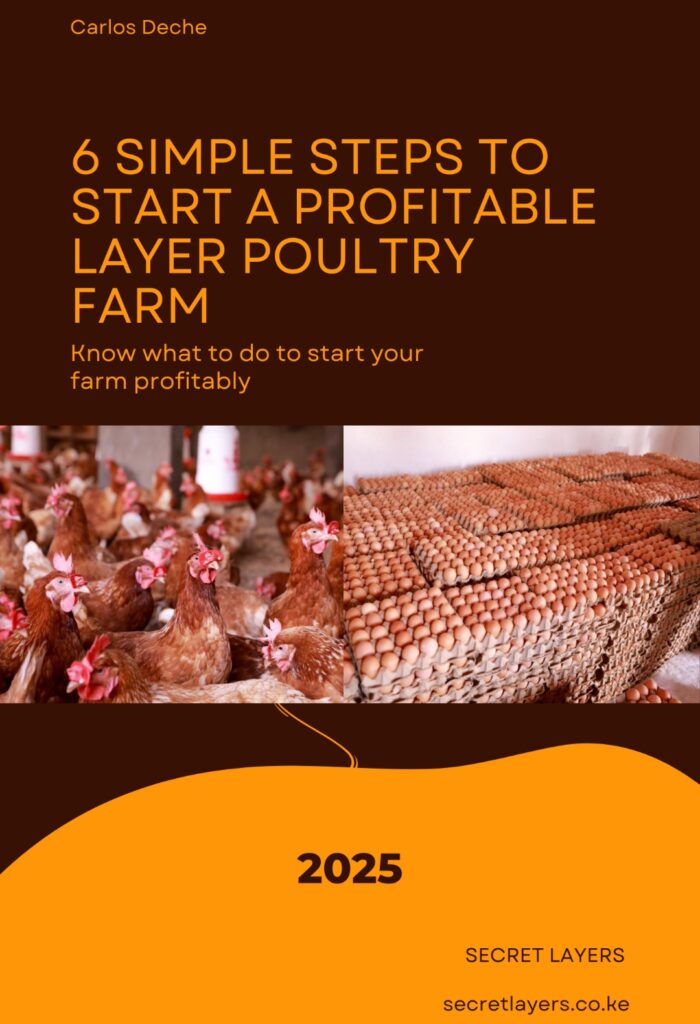
    ✅ A beginner’s guide
    ✅ A printable purpose planner

    🔑From Fantasy To Plan

    She quickly read through the guides and oh boy! She was glad she did.

    She sat back and let the truth land in her skull. For the first time the fantasy and the work separated. The math stopped being a dream and began to look like a plan — one that required learning, humility and time.

    🚨Don’t Be Like Niss

    “I can’t believe I was just fantasizing about money without knowing anything about keeping layers,” she whispered. “Never again.”

    What’s in your head is very different from the work on the ground. Don’t be a spectator. Be the person in the arena.

    If you’ve ever pictured quick riches from birds and a single, neat calculation — stop. Learn the real steps first.


    👉 Register for free now and start the work with truth, not a fantasy.

    You’ll get our regular Layer Chicken Digest tips via email.

  • 5 Things You Need To Start A Layer Farm

    What do I need to start a layer farm? That’s a question many beginners ask. You may wonder if you should first buy land, get money, or even write a business plan.

    In this post, I’ll give you a clear answer. By the end, you’ll know exactly what you need to start a layer poultry farm. In fact, the same applies to almost any farming venture.

    What do I need before I start a farm?
    What do I really need to start my layer poultry farm? I’m confused😮‍💨 Don’t fret.Just keep reading.

    1. PEOPLE

    First, you need people. It is said, if you want to go far, go alone. If you want to go further, go with others.

    Well,here’s what I say, if you want to go anywhere worthy, you need people.

    In business, this is true. You cannot do everything on your own because you’ll quickly burn out. Moreover, business itself is about people—someone with a problem and someone with the solution.

    That means you’ll need partners, employees, customers, and suppliers. Even your spouse doesn’t have to like what you do, but they should at least support you. For marketing, sales, and legal matters, you’ll also need a team, including lawyers.

    Who will buy your eggs? Customers.

    Where will you get farm inputs? From suppliers.

    As Jim Collins said in his book Good to Great, you need the right people on the bus even before deciding where the bus should go.

    Therefore, choose carefully. Work with people who share your mission, goals, and values. Not just anybody.

    2. PLAN

    Next, you need a plan. This doesn’t have to be a long, bankable business plan. Honestly, those are often useless.

    Instead, have a simple plan that shows direction. Remember how we said to get the right people on the bus? Now, the plan is about deciding where that bus is going. It would be pointless to gather the right people only to lead them into a ditch.

    So, what should your plan include?

    Goals – How big do you want your farm to be?

    Mission – Why are you starting this farm beyond money?

    Product – Will you sell only eggs, or also chicks, feeds, or add value?

    Systems – How will your farm run daily?

    Legal – What approvals or licenses do you need to grow?

    Communication – How will buyers find you, and how will you sell to them?

    With these basics, your farm will have direction.

    3. GUIDE

    Equally important, you need a guide. This is step 1 and step 5 in our detailed guide to starting a layer poultry farm. That’s how vital it is.

    Free beginners guide to starting a profitable layer poultry farm. Step by step guide.

    Get your FREE guide here 👇🏿:

    Name
    Limited access. Join other serious farmers who have taken the guide and get support.

    Great, you’ve already found your first guide—Secret Layers. Congratulations, because most people never take that step. From here, you’ll gain technical information and real knowledge about running a layer farm.

    Still, you should also find a physical guide. This is someone nearby who can help in case of emergencies and offer one-on-one support. Trust me, you’ll need such a guide.

    4. MONEY

    Many beginners think money is the number one need. While they’re not entirely wrong, the truth is you need the other things first.

    Still, you cannot ignore money. You’ll need cash to feed your birds from day one until about 4.5 months when they start laying. You’ll also need a chicken house, chicks, vaccines, water, and cash to cover ongoing costs like marketing and daily operations.

    In addition, you must think about cash flow. Without steady cash flow, your farm could stop running even if you have healthy birds. That’s why money matters, but only after people, plan, and guide.

    5. LAND

    Finally, let’s talk about land—the elephant in the room. Do you really need land to start raising chickens? Yes, you do.

    However, you don’t need to break the bank. You simply need enough space for your chicken house, storage, and workers. If you already have some land, start with that. If not, you can lease, borrow, or partner instead of spending thousands to buy.

    Remember the second “R” in DR. STARR—it stands for Resourceful. Use what you have.


    Now you know what you need to start a layer farm: people, plan, guide, money, and land. Don’t postpone your dream. Take the first step today and build the farm you’ve been thinking about.

    👉 Register below for free to get our regular Layer Chicken Digest tips.

    Name
    Limited access. Join other serious farmers who have taken the guide and get support.

    See you next Friday!

    Carlos Deche

    carlosdeche4040@gmail.com

    secretlayerske@gmail.com

  • The Mother Who Made A Dangerous Promise

    A Busy Afternoon

    Niss was busy washing her youngest child’s school uniform. Monday was tomorrow, and the clothes had to be ready and ironed before bedtime. The sun was already low, casting long shadows across the yard. They had returned from church only 20 minutes earlier.

    Yes, these village churches—services often ran late. Today, the pastor had been recounting a five-year visit to her mother-in-law. Niss had left early because her daughter was sick. After what felt like a 10-hour prayer session from the pastor’s wife, her little girl was finally feeling better.

    She had asked her daughter to wash the uniforms the day before, but kids these days… well, they didn’t always listen. Niss hung the last uniform on the line and thought, “Thank God she’s fine now.”

    Maybe she should call the headmaster to explain that her daughter might miss school. But wait—the headmaster had been at church too. Surely he understood.

    The Weight Of Responsibilities

    Her mind wandered to other pressing matters:

    • School fees were unpaid.
    • She owed Ksh. 40,000 to her chama.
    • The monthly siblings’ meeting was coming up.
    • Her other 4 kids will soon be home for the holidays.
    • Her father had just left the hospital, and her mother needed support.
    • Kadzo’s wedding was coming, and she hadn’t contributed yet.

    Life was heavy. “I need money. And I need it fast. Otherwise, I might die in this village,” she muttered.

    Villagers might think life here is easy—food everywhere, no one goes hungry. But Niss knew better.

    A Glimmer Of Hope

    Later that night, while preparing supper and scrolling through Facebook, a familiar page caught her eye: Secret Layers.

    She had seen it before, but now it struck her—this could be her way out. The guide promised practical steps to earn more money, learn business, and take control of your life.

    Her heart raced. She wanted to try, but reality hit: no money, no experience, no one to borrow from, and she was in debt.

    This layers thing looks risky, she thought.

    How do you feed birds for 4.5 months without a single egg?

    What if they die?

    What if I run out of money?

    I didn’t even do well in primary mathematics,how can I do business… Never mind. It’s for the rich.

    A Daughter’s Plea

    “Maaa!” her daughter called, panic in her voice.
    “We have a trip to Gedi ruins next week! I don’t want to miss it like the previous one!”

    Niss’s chest tightened. Where was she going to get the money?

    “You won’t.”She mumbled.

    There it is.The dangerous promise.

    Could she keep it this time?

    She returned to the table, pushed aside the ironing, and opened her phone. She typed “Secret Layers” into the search bar, hit follow, and scrolled until she found the post she had been looking for:

    “Make a commitment and write it down. Date it. Sign it.”

    She smiled at the playful advice about cutting a finger and using a drop of blood like Ghost Rider. Just kidding!

    The Commitment

    Niss grabbed a notebook and wrote:

    03 September 2025

    I need to have money. I commit to keeping layers and making enough to support my family. I don’t want to disappoint my daughter.

    Signature.

    Relief washed over her. A burden lifted from her chest. A knife that had been half-stabbed into her heart seemed to vanish.

    She had no idea what lay ahead. She didn’t know the challenges, the risks, or the mistakes she might make. But she had made her choice. She had committed, and she had taken the first step.

    And sometimes, the first step—though hardest—is all you need to begin.

    Your Turn

    Have you made your commitment like Niss did?

    The first step may be the hardest but it’s also the most important.

    Start here

    Enter your email below.

  • How To Choose The Best Layer Breed

    You’ve decided it’s layers you’re going to keep but you don’t know what to consider when choosing the best breed for your farm.

    If you’ve not yet decided it’s layers, please check this post where I give the 6 reasons that made me choose layers over broilers before you continue.

    There are over 40 layer chicken breeds, and it can feel overwhelming to select the perfect one for your farm.

    Although I’ve already shared my list of the Top 3 layer chicken breeds, I believe it’s even more useful to give you the factors you should consider when making your choice. That way, you’ll know how to pick the breed that best fits your goals and situation.

    These are 9 factors to consider. The first 3 are general factors, while the last 6 are chicken-specific factors that focus on the characteristics of the birds themselves.

    Hopefully, by the end of this guide you’ll be able to make the right choice of breed based on facts. And the best part? You’ll also be able to advise that friend of yours who’s just getting into egg production on what they should look for.

    GENERAL FACTORS

    1. GOALS

    When given 10 days to cut a tree, I’d take the first 7 sharpening the axe. You’ve probably heard this saying before.

    But here’s the best version — I got it from Seth Godin. He says it’s not just about sharpening the axe today. Instead, it’s about going back 20 years and asking: Which tree should I plant, and where should I plant it, so I can come back to cut it down 20 years later?

    That same thinking applies to farming.

    What is your goal with layer chicken farming?

    Are you planning to have a big commercial farm?

    Do you want to sell eggs for profit?

    Or is your plan to simply get a steady supply of eggs for your family?

    Maybe you just want a pet!😂

    This matters because different breeds have different egg production levels, require different levels of care, and some can even be quite fierce — not ideal if you’re looking for a pet.

    And if you want both eggs and meat, you should consider dual-purpose breeds like Kuroiler or Kenbro.

    👉 If you want to know which breed is best for commercial use and which one is better for personal use, check this guide.

    2. AVAILABILITY

    Don’t tell me you want to rear the Jersey Giant and you’re in Kenya — let’s say Kilifi.

    Why? Because you’ll most likely not find them locally. You’d either have to import or search endlessly. Honestly, I’ve never seen them here in Kenya. Maybe they exist somewhere, but I personally haven’t come across them.

    So, your choice of breed should depend on what is easily available around you. This way, you’ll save on transport costs and avoid unnecessary headaches.

    3. MARKET

    If your market prefers white eggs, get the White Leghorn. If your market prefers brown eggs, choose any of the other breeds.

    Don’t make the mistake of taking white eggs to a brown-egg market or brown eggs to a white-egg market. You’ll struggle to sell.

    Of course, you can still succeed if you focus on that small niche white egg market and serve it well — but that’s beyond the scope of this post. I’ll cover it in a future post.

    CHICKEN SPECIFIC FACTORS

    4. PRODUCTIVITY

    Different layer breeds have different levels of productivity. Hybrids usually have the highest.

    For example, ISA Brown will produce more eggs per year compared to a KenBro.

    So, for commercial purposes, you definitely want to choose the breed that gives you the highest number of eggs annually.

    5. FEED-TO-EGG CONVERSION

    This is the amount of feed a chicken eats that actually gets converted into eggs.

    For instance:
    Breed A: 1 chicken eats 100g of feed = 1 egg.

    Breed B: 1 chicken eats 150g of feed = 1 egg.

    Which one should you choose?

    Clearly, the one with the higher conversion rate, because it takes less feed to produce an egg. That means lower costs and more profit.

    6. LEVEL OF CARE NEEDED

    Are you a hands-on guy?

    Are you willing to learn how to manage chickens properly?

    Some breeds, especially Hy-Line, require a higher level of advanced care compared to breeds like ISA Brown or dual-purpose breeds.

    If you’re just starting out and want something simpler, go for breeds that need less specialized care.

    7. LOCATION

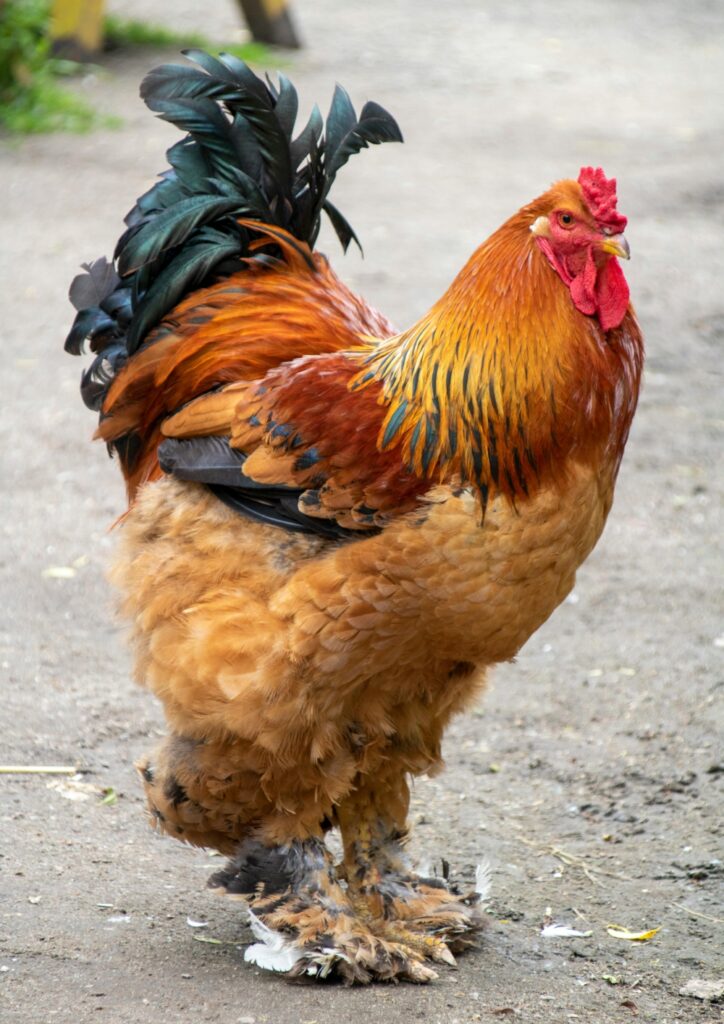
    Some breeds are suited for cooler, temperate regions,like the Brahma while others thrive in warm tropical areas.

    So, choose the appropriate breed for your climate to get the best results.

    Image of brahma chicken breed.A dual purpose breeds mainly kept in the cooler temperate regions.
    The brahma chicken breed mainly kept in the cooler temperate regions.You can see the feathers extending to her legs – They’re for protection against cold.

    8. ADAPTABILITY

    While some breeds are developed for specific regions, many can adapt and still perform well in both cold and warm areas.

    Breeds like ISA Brown, Hy-Line, and Lohmann Brown are known to do well in a wide range of conditions.

    9. DISEASE RESISTANCE

    In general, hybrids tend to have better resistance to diseases than pure breeds. This is because superior qualities are selected during their production.

    Most hybrid producers will specify the exact strengths of their birds, including the diseases they resist best. That makes it easier for you to choose.

    One Last Thing..

    Now you have a clear checklist to run through whenever a friend recommends a breed — or when you come across one online. This way, you’ll avoid making a choice you regret later.


    To help you even more, check out my recommendations for the top 3 layer chicken breeds in Kenya if you haven’t yet.

    Also register for free to get my guide plus the Layer Chicken Digest Tips via email.

    Free beginners guide to starting a profitable layer poultry farm. Step by step guide.

    See you next Friday!

    Carlos Deche

    carlosdeche4040@gmail.com

    secretlayerske@gmail.com

  • Layers Vs Broilers : 6 Reasons Why You Should Choose Layers

    Confused between layers vs broilers?

    Choose layers.Don’t go for broilers.

    We’ve already looked at the key differences between layers and broilers. (If you missed that post, find it here.

    Both can be profitable, but in this post I’ll share why I chose layers over broilers — and why you should too.

    Many farmers rush into broiler farming because it looks easier. But easy doesn’t always mean better. Let’s break down the reasons why layers often win in the layers vs broilers debate.

    Layers vs broilers.Why you should choose layers over broilers.
    In the layers vs broilers debate,choose layers.Below are the 6 reasons why I did and so should you.

    1. MARKET

    The egg market is stronger than broiler meat.

    Fewer farmers keep layers compared to broilers, which means fewer eggs in the market. According to the law of supply and demand, low supply increases demand — and that’s good for you.

    Eggs enjoy consistent demand year-round. Broiler meat, on the other hand, has peak seasons like Christmas or when there’s an influx of tourists.

    With eggs, you don’t have to wait for festivals to sell your product.

    2. STARTUP COSTS

    Layer farming isn’t easy to start. It requires more money, more time, better information, and more skill compared to broilers.

    That may sound like a disadvantage, but it’s actually an opportunity. Real entrepreneurship is about turning challenges into profits. The harder the problem, the higher the potential reward.

    Because it’s tough, most people avoid it. Less competition means you can dominate the market once you succeed. Remember Mike, who left broiler farming due to stiff competition and is now thriving with layers? That’s proof of how the challenge can turn into profit.

    3. RETURNS

    Layers give a higher return on investment (ROI) compared to broilers.

    Many broiler farmers have to replace flock after flock because the profit margins per batch are very low. It takes several cycles to see meaningful returns.

    With layers, one hen can produce about 300 eggs in a year. That equals 10 trays. If one tray sells at Ksh.350 (minimum), you earn Ksh.3,500 from a single hen.

    Now compare that with broilers. One broiler sells for about Ksh.500 at best. You can already see the gap.

    Even better, at the end of the laying cycle you can still sell the birds as spent hens. For example, if you bought a day old chick at Ksh.150 and sold it at Ksh.400 after two years, you never really make a loss.

    *Excluding all other costs like feeds e.t.c

    4. CASHFLOW

    Layers provide stable, predictable cashflow.

    Keeping broilers is like buying a chick at Ksh.100 and selling it six weeks later for Ksh.500. That sounds fine, but you must repeat the cycle every 1.5 months to keep earning.

    Layers are different. Once they start laying at around 18 weeks, you collect eggs daily for up to 1.5–2 years. That’s consistent income with the effort front-loaded at the start.

    Robert Kiyosaki, author of Rich Dad Poor Dad, says real investors invest for cashflow, not just capital gains. Layers farming is exactly that — cashflow farming.

    5. VALUE ADDITION

    Eggs give you more value-addition options than chicken meat.

    Check market prices:

    How much does 1kg of packaged chicken meat sell for?

    And how much does 1 litre of packaged liquid eggs sell for?

    Way,way higher.


    For example, just one tray of eggs can be turned into products worth Ksh.1,750 through value addition. Eggs can be processed into liquid, powder, or used for baking.

    See for yourself what Fridah Kaaria is doing

    Chicken meat also has processing options, but the percentage increase in value is much higher for eggs.

    6. PRICES

    Eggs generally command better unit value compared to broiler meat.

    Think about this:

    One broiler chicken raised for nearly two months sells for Ksh.500. That’s almost the same price as 1.5 trays of eggs, which you can easily get in a single day if you keep 50 layers.

    That’s the power of layers in the layers vs broilers comparison.


    Now you’ve seen the clear advantages of choosing layers over broilers: stronger market demand, higher ROI, stable cashflow, better value addition opportunities, and stronger unit prices.

    Follow these steps to start your layer farm profitably

    For me, the biggest reason is cashflow. Keeping layers feels like buying a money-printing machine. From 18 weeks until almost 2 years later, you earn consistently before finally selling the birds.

    If you’re ready to start your journey, register below for free.

    👉 Just enter your details to grab a copy of my free guide and regular Layer Chicken Digest Tips via email:

    “6 SIMPLE STEPS TO START A PROFITABLE LAYER POULTRY FARM”

    Free beginners guide to starting a profitable layer poultry farm. Step by step guide.
    Name
    Limited access. Join other serious farmers who have taken the guide and get support.

    See you next Friday!

    Carlos Deche

    carlosdeche4040@gmail.com

    secretlayerske@gmail.com

  • 5 Powerful Solutions To High Animal Feed Costs In Kenya

    How do you reduce feed costs on your farm?

    It’s the million dollar question every poultry and livestock farmer in Kenya is asking right now.

    Finding solutions to high animal feed costs in Kenya is urgent for every poultry and livestock farmer.

    Feed prices often take up to 70% of production costs, leaving farmers struggling to stay profitable. The 2024 Competition Authority of Kenya (CAK) report shows maize, soybean, and sunflower products have risen by over 30% in just two years.

    Last week, I shared the 7 main reasons why animal feed costs are high in Kenya.

    If you missed it, you can read that article here and also check out the official CAK report.

    Today, I’ll share my 5 practical and industry-level recommendations for solving this problem for good. These are not the usual “grow your own azolla” or “use black soldier fly” tips. They are strategies that, if implemented, can make farming more profitable — especially for layers farmers, which is what Secret Layers specializes in.

    The first three ideas focus on reducing feed costs directly. The last two focus on increasing the price you can charge for your eggs, so even if feed prices stay high, you remain profitable.

    1. GO BIG

    Big(200m long 2 floor chicken house)
    Going big gives you an edge in sourcing and formulating feeds.

    Scaling up is one of the fastest ways to cut feed costs. Larger farms can negotiate better prices with suppliers because they buy in bulk.

    Hypothetical example:
    Imagine you have 5,000 layers. Instead of buying feed in 50 kg bags, you order a full truckload. Your supplier might offer you a 5–10% discount for the bigger order. That’s money saved before the feed even reaches your store.

    Farmer action: If expanding your flock is not realistic, join or form a cooperative. When multiple farmers buy together, they gain the same bulk-buying power as a large farm.

    Stakeholder action: Support cooperative models by offering bulk storage facilities, transport discounts, or collective purchasing agreements.

    2. FORMULATE YOUR OWN FEEDS

    Making your own feeds can lower your expenses because you are sourcing raw materials directly and avoiding retail markups. This is one of the most effective poultry feed cost solutions available to Kenyan farmers.

    What to consider before starting:

    Can you source maize, sunflower cake, or soybean meal at good prices?

    Do you understand feed formulation for layers so you meet nutritional needs?

    Hypothetical example:
    Let’s say you have 1,500 layers. You decide to mix your own layers mash using maize bran, sunflower cake, and premixes bought directly from a miller. This could cut your feed costs by around 15–20% compared to agrovet prices.

    Farmer action: Learn feed formulation from extension officers or trusted training providers. If the investment in mixers is too high, share equipment with other farmers.

    Stakeholder action: Offer accessible training and affordable leasing of feed-mixing equipment to farmer groups.

    3. PRODUCE OUR OWN FEED INPUTS

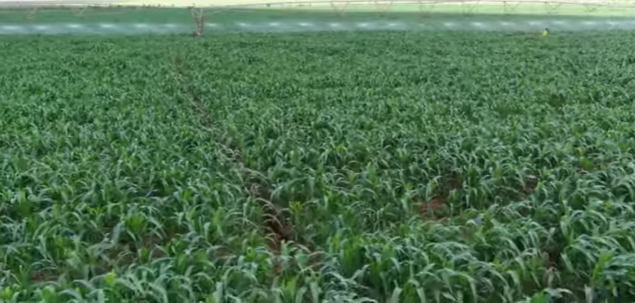
    We can reduce feeds prices by producing our own farm inputs.Like such maize production at Galana-Kulalu.
    Massive maize production at Galana-Kulalu in Kenya.We can do the same for sunflower, soya beans and have our own feeds inputs.

    Kenya imports a lot of maize, sunflower, and soybeans for feed manufacturing. While countries like Uganda or Zambia may have larger production areas, we can still increase our own supply.

    By producing these crops locally and processing them into sunflower cake or soybean meal, we reduce dependence on imports and stabilize prices.

    Hypothetical example:
    A group of 10 poultry farmers could partner with crop farmers to grow sunflower on 50 acres. The harvest could then be processed locally, giving them cheaper sunflower cake than the market price.

    Farmer action: Secure long-term contracts with maize, sunflower, or soybean growers in your region to guarantee feed input supply.

    Stakeholder action: Create incentives for local feed input production including subsidies, irrigation programs and assured market purchases.

    4. VALUE ADDITION

    We don’t have to keep selling eggs for less than Ksh 500 per tray. Through value addition, you can sell your eggs at much higher prices. Processing eggs into liquid, powdered, or specialty products for bakeries, pharmaceutical companies, and retailers allows you to charge more.

    Hypothetical example:
    If you partner with other farmers to invest in a small pasteurization unit, you could supply bakeries with liquid eggs at prices that translate to more than Ksh.1500 per tray in value.

    Here’s Fridah Kaaria who processes liquid eggs in Central Kenya.

    Value addition of eggs - Pasteurized liquid eggs processed by Fridah Kaaria an entrepreneur in Kenya
    Pasteurized eggs processed by Fridah Kaaria an entrepreneur in Kenya.One 250ml bottle goes for Ksh.350(2021)


    Farmer action: Form groups to share the cost of processing equipment or supply your eggs to existing processors.

    Stakeholder action: Provide technical training for value-added egg production and help farmers access certified processing facilities.

    5. EXPORT OUR EGG PRODUCTS

    If Kenya can export coffee, tea, and miraa, we can also export eggs and processed egg products. Powdered and liquid eggs have long shelf lives and can be shipped regionally and internationally.

    Hypothetical example:
    A farmer cooperative could package powdered eggs and target markets in Rwanda, South Sudan, or even the Middle East. The cooperative could fetch premium prices if it meets export quality standards.

    Farmer action: Focus on producing clean, high-quality eggs and join export-ready farmer groups.

    Stakeholder action: Streamline export regulations for egg products and secure trade agreements with target countries.

    REALITY CHECK : THE ROAD AHEAD

    None of these solutions will happen instantly. Bulk buying requires capital. Feed formulation needs training. Exporting calls for regulatory support. But they are all achievable if farmers and stakeholders take coordinated steps. Even small actions today can lead to big changes in the industry.

    WHAT CAN YOU DO TODAY?

    Choose one or two strategies you can start working on now. Maybe that’s joining a buying cooperative, planting your own maize for feed, or exploring value addition opportunities.

    The goal is not just to make more money, but to build a stronger, more resilient poultry industry in Kenya.

    By applying these solutions to high animal feed costs in Kenya, we can create lasting change for farmers across the country.

    WAIT!

    Enter your details to grab a copy of my free guide and regular Layer Chicken Digest tips via email:

    “6 SIMPLE STEPS TO START A PROFITABLE LAYER POULTRY FARM”

    Free beginners guide to starting a profitable layer poultry farm. Step by step guide.
    Name
    Limited access. Join other serious farmers who have taken the guide and get support.

    See you next Friday!

    Carlos Deche

    secretlayerske@gmail.com

    carlosdeche4040@gmail.com

  • Why Animal Feeds Prices Are High In Kenya -(CAK Report 2024)

    “Feeds will kill your business.”
    You’ve probably heard this statement over a million times.
    It’s what many are told when they decide to get into poultry farming — that you’d make a lot of money, were it not for the prices of feeds.
    Worse still, feed prices keep rising year after year.

    From 2020 to mid-2022, poultry feed costs in Kenya rose by 40–50%.
    Following the same trend, feed costs in Kenya 2025 could increase by another 25%.
    Is this a lie? Definitely not.

    Animal feeds are the single largest expense on any poultry farm — layers or broilers.
    Even for livestock like cattle, pigs, or fish, feed accounts for about 70% of the farm’s total expenses.
    After deducting labor, vaccines, water, and other costs, most farmers are left with around 20% of their revenue as net profit.
    Some don’t even break even.
    Worse still, some incur losses.

    To survive, farmers try different ways to reduce feed expenses:

    -Buying cheaper, low-quality feeds. This often backfires due to poor egg production and even greater losses.

    -Purchasing in bulk for discounts. Only large farms benefit from this.

    -Supplementing with local feed options such as pawpaw, vegetables, azolla, or hydroponic fodder. These are difficult to balance nutritionally.

    -Producing their own feed. While this is cost-effective, it only works for large farms that understand feed formulation and raw material sourcing.

    So What Did I Do?

    As part of my research on why animal feeds prices are high in Kenya — a concern that keeps many from starting poultry farms — I came across a 2024 Animal Feeds Inquiry Report by the Competition Authority of Kenya (CAK).

    This report explored the reasons behind the high feed prices and made key recommendations to solve the issue.

    Below is a summary of the report.

    In my next post, I’ll share my personal take on how the government and farmers like us can take action.

    If this problem is fixed, Kenya could unlock massive employment opportunities across the animal feeds value chain.

    Manufacturers, distributors, farm owners, and workers would all benefit.

    Increased egg production would follow — the cheapest source of protein for most African families — and this would help reduce malnutrition across the continent.

    But Is This Problem Unique To Kenya?


    Unfortunately, yes.
    Among East African countries, animal feeds prices in Kenya are the highest.
    Compared to international benchmarks, feed prices here remain unreasonably high.

    Kenya also struggles with the influx of cheaper imported eggs, mainly from Uganda.
    Why? Because Uganda has lower poultry feed costs, allowing their farmers to sell eggs more cheaply while still making a profit.
    This puts Kenyan poultry farmers at a serious disadvantage.

    So Why Are Animal Feeds Prices High In Kenya?

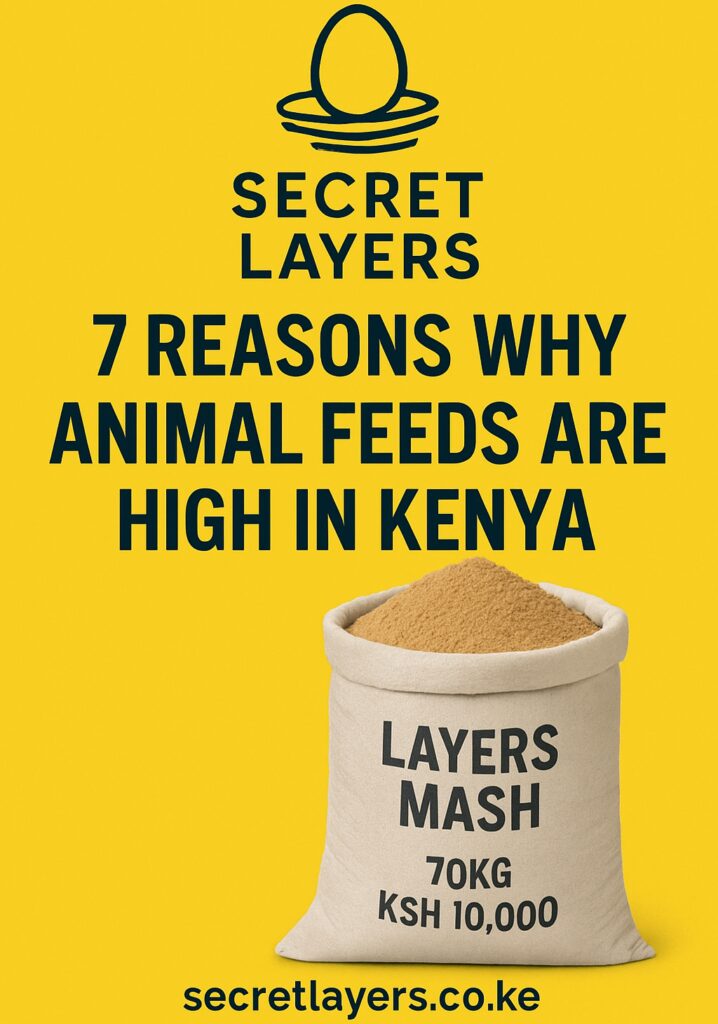
    A 70kg bag of layer mash going for Ksh.10,000 showing the extent of high animal feeds in Kenya.Secret layers summary of the CAK Inquiry Report,2024.
    7 Reasons why animal feeds are high in Kenya according to Competition Authority of Kenya(CAK) Inquiry Report,2024.

    According to the CAK report, there are 7 key reasons behind the high animal feed prices in Kenya:

    1. Heavy Dependence On Imported Raw Materials

    Kenya doesn’t produce many of the raw materials needed to make poultry feeds.
    Instead, we import them — and this adds costs at every step.

    Soybean meal is imported mainly from Zambia, Malawi, and Uganda.

    Sunflower cake comes from Tanzania.

    Vitamins and additives are brought in from countries like China, the Netherlands, and Germany.

    Every stage of importation — from foreign exchange, transport, taxes, and port delays — raises the final price.
    Local farmers pay for all this when they buy feeds.

    This overreliance on imports makes our feed prices volatile and sensitive to global changes.

    2. Market Dominance By A Few Feed Manufacturers

    Only four companies control over 50% of the commercial animal feed market in Kenya.This means just a few players determine the pricing trends.

    While the report does not accuse them directly of collusion, the structure allows for potential price control.
    This limits the power of smaller players and gives big companies room to increase prices unchecked.

    When competition is low, innovation and price cuts disappear — bad news for smallholder farmers.

    3. Unfair Pricing For Non-Integrated Feed Producers

    Some feed companies are “integrated,” meaning they also own or control the supply of raw materials.
    Others rely on external suppliers for inputs.

    In 2021 and 2022, the report shows that non-integrated feed producers were charged higher prices for inputs.
    This “margin squeeze” forced many smaller producers out of business.

    So the fewer the producers, the less competition — and the higher the feed prices.

    If you’ve ever wondered why the small local feed company died, this is a major reason.

    4. Input Processors Set Their Own Rules

    Most natural processors of feed inputs like oil cakes and grains are based in East and Southern Africa.
    Because they dominate the region, they can dictate trade terms and pricing.

    Kenya, being a buyer, has little say.
    Our feed manufacturers must accept the high prices or go without.
    This makes it harder to produce affordable poultry feed options for local farmers.

    5. Lack Of Transparency And Information Sharing

    Large feed suppliers in Kenya often exchange information with each other.
    However, smaller players are left in the dark.


    This lack of transparency allows the big players to coordinate pricing — even without formal agreements.
    It also blocks new entrants from competing fairly.

    When small businesses don’t know the actual market rates or raw material trends, they can’t plan or scale.

    This keeps animal feeds prices in Kenya unnecessarily high.

    6. County Taxes Create Fragmented Markets

    One of the most frustrating problems for manufacturers is the inconsistent and excessive county taxes.
    These vary wildly across Kenya and make the distribution of feeds expensive and unpredictable.

    For example:

    Machakos County charges Ksh. 20,000 annually per vehicle for distribution.

    A separate Ksh. 20,000 is charged for branding.

    Each truck needs a Ksh. 2,500 annual transport sticker.

    On top of that, there’s a daily parking fee of Ksh. 500 per truck.

    Other counties add more charges:

    In Kericho, feeding all six sub-counties could cost at least Ksh. 1,200 per day per truck.


    In Tharaka Nithi, manufacturers must pay all vehicle parking fees upfront — regardless of how often they deliver.

    And it doesn’t stop there.
    Counties also charge Agricultural Produce levies for inputs like rice polish, salt, and maize bran.
    These additional costs are passed on to the farmer.

    All this leads to one thing: higher feed costs across Kenya.

    7. Limited Use Of Yellow Maize For Feed

    In countries like Uganda, both white and yellow maize are grown.
    White maize is used for human food, while yellow maize is reserved for animal feed.

    But in Kenya, almost all maize is white — and it’s used for both food and feed.
    This creates direct competition between humans and animals.

    In 2025, maize prices rose and this means layer feed prices will ‘jump’ by almost 30%.
    Why? Because the demand for maize in feed production still outpaces supply.

    If Kenya increased yellow maize production, feed manufacturers could have a cheaper, dedicated source.

    Why Poultry Feed Rises Faster Than Dairy Feed

    Dairy feed is easy to make — just mix the ingredients.
    No need for expensive machines.

    Poultry feed, on the other hand, requires pelleting and crumbling, which needs precise formulation and investment in machines.
    This increases production costs and drives up prices.

    It’s no surprise that poultry feed costs in Kenya continue to rise faster than other animal feeds.

    What CAK Recommends

    To solve the problem, CAK made several important recommendations:

    1. Reposition the animal feeds industry.
    Invest in the sector and remove existing barriers to unleash its job creation and production potential.


    2.Improve cross-border markets and regulations.This would make it easier to source inputs at fair prices across COMESA and EAC regions.


    3. Eliminate county-level trade barriers.
    Unpredictable taxes hurt feed manufacturers and distort national pricing. These must be reviewed and harmonized.


    4. Track and monitor feed markets.
    Government and regional bodies should assess whether Kenya’s feed prices match international trends.
    They should intervene in cases of anti-competitive behavior.


    5. Add animal feeds to KAMIS monitoring system.
    This would help create transparency in feed pricing, benefiting both manufacturers and farmers.

    What This Means For You

    If these solutions are fully implemented, poultry farming could become more profitable.
    Lower and stable feed prices mean more profit, less stress, and better planning.

    Imagine earning 40% more because feed costs dropped.
    It’s not a dream — it’s possible with the right reforms.

    In My Next Post…


    Next Friday, I’ll share what I believe we farmers and the government can do to lower feed prices sustainably.
    These are practical, long-term solutions that will build on CAK’s findings.

    Together, we can take agriculture to the next level — maybe even Mars 🚀

    📄 Read the Full CAK Inquiry Report here

    Before You Go

    💬 Which CAK recommendation do you think would help the most?
    Leave a comment below.

    📩 Want more updates like this?Enter your details below to grab a copy of my free guide and regular Layer Chicken Digest tips and reports via email:

    Free beginners guide to starting a profitable layer poultry farm. Step by step guide.
    Name
    Limited access. Join other serious farmers who have taken the guide and get support.

    See you next Friday!

    Carlos Deche

    secretlayerske@gmail.com

    carlosdeche4040@gmail.com

  • Layers Vs Broilers:Differences You Must Know

    You’ve decided to go into poultry farming, but now you’re stuck between layers and broilers, unsure of their differences.

    You don’t want to invest your hard-earned money blindly and fail because of limited information. That would be costly ignorance.
    ‎
    ‎The choice you make—whether to keep layers or broilers—will influence your time involvement, the costs you incur to start and manage your poultry farm, your profitability, and ultimately your happiness as a farmer.

    This guide aims to remove confusion by explaining 10 key differences between layers and broilers and adding a profitability score for both.
    ‎
    ‎Make the right choice for your poultry farm.

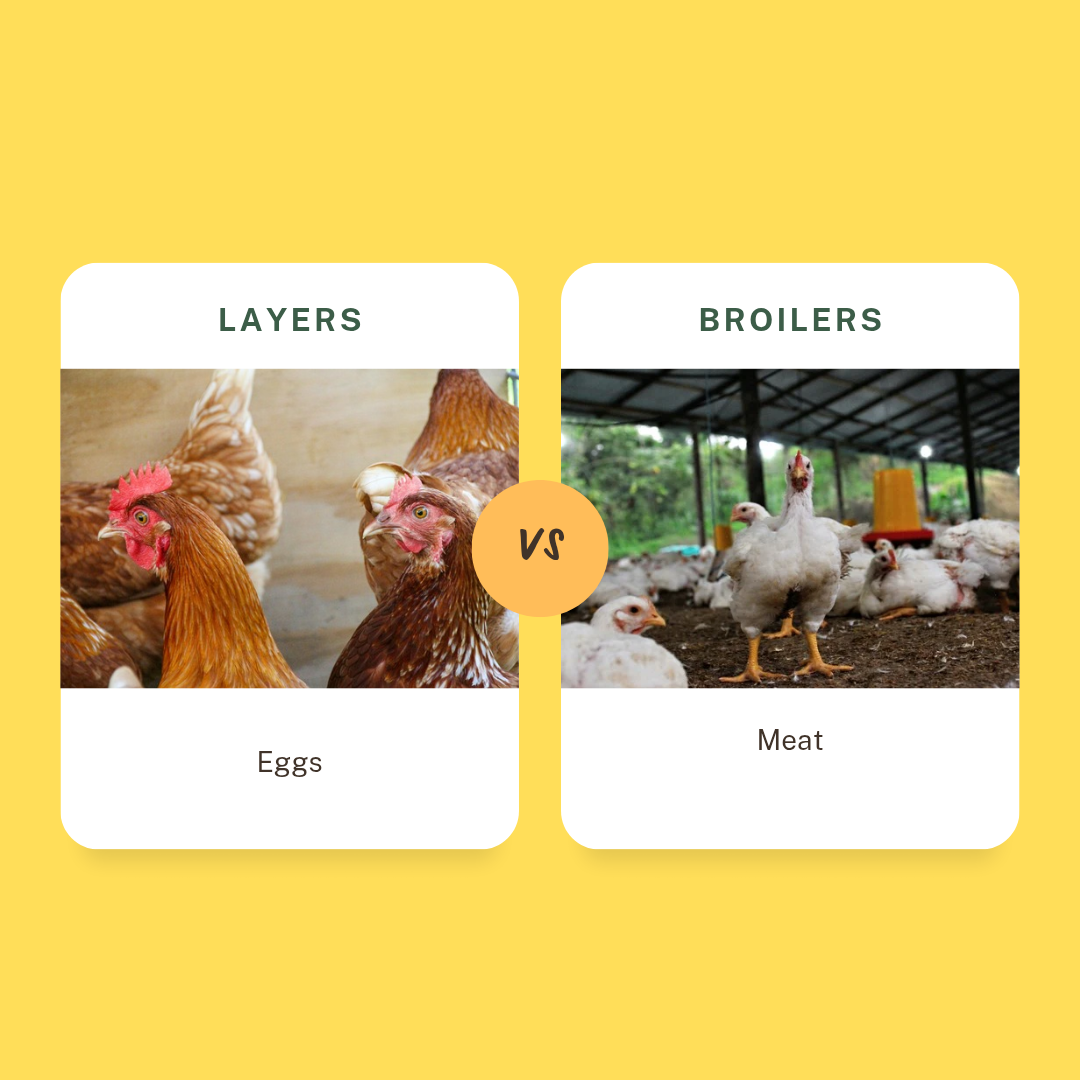
    Layer chicken vs broiler chicken side by side showing physical differences
    Layer vs broiler chicken side by side – see the physical differences clearly.


    ‎What Are Layer Chickens vs Broiler Chickens?
    ‎

    ‎Before diving into differences, let’s define these two types of poultry.
    ‎
    ‎Broilers – Chickens bred and raised primarily for meat production.
    ‎
    ‎Layers – Chickens kept mainly for egg production.

    Here’s a quick Layers vs Broilers comparison.More details below:

    Feature LayersBroilers
    Main PurposeEggsMeat
    Startup CostsHigherLower
    Time to harvestStart laying at 18 weeksReady for sale 6-9 weeks
    Market StabilityStable demandDemand
    fluctuates
    Housing SystemBattery cage or deep litterMostly deep litter
    Vaccine
    Schedule
    Longer Shorter
    SpacingBigger(2-3sq ft/bird)Smaller(1-2 sq ft/bird)
    FeedsStarter
    Grower
    Layer
    Starter
    Finisher
    Profit TypeDaily income
    Continuous
    Quick
    One time batch
    Management LevelMore skilled
    Long term
    Easier
    Short term
    LightingLess
    14-18 hrs
    More
    24 hrs
    Profitability Score8.37.5
    (Check below for how it was compiled)

    (Layers vs broilers differences table)
    ‎
    ‎With that in mind, here are the 10 key differences in details.
    ‎
    ‎1. Startup Costs
    ‎

    ‎Startup costs for layers are significantly higher compared to broilers.

    This is because layers require more housing space, higher-priced chicks, a longer vaccination program, and more feed in their early months.
    ‎
    ‎For example, in Kenya in 2025, starting with 100 broilers costs approximately KSh 100,000, whereas 100 layers could cost upwards of KSh 300,000.

    These figures are estimates and can vary based on region, type of housing, and market fluctuations.
    ‎
    ‎(Tip: I’ll soon publish a full, accurate cost breakdown for starting a layer poultry farm.)

    ‎
    ‎2. Time Commitment
    ‎
    ‎Layers require more time and commitment than broilers.

    While broilers are typically raised for a short period—6 to 9 weeks before slaughter—layers stay on the farm for up to 2 years as long as they remain productive.
    ‎
    ‎Because layers stay longer, they need continuous care, including vaccination follow-ups, debeaking, egg collection, and regular health monitoring.

    Broilers, on the other hand, have a shorter but more intensive cycle, allowing you to free up your time after each batch.
    ‎
    ‎
    ‎3. Market Dynamics
    ‎
    ‎The market for eggs is generally more stable than for broiler meat.

    In Kenya, there are significantly more broiler farmers than layer farmers, which means meat supply often outpaces demand. This can lead to price drops during peak seasons.
    ‎
    ‎Eggs, however, have a steady demand from institutions, hotels, retail shops, and households.

    Even better,layers give you more time to plan because they start laying at about 18 weeks (4.5 months), whereas broilers must be sold within 6 weeks. That short sales window for broilers means you should find your market before buying your chicks.
    ‎
    ‎
    ‎4. Housing Systems
    ‎
    ‎Layers can be raised in both battery cages and deep litter systems,
    providing flexibility depending on your budget and management style. Broilers, however, are mostly raised on deep litter systems only.
    ‎
    ‎Imagine broilers in cages—uncommon and impractical due to their rapid growth and space requirements. If you want options for expansion or automation, layers offer more choices.

    Get detailed guides on layer chicken here
    ‎
    ‎
    ‎5. Vaccination Programs
    ‎
    ‎Because layers live longer, their vaccination schedule is more extensive.

    Vaccines for layers typically include Marek’s, Newcastle, Infectious Bronchitis, Gumboro, Fowl Pox, and periodic deworming.
    ‎
    ‎Broilers, on the other hand, have shorter lifespans and need fewer vaccines—mainly Marek’s, Newcastle, and Infectious Bronchitis.

    This makes broilers easier and cheaper to manage from a health perspective, especially for beginners.
    ‎
    ‎
    ‎6. Space Requirements
    ‎
    ‎Layers need more space per bird compared to broilers.

    They are active, long-lived, and require at least 2–3 square feet per bird. Broilers, by comparison, only need about 1–2 square feet per bird.
    ‎
    ‎This difference directly affects your housing investment. A larger poultry house for layers means higher construction costs upfront. If your available space is limited, broilers might be easier to start with.
    ‎
    ‎
    ‎7. Feed and Nutrition
    ‎
    ‎Feeding layers is more expensive in the long run because they go through multiple feed stages—starter, growers mash, and layers mash.

    Additionally, their feed must be rich in calcium and other minerals to support eggshell production, while protein levels stay moderate (16–18%).
    ‎
    ‎Broilers only need starter and finisher feeds, formulated with high protein levels (around 23%) to promote fast muscle growth. Because their cycle is short, their total feed cost per cycle is often lower, making broilers appealing for quick-turnaround ventures.

    Find more details on broilers best practices here
    ‎
    ‎
    ‎8. Profitability Potential
    ‎

    ‎Both layers and broilers can be profitable, but the pattern of profitability differs.

    Broilers deliver quick, one-time profits per batch, ideal if you want fast cash flow.

    Layers, however, offer stable long-term income through daily egg sales once production starts.
    ‎
    ‎Layers often have a higher profit margin because you buy birds once and earn from them continuously for about 22 months.

    Broilers require you to restock every 6 weeks, which can be labor-intensive but gives multiple opportunities to adjust market strategy.
    ‎
    ‎
    ‎9. Management Skills Required
    ‎
    ‎Managing layers is more demanding than managing broilers.

    Layers need specialized skills, including handling vaccinations, debeaking, egg collection, and monitoring productivity over a long period. However, once your layers are established, you don’t need to buy new birds for almost two years.
    ‎
    ‎Broilers are simpler in terms of management but require high attention during their short growth period. They need constant monitoring for weight gain, proper feeding, and quick marketing decisions.
    ‎
    ‎
    ‎10. Lighting Requirements
    ‎

    ‎Lighting needs also differ significantly. Layers require controlled lighting, typically 14–18 hours daily, to maintain egg production. Broilers, however, need near-constant lighting (24 hours) to encourage continuous feeding and rapid weight gain.
    ‎
    ‎This difference impacts your power costs and infrastructure decisions.
    ‎

    Profitability Score

    CriteriaLayers
    (Score 1-10)
    Broilers
    (Score 1-10)
    Startup Costs6
    (Higher but worth it)
    8
    (Lower)
    Time to returns7
    (Slower)
    9
    (Fast)
    Profit Stability10
    (Very stable)
    6
    (Seasonal
    Market Demand10
    (Strong & Steady)
    7
    (Fluctuating)
    Management Complexity7
    (Challenging but rewarding
    8
    (Simpler)
    Long Term Profit 10
    (Excellent)
    7
    (Moderate)
    Average Score8.37.5

    (Layers vs broilers differences in profitability)

    Layers have it🥳

    If you’ve already decided it’s layers, I have a step by step guide on how to start your layer chicken farm the right way here

    And to start you off,

    Enter your details to grab a copy of my free printable guide and regular Layer Chicken Digest tips via email:

    Free beginners guide to starting a profitable layer poultry farm. Step by step guide.
    Name
    Limited access. Join other serious farmers who have taken the guide and get support.


    Which Option Carries More Risk?
    ‎
    ‎Risk depends on your resources and experience.

    Layers require more startup capital, long-term commitment, and skilled management, but they also provide steady income after maturity. You won’t see returns until after 4.5 months when they start laying, so patience is necessary.
    ‎
    ‎Broilers carry a different risk. Their short cycle means that if you fail to secure a market quickly, your birds continue eating expensive feed while gaining weight beyond market standards.

    Unfortunately, most buyers won’t pay extra for heavier birds, leaving you with slimmer profit margins—or even losses.

    ‎
    ‎Which Should You Choose?
    ‎
    ‎The decision between broilers and layers depends entirely on your goals.

    If you prefer long-term, stable income and are willing to invest more time and capital upfront, layers are ideal. If you want quick turnover and have a reliable meat market, broilers may suit you better.
    ‎
    ‎Think about your financial resources, available space, time commitment, skill level, and long-term vision. Choose what aligns with your goals, even imagining what you’d be comfortable managing for the next decade—eggs or meat?
    ‎
    ‎Common Questions Beginner Farmers Ask
    ‎
    ‎1. Can you keep both layers and broilers together?
    ‎Yes, you can keep both on the same farm, but never in the same house. Maintain two separate poultry houses at a safe distance to prevent disease transmission.
    ‎
    ‎2. Layers vs broilers—Which is Better?
    ‎There’s no universal answer. The better choice is the one that matches your current financial position, skill level, and business goal. Carefully weigh startup costs, time involvement, and market potential before deciding.
    ‎
    ‎3. Which is best for small farms?
    ‎For small farms with limited capital, broilers are often the better starting point because of lower upfront costs and faster returns.
    ‎
    ‎Finally,
    ‎
    ‎The layers vs broilers differences go beyond just eggs versus meat. They influence your time, money, and long-term profitability. Understand your goals clearly and then choose the option that matches your situation.
    ‎
    ‎If you want to explore layers further, check out for my upcoming detailed guide on the cost of starting a layer poultry farm. It will include cost by cost breakdown and projected revenue and profits.

    See you next Friday!

    Carlos Deche

    carlosdeche4040@gmail.com

    secretlayerske@gmail.com

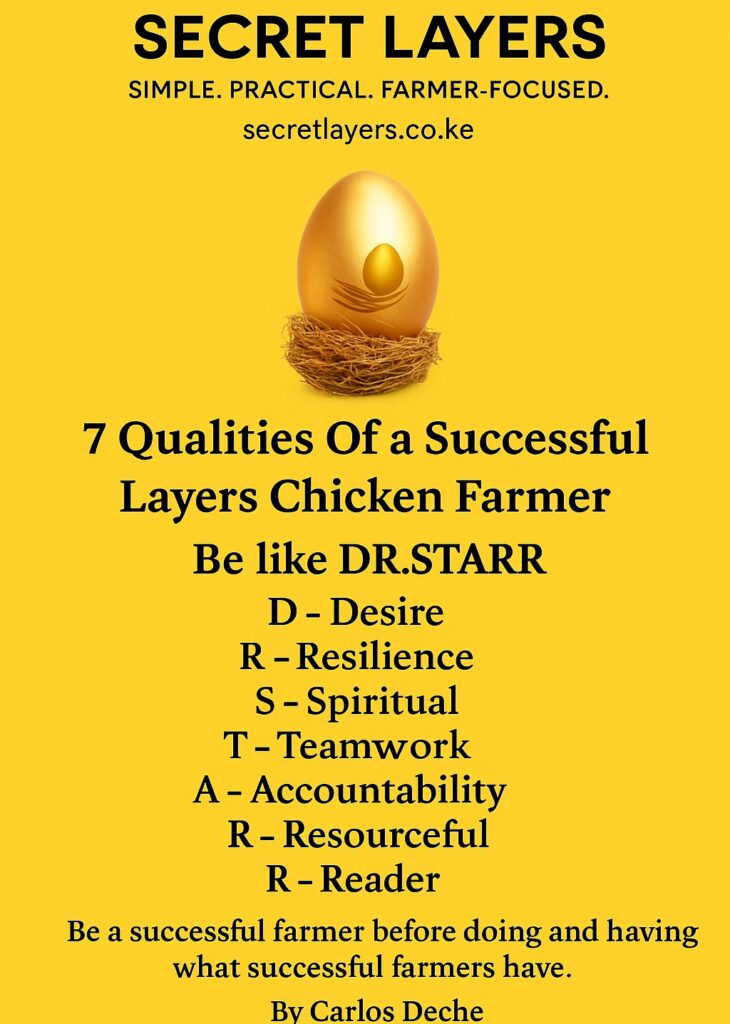
  • 7 Qualities Of A Successful Layer Chicken Farmer

    Be like DR.STARR and master the 7 qualities of a successful layer chicken farmer required for a profitable and sustainable layer farm.

    Remember the quail farming craze of 2010?

    Kenyan farmers invested heavily, only for many to lose millions when the market crashed.

    One farmer even released 3,000 quails into the wild because he could not sustain the business.

    But what was the real problem?

    Were quails themselves a bad idea?

    Not really. Some people actually became millionaires during that time. So why did some farmers succeed while others failed?

    The difference often lies in character, values, and qualities rather than just resources. Sometimes success comes not from what you have but from who you are.

    In this post, I’ll show you how adopting the DR. STARR framework can transform your layer farming journey.

    DR. STARR is an acronym representing 7 qualities of a successful layer chicken farmer – essential traits every farmer must have.

    1.DESIRE

    Napoleon Hill, in Think and Grow Rich, calls desire “the starting point of all achievement—the first step toward riches.”

    You don’t necessarily need deep passion for chickens to succeed in poultry farming, but you must cultivate a strong desire to succeed in keeping layers.

    Wishing for success is not enough. Instead, develop a desire so strong it becomes an obsession. Then plan definite ways to achieve your goal and back those plans with persistent action. When your mind obsesses over success, it naturally finds ways to make it real.

    Look around you.

    Every great achievement you’ve ever had probably began as a thought—a simple desire in your mind. Your layer chicken farm is no different: desire first, then achievement.

    2.RESILIENCE

    Resilience is the ability to recover quickly from difficulties.

    Poultry farming, like any business, comes with challenges. Birds may die from disease, feed prices may spike, or theft might wipe out your flock.

    What will you do when these setbacks happen? Quit? Blame the government, imported eggs, or bad luck? Or will you come back stronger?

    The answer defines success. Those who quit easily never see profits. In contrast, resilient farmers adapt and rebuild after every challenge.

    For instance, Dr. Daniel Masaba, a successful Ugandan layer farmer with 30,000 birds today, once lost 700 birds (Almost half of his flock at the time) in a disease outbreak. Instead of giving up, he rebuilt with improved biosecurity.

    Today, his farm thrives because of his resilience.Persistence keeps you moving forward; resilience helps you rise after falling. Together, they keep you in business long enough to see the “crazy profits.”

    3.SPIRITUALITY


    Surprisingly, spirituality plays a significant role in farming success. Here, spirituality involves two things: Mission and Faith.

    Mission:

    Why does your farm exist? Is it just for money, or does it serve a bigger purpose?

    While earning KES 100,000 a month is a great financial goal, having a purpose beyond money gives you drive even when challenges arise.

    It keeps you motivated before the money comes and even after it arrives.

    Faith:

    Faith is believing in things you cannot yet see.

    You already exercise faith daily—when you go to sleep trusting you’ll wake up or travel believing you’ll arrive safely. Likewise, you must believe you can succeed in poultry farming even before it happens.

    When faith combines with mission, your farm gains a powerful foundation. You’re not just running a business; you’re pursuing a purposeful calling.

    For a step-by-step guide to finding your spiritual goal and why, check out our free worksheet—https://secretlayers.co.ke/blog/how-to-start-poultry-farmingthe-5-things-every-layer-chicken-farmer-must-know/

    4.TEAMWORK

    To be a leader, you must first be a good follower.

    And being a good follower involves working as a team and following the teams goals and mission.

    That lesson applies directly to farming because you’ll interact with many people: employees, customers, suppliers, and even government officers.

    Lack of teamwork often creates unnecessary workload, employee turnover, and lost partnerships.

    Successful poultry farmers, on the other hand, know how to work well with others and build strong professional relationships.

    Here’s a tip I use to promote teamwork: treat everyone as a partner in your business. Listen to them, ask better questions, and encourage collaboration. Even friends can offer valuable insights when you view them as informal consultants. Remember, we always go farther together.

    5.ACCOUNTABILITY


    Accountability is one of the toughest yet most valuable qualities to develop.

    It’s different from responsibility.

    Responsibility means admitting you made a mistake.

    Accountability goes further: learning from that mistake and preventing it from happening again

    For example, if feed prices rise, accountability means acknowledging you failed to stock up when prices were low, then creating a plan to buy in bulk next time.

    If an employee ignores biosecurity rules and your flock dies, accountability means accepting you hired and trained poorly—then improving your hiring and training process.

    Mastering accountability forces you to create systems and solutions that strengthen your farm, ensuring mistakes are not repeated. It’s a powerful habit not just in business but in life.

    6.RESOURCEFUL

    Being resourceful doesn’t mean having plenty of resources; it means making the most of what you have.

    Imagine you need to travel from Nairobi to Mombasa but can’t afford a plane ticket. What do you do? You take a bus. You still reach Mombasa, just in a different way. That’s resourcefulness—finding alternatives when things get tough.

    On your layers farm, money may run out, customers may switch suppliers, or markets may slow down. Will you give up, or will you find creative solutions to keep moving forward?

    Resourcefulness often awakens your creativity.

    You begin to see possibilities where others see dead ends. That ability keeps your farm alive and thriving when others fail.

    7.READER

    If you’ve reached this part of the blog, congratulations—you’re already a reader!

    And that’s an essential quality.

    Elon Musk once said he learned how to build rockets by reading two books a day. Similarly, farmers who continuously learn stay ahead of the curve. Reading exposes you to new concepts, tools, and opportunities that others miss.

    Even dedicating 10 minutes a day to reading about best poultry farming practices can compound into significant knowledge over time.

    With today’s fast-changing agriculture industry, staying informed is crucial to staying competitive.

    Start with reliable sources: books, research papers, credible blogs, newsletters, and even worksheets like the ones we offer at Secret Layers.

    (If you haven’t already, sign up for our free Layer Starter Kit,weekly poultry tips and tutorials- It’s totally FREE)

    Here are other reliable sources:

    https://www.kalro.org for poultry research and farmer insights

    https://kilimo.go.ke for poultry news updates

    You now have the blueprint for being a successful layer chicken farmer.

    Find out about The 5 Things You Should Know Before Starting a Layer Poultry Farm:

    https://secretlayers.co.ke/blog/how-to-start-poultry-farmingthe-5-things-every-layer-chicken-farmer-must-know/‎‎


    Being like DR. STARR—having Desire, Resilience, Spirituality, Teamwork, Accountability, being Resourceful, and becoming a Reader—makes you more than just a farmer.

    It positions you as a successful, future-ready poultry entrepreneur.They are the qualities of a successful layer chicken farmer you’ve been looking for – the ‘cheat code’ for success in the poultry business.

    These qualities may seem personal, but they directly influence how you run your farm, how you handle challenges, and how quickly you grow.

    Start working on them today. Build the poultry business mindset first, then apply the skills. Combine your character with knowledge and watch your layers farm thrive—regardless of market challenges.

    And if you haven’t already:

    > 📩 Register below for free for access to Secret Layers resources:

    ✅Beginners’ guide

    ✅ Printable Purpose Planner

    ✅Regular Layer Chicken Digest Tips

    Name
    Limited access. Join other serious farmers who have taken the guide and get support.

    See you next Friday!

    Carlos Deche

    carlosdeche4040@gmail.com

    secretlayerke@gmail.com

    secretlayers.co.ke

  • The 3 Best Layer Chicken Breeds In Kenya


    Struggling to choose the best layer chicken breeds for your layer farm?
    You’re not alone.

    There are over 40 layer chicken breeds in the world. Yes, 40!
    And trying to pick one from that list is overwhelming, even for experienced farmers.

    But here’s the good news:

    You don’t need all 40 breeds to make money.
    After all, how many breeds can you keep on a single farm?

    What you need is a practical shortlist of the 3 best layer chicken breeds.The best performing.
    Note that if you’re in any other tropical country, this post is also for you.

    In this guide, we’ll walk through the top 3 best layer chicken breeds that do well in Kenya’s climate, lay plenty of eggs, and are loved by farmers.

    And because I like you, I’ll also give you a number 4 bonus breed to keep in mind.

    By the end, you’ll know exactly which one suits your goals.

    1. ISA BROWN

    ISA Brown chicken breed on close up - arguably the best brown egg laying chicken in the world
    ISA Brown Chicken – Known for the best feed to egg conversion rate.


    ISA Brown is a hybrid chicken – a mix of several breeds.
    It’s arguably the best brown egg layer worldwide.

    ✨ Did you know?
    “ISA” stands for Institut de SĂŠlection Animale – French for ‘Animal Breeding Institute.

    They lay around 280–300 eggs per year with good feeding and care.

    Their eggs are medium-sized and dark brown in colour.

    With a lifespan of 2–4 years, they’re productive and efficient.

    Though some reports say they’re harsh, most farmers say ISA Browns are calm and easy to manage.

    They’re excellent for commercial farms due to their great feed-to-egg conversion ratio.
    That means fewer feeds, more eggs and more money.

    They start laying at 18–22 weeks and adapt very well to Kenya’s tropical climate.

    Since they also do great in both cages and deep litter systems, they are a perfect breed for most Kenyan farmers.

    Learn more about the ISA Brown chicken breed here:

    ‎https://www.brownsfamilyfarmstead.com/post/isa-brown-chicken-breed-guide

    2. HY-LINE BROWN

    Closeup Hy-Line Brown chicken
    Hy-Line Brown chicken breed – Can lay upto 330+ eggs per year


    Hy-Line is another layer breed among the top performers in Kenya.


    ✨ Did you know?
    It’s a sex-link breed – you can tell males from females at day-old.
    Females hatch red, males hatch white.

    Hy-Lines can lay up to 330+ eggs per year – the highest of all.

    They produce medium to large brown eggs, depending on feeding.

    They start laying around 18–20 weeks, and live for 4–5 years.

    They’re calm, farmer-friendly, and perform well in both deep litter and battery cages.

    Although their feed conversion is slightly lower than ISA Brown, they still offer excellent returns.

    They also adapt well to both hot and cold regions and can be raised perfectly in Kenya with the right setup.

    Hy-Line International offers a detailed breed profile with feeding and care tips here:

    ‎https://www.hyline.com/varieties

    3. LOHMANN BROWN

    Lohmann Brown Classic upclose - Calm,docile and friendly chicken.
    Lohmann Brown Chicken Breed – Best for beginners keeping chicken for eggs for personal use.

    The Lohmann Brown.
    This breed is perfect for beginners raising chickens for eggs at home.


    But it’s also good for commercial use.

    ✨ Did you know?
    Lohmann Browns are considered the friendliest chicken breed.
    Some farmers say they’re so gentle, they could dine with you!

    They lay about 320 eggs a year, starting from around 19 weeks.

    Eggs are light to medium brown in colour.

    They live up to 5–10 years and have decent feed efficiency.

    They’re also great in hot climates and thrive in both housing systems.

    They’re the best layer chicken breed for the complete beginner in need of eggs for his/her family.

    For more details about the management of Lohmann Brown Classic. Check out this from Lohmann Breeders:

    ‎https://www.lohmanngb.co.uk/products/lohmann-brown-classic/

    Bonus:

    WHITE LEGHORN

    The White Leghorn Chicken standing on grass - White egg layer chicken
    The White Leghorn Breed – Best for white egg commercial layer farmers.


    You’ve probably heard of this white egg-laying breed.
    While not popular in Kenya due to egg colour preference, they’re incredibly productive.

    ✨ Did you know?
    Leghorns come in multiple colours: black, buff, brown, golden – but white is the most popular for egg production.

    White Leghorns lay about 289–320 white eggs/year.

    They tolerate heat well and live for 4–6 years in backyard setups.

    They’re gentle but active – often described as “noisy” by farmers.

    They’re a good choice if your market prefers white eggs.

    Get the detailed guide of the White Leghorn below:

    ‎https://www.brownsfamilyfarmstead.com/post/leghorn-chicken-breed-guide

    🔍 Quick Summary

    CategoryBreed
    Most eggsHy-Line Brown
    Best feed efficiencyISA Brown
    Calmest and friendliest Lohmann Brown
    Best for beginners
    (Personal use)
    Lohmann Brown
    Best for beginners
    (Commercial)
    ISA Brown
    Best for advanced setupsHy-Line Brown
    Most popular in KenyaISA Brown
    Best for white eggsWhite Leghorn

    Which Breed Works Best in Kenya?

    All the above breeds can adapt to Kenya’s warm weather.

    Here’s how they rank in heat tolerance and adaptability:

    1. ISA Brown – Excellent

    2. Lohmann Brown – Good

    3. Hy-Line Brown – Good, but needs care in high temperature seasons

    Which Breed is Most Profitable?

    Most layers chicken beginner farmers think profit is about the number of eggs you sell.

    While this is partly true, it’s not the entire truth.

    Profit isn’t just about egg numbers.
    You also need to think about feed costs,the feed to egg conversion rate of your birds,survival rate, egg market,your setup and the business aspects.

    Like we call it..“The Business Of Layers

    And for that, here’s a profitability score based on Kenyan conditions:

    1. ISA Brown – Best for feed efficiency and low death rate

    2. Lohmann Brown – Consistent performance and gentle temperament

    3. Hy-Line Brown – Profitable if you have systems in place for precision care

    What Next?

    Now you probably know which breed you intend to buy.

    To help you further, I’ll write a post explaining the factors to consider when choosing the best layer chicken breeds for you to keep.


    But how do you get started?

    I’ve created a practical 6-step guide to help you launch your layer farm smoothly.

    👉 Read the 6-Step Guide to Starting a Layer Farm Here:

    https://secretlayers.co.ke/blog/6-steps-to-start-a-layers-poultry-farm/

    Enter your details to grab a free copy of the printable free guide and regular Layer Chicken Digest tips via email:

    “6 SIMPLE STEPS TO START A PROFITABLE LAYER POULTRY FARM”

    Free beginners guide to starting a profitable layer poultry farm. Step by step guide.
    Name
    Limited access. Join other serious farmers who have taken the guide and get support.

    See you next Friday.


    Carlos Deche
    carlosdeche4040@gmail.com
    secretlayerke@gmail.com
    secretlayers.co.ke